【Applications Closed】Open Call for Kyoto Traditional Crafts Research Residency 2026
【Online Info Session (Pre-Recorded / Archive)】
For those who were unable to join the live online session, we have made this pre-recorded info session available. Watch the video below to learn more about the residency program, research environment, accommodation facilities, and answers to frequently asked questions.
【Q&A Now Available!】
We have compiled the questions submitted by participants of the online info session, along with answers from the programme team.
The Q&A provides detailed information on key points you may want to know before applying. Whether you attended the info session or are considering applying to the programme, we encourage you to read “Q&A: Kyoto Traditional Crafts Research Residency 2026.”
【Update on Online Info Session Registration】
Thank you again for your overwhelming interest in our Online Info Session.
To accommodate more participants, we have increased the capacity of each session to 400 participants, and registration is now open again.
If you would like to attend, please register using the form below.
- Attendance at the info session is completely optional and will NOT affect the selection process.
- The session will be held via Google Meet. Please make sure you have access to Google Meet before the session.
Thank you again for your patience and enthusiastic response!
An international research residency that re-examines Kyoto's traditional crafts not as finished techniques, but through their relationships with materials, architecture, landscape, and local communities.
Introduction
*** in Residence Kyoto is an international residency program that connects Kyoto's traditional industries with the global creative community.
Kyoto is home to a wide range of traditional crafts that have been cultivated and passed down over centuries. Their value, however, lies not only in the finished objects themselves, but also in the broader environments that sustain them: the mountains and forests that provide materials, the architecture that houses them, the communities that support them, and the everyday practices of the people who continue these traditions.
This residency invites participants to reconsider Kyoto's traditional crafts as cultural practices rooted in local communities. Centered on the Ninose district in northern Kyoto, the program provides opportunities for dialogue and field research with craftspeople, researchers, and local residents. Through these encounters, participants are encouraged to explore new connections between their own practices and Kyoto's living craft traditions.
The program is organized through a collaboration between *** in Residence Kyoto, TCI Laboratory Co.,Ltd., KONOE AIR 7 RESIDENCE, and Atelier hifumi / COSMIC WHALE LLC.
List of Traditional Crafts Designated by City of Kyoto: https://densan.kyoto/industry/
Important Notice:
Applications Open: August 15, 2026 at 10:00 AM JST
Due to our small selection committee, applications are limited to the first 50 submissions. The application form will automatically close once this limit is reached, even before the published deadline. We strongly encourage early preparation and submission.
The application form link is available in the “How to Apply” section below and will become active on August 15, 2026 at 10:00 AM JST.
2026 Theme
Craft, Place and Living Traditions - Uncovering Kyoto’s Traditional Crafts and the Memories of Place
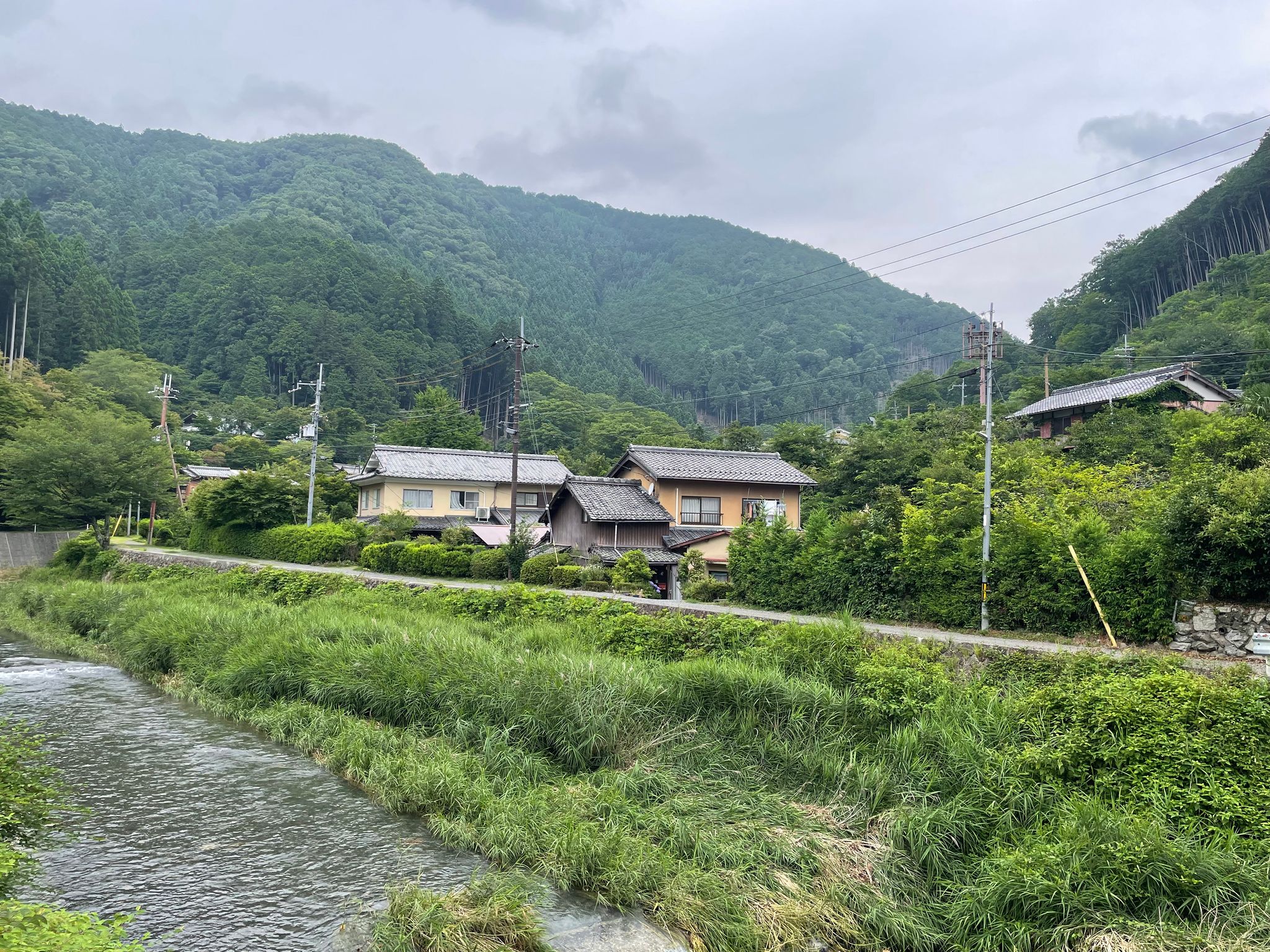
In 2027, the residency will use the Ninose district of northern Kyoto as a case study for exploring the relationships between traditional crafts, architecture, natural environments, and local culture.
Through visits to craft workshops across Kyoto and field research in Ninose, participants are invited to develop new project proposals from the perspective of their own disciplines and practices.
Why Ninose?
Located in the mountainous northern area of Kyoto City, Ninose has long-standing historical connections to kijishi (traditional woodturners) and lacquer-making cultures.
Unlike central Kyoto, the area retains distinctive natural landscapes and historical environments where architecture, forests, craft production, and everyday life remain closely intertwined.
Atelier hifumi, one of the collaborators in this program, is transforming a traditional Japanese house (kominka) into the lacquer art studio, while also creating a cultural space open to the wider community.
This residency considers not only the house itself, but the wider Ninose area as a research field through which participants can investigate the relationship between craft and place.
Residency Environment
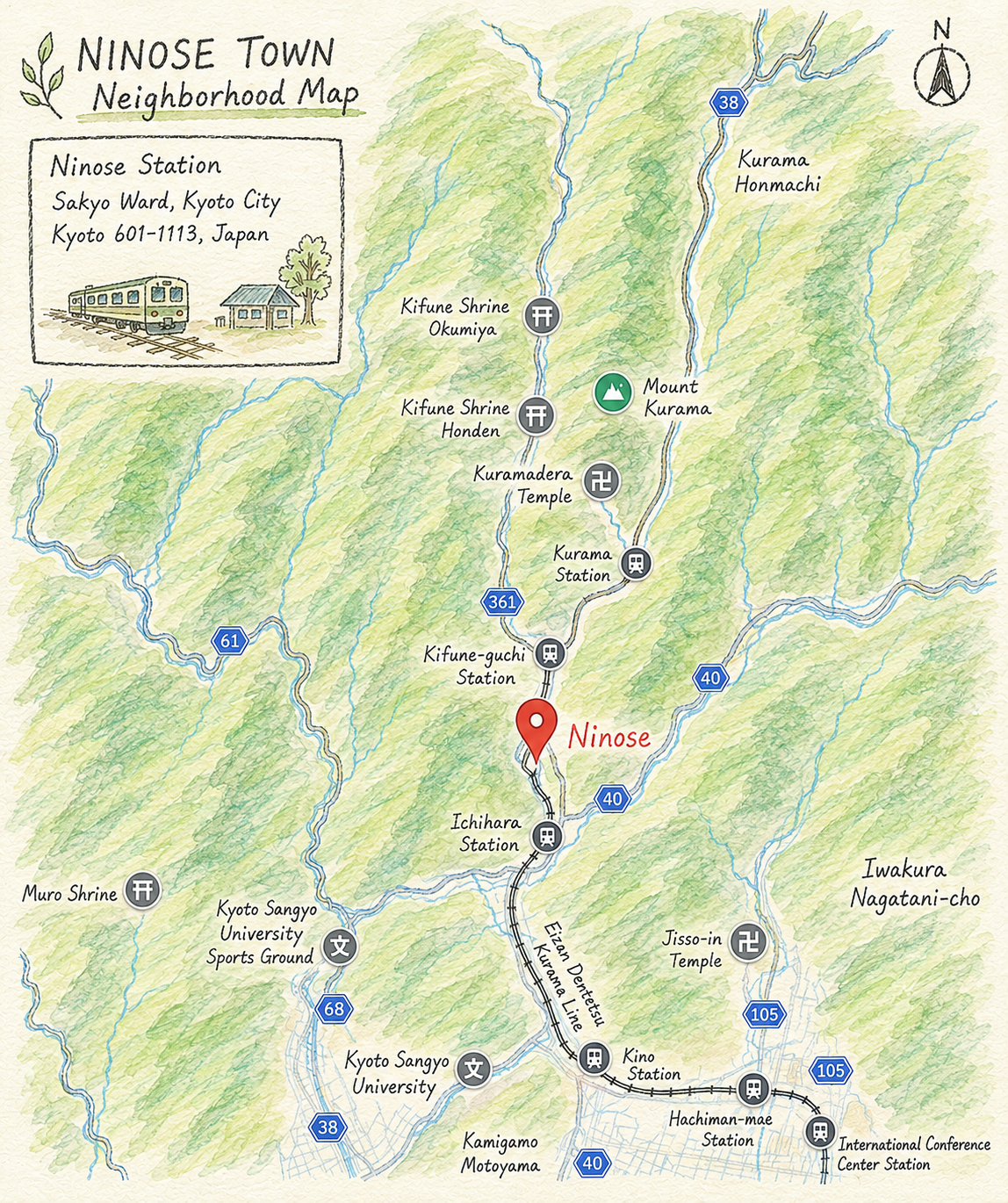
In this program, participants will move between three bases—“Residency,” “Production,” and “Fieldwork”—as they carry out their activitie
① Residency Base | Accommodation
KONOE AIR 7 RESIDENCE
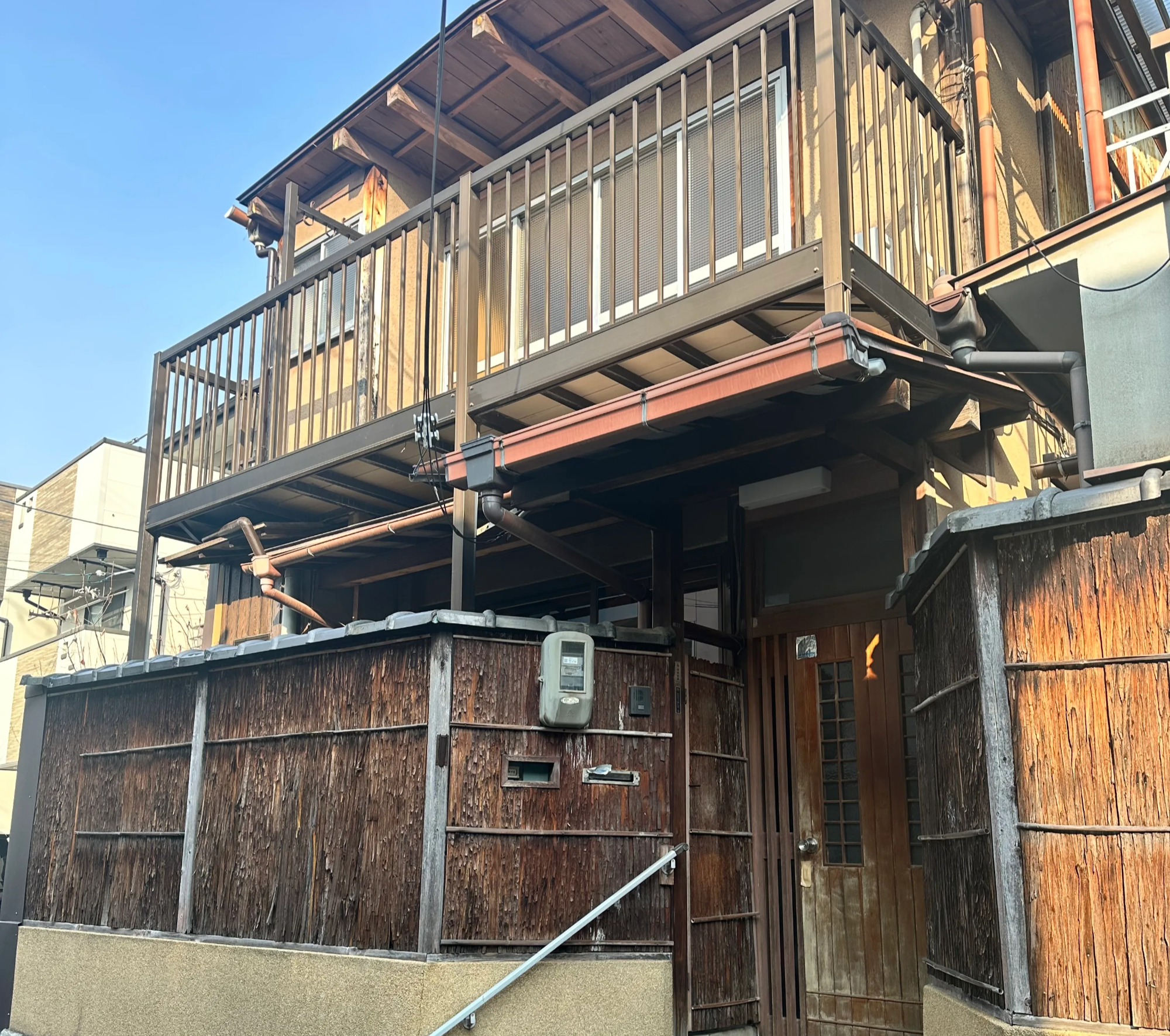
Participants will stay at KONOE AIR 7 RESIDENCE in the Yoshida area of Sakyo Ward, Kyoto.
Located within one of Kyoto's historic cultural districts, the residence is surrounded by sites such as Yoshida Shrine, Konkai Komyo-ji Temple, Heian Shrine, and Kyoto University, while remaining conveniently connected to the city center.
In addition to serving as participants' living space, the residency base provides an environment for research, writing, and light project development. Opportunities to engage with local researchers, artists, and residents in the Yoshida area will also be arranged throughout the program.
② Studio Base | Production & Prototyping
Atelier hifumi / COSMIC WHALE LLC (The SITE)
Located approximately 30 minutes from KONOE AIR 7 RESIDENCE, The SITE is a creative workspace equipped for light fabrication, prototyping, and project development.
Participants will have access to the shared workshop space provided by Atelier hifumi / COSMIC WHALE LLC. Use of the facility is subject to prior reservation and availability.
③ Research Field | Field Research Sit
Ninose District, Sakyo Ward, Kyoto
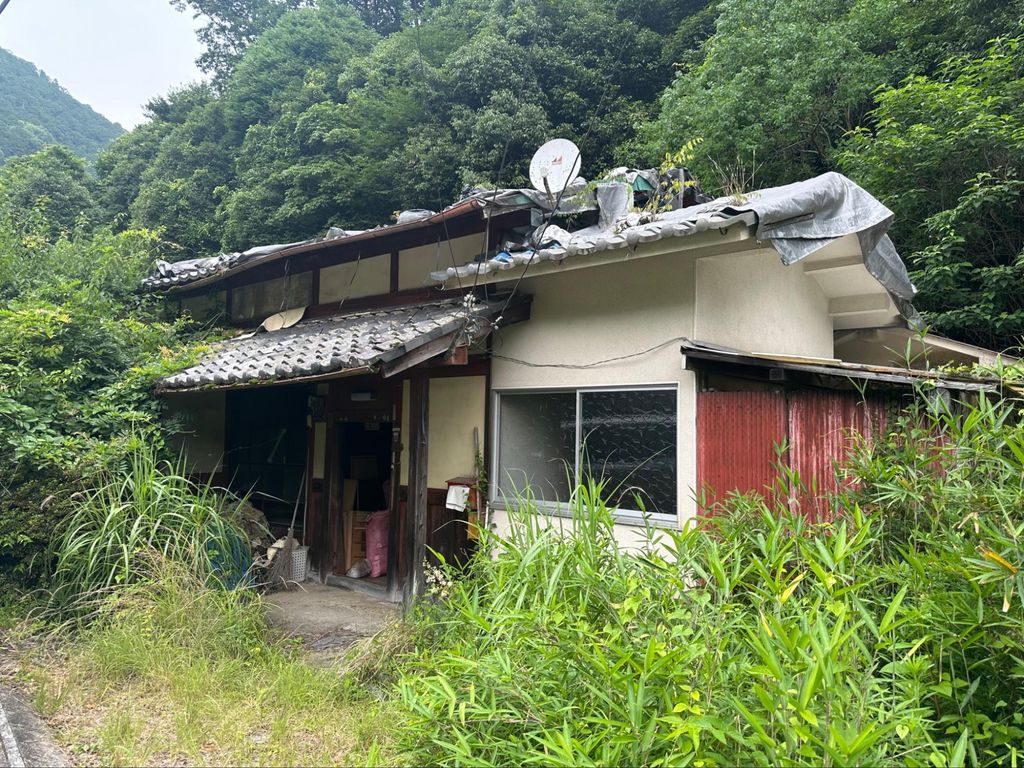
The Ninose district serves as the program's primary research field.
The Ninose district will serve as the primary research field for this program. Participants will conduct their own research while visiting traditional houses, forests, local communities, craft workshops, and other sites.
Please note that the traditional farmhouse currently undergoing restoration in Ninose may have limited accessibility depending on the progress of renovation works at the time of the residency.
Engagement with Local Communities
This residency values encounters, dialogue, and exchange as much as artistic production and research.
According to the needs of each participant's project, the program team can facilitate introductions and research opportunities with:
- Traditional craft workshops in Kyoto
- Craft practitioners and artisans
- Architects
- Researchers
- Local residents
- Artists and cultural practitioners
Throughout the residency, participants will also have opportunities to take part in:
- Networking and exchange events organized by *** in Residence Kyoto
- Visits to craft workshops and studios
- Meetings with local communities and cultural stakeholders
Towards the end of the residency, participants will be invited to share their research and activities through a public presentation, open event, or other form of community engagement.
Who Should Apply?
We welcome applicants who:
- Have a genuine interest in Kyoto's traditional crafts and cultural heritage
- Are eager to conduct place-based research and engage with local communities
- Enjoy dialogue and collaboration across disciplines
- Wish to build long-term relationships with Kyoto's craftspeople, cultural practitioners, and production regions beyond the residency period
Applicants from all disciplines are encouraged to apply, including but not limited to:
- Architecture
- Design
- Craft
- Visual Arts
- Film and Moving Image
- Performance
- Music and Sound
- Food Culture
- Landscape and Environmental Practice
- Anthropology
- Curatorial Practice
- Writing and Publishing
Interdisciplinary and experimental practices are also welcome.
Possible Activities
Depending on the nature of their projects, participants may engage in activities such as:
- Field research
- Workshop and studio visits
- Interviews
- Architectural and material research
- Documentary and video production
- Photography
- Writing
- Zine and independent publishing
- Workshops
- Performances
- Exhibitions
- Tea gatherings and cultural events
- Community-based activities
Outcomes are not limited to finished artworks.
The residency welcomes a wide range of outputs, including research, documentation, publications, conversations, prototypes, performances, and other forms of knowledge sharing.
Program Support
The residency provides:
- Accommodation
- Orientation and program introduction
- Project coordination
- Introductions to local communities, craftspeople, and workshops
- Field research support
- Support for final presentations and public programs
Financial Support
The residency provides:
- Accommodation for one month (Note: Only one private room is available per selected grant/party)
- Travel Grant: JPY 100,000
- Research & Production Grant: JPY 100,000
*The research and project support grant may be used for project-related expenses, including local transportation.
*All project-related expenses require prior approval from the program team.
*Travel and accommodation costs for accompanying family members or partners are not covered by the program.
The following expenses are not eligible for support:
- Meals and personal food expenses
- Personal and household supplies
- Visa application fees
- Travel and health insurance (mandatory and to be arranged independently by participants)
- Accommodation outside the residency period
- Major production expenses that have not been approved in advance
- Any other personal expenses
Proposed Schedule
Week 1 | Getting to Know the Place
The first week focuses on settling into life in Kyoto and building relationships with the local environment, communities, and program partners.
Activities may include:
- Orientation
- Introduction to Kyoto City and the Yoshida area
- Meetings with program partners and collaborators
- Fieldwork in the Ninose district
- Lectures and conversations on local history, ecology, and culture
- Refining and developing individual research questions
Week 2 | Encountering Craft Practices
Participants deepen their research through exchanges with craftspeople, researchers, and cultural practitioners in Kyoto and surrounding areas.
Activities may include:
- Visits to craft workshops and studios
- Conversations with artisans and makers
- Research into architecture, materials, and natural environments
- Discussions with the TCI Research Institute
- Collaborative experiments, prototyping, or material testing, where appropriate
Week 3 | Developing the Project
Based on your research, you will develop your own project. Outcomes are not limited to finished artworks and may take a variety oforms, including:
- Research
- Writing
- Video production
- Installation
- Performance
- Workshops
- Collaborative projects with the community
You will carry out your activities according to each specific practice.
Week 4 | Sharing with the Community
During the final week, participants share their research, processes, and findings with local audiences. Formats will vary according to each project.
Possible formats include:
- Exhibitions
- Open studios
- Talks and presentations
- Workshops
- Tea gatherings or communal meals
- Guided field walks
- Performances
- Zines, publications, and printed matter
The final presentation is not intended as a showcase of a completed artwork. Rather, it serves as an opportunity to foster dialogue, exchange knowledge, and build relationships between participants and the local community.
Before You Apply
This residency is not intended solely as a program for producing finished artworks.
This is a collaborative research program designed to help participants deepen their own practice while engaging with the environment surrounding Kyoto’s traditional crafts and the local community.
We are looking for participants who are willing to formulate their own questions, immerse themselves in local contexts, and learn through dialogue, observation, and exchange.
At the same time, local residents and those involved in the crafts industry are looking forward to gaining new perspectives and insights from the participants.
This program is not a one-way setting for “teaching” and “learning,” but rather a space where participants exchange knowledge and experiences with one another while fostering new relationships.
We welcome projects that foster ongoing connections with Kyoto and its craft communities beyond the residency period.
How to Apply
Please submit your application using the online application form (Google Form) linked below.
Application Form: https://forms.gle/dxp47mfwtrxGhH8HA
(Available from August 15, 2026 at 10:00 AM JST)
Important Notice on Application Capacity
To ensure a thorough review process with our small team, applications are limited to the first 50 submissions. The application form will close automatically as soon as we reach 50 applications, even before the official deadline. We highly encourage early submission.
Online Information
We will host an online info session (via Google Meet) for international creators who are interested in applying or have questions about the residency program, facilities, or local crafts context.
Date & Time :
- August 14, 2026 / 10:00 – 11:00 (JST)
- August 14, 2026 / 18:00 – 19:00 (JST)
- Language : English / 日本語
- Format : Online via Google Meet (Prior registration required )
Pre-Orientation Registration Form: https://forms.gle/LZ85zRVJUCetufrZ6
Due to high demand, registration is currently on hold while we adjust system capacity. An update on seat availability will be announced here soon. Attendance is optional and will NOT affect selection.
Attendance is optional and will not affect the selection process. If you cannot attend, you can find a Q&A summary and a link to the recording above on this page.
Application Form Questions
Applications will be accepted through an online Google Form. The application form will ask for the following information:
Items marked with an asterisk (*) are required.
- Full Name*
- email address*
- Current country / city of residence*
- Nationality*
- Field of practice*
- Craft, Visual Arts, Film and Moving Image, Performance, Music and Sound, Food Culture, Landscape and Environmental Practice, Anthropology, Curatorial Practice, Writing and Publishing, Other (please specify)
- Website / Portfolio / Work sample links*
- Please provide links to your website, portfolio, or up to three examples of your previous works. Links should be accessible online.
- Social Media / SNS
- Short biography*
- Motivation*
- Why are you applying for this residency program? (150–250 words)
- Project Proposal*
- Outline your proposed project, research plan, and public sharing idea during the residency. (300–500 words)
- Preferred arrival date*
- Please confirm your availability for a one-month residency between early January and mid-February 2027. Exact dates will be arranged after selection.
- Preferred leaving date*
- Optional: Letter of Recommendation / Supporting Statement
- Applicants may submit a short recommendation letter or supporting statement from a trusted organization, institution, residency, curator, educator, collaborator, or community leader who is familiar with their practice.
- The letter is not required and will not determine eligibility. However, it may provide additional context about the applicant's work, experience, and potential contribution to the residency.
- Please upload a PDF (maximum 2 pages) (up to 10MB)
- Practical notes
- Please let us know if you have any allergies, accessibility needs, or other considerations that may be relevant to your stay.
- Confirmation*
Application & Selection Timeline
Open Call and Selection Schedule
- 1 August 2026 — Program announcement and teaser release
- 14 August 2026 — Online Information Sessions (10:00–11:00 JST / 18:00–19:00 JST)
- 15 August 2026, 10:00 JST — Open Call Launch (Application Form Opens)
- 31 August 2026, 23:59 JST — Application Deadline
- Applications are strictly capped at the first 50 submissions. The form will close automatically once 50 applications are received, even before the deadline.
- Early to Mid-September 2026 — Application Review & Online Interviews
- Late September 2026 — Notification of Results
- Selected artists will participate in online meetings prior to their residency to confirm and finalize program details.
Residency Period
- Early January – Mid-February 2027 (1-Month Residency)
- Exact arrival and departure dates will be determined in consultation with the selected participant, host, and organizers following the selection process.
Program Partners & Contributors
Mio Heki
A lacquer artist based in Kyoto. After graduating from Kyoto City University of Arts, she worked as a restorer at workshops specializing in the restoration of historic architecture, Buddhist statues, and antique art—including National Treasures and Important Cultural Properties—before establishing her own practice. She creates lacquer decorations for dancers, produces original artworks, and collaborates with renowned international artists on stage productions. She has held numerous exhibitions both in Japan and abroad. Since 2015, she has held exhibitions and kintsugi and lacquer workshops in major cities around the world, including Paris, Amsterdam, Maastricht, Madrid, and Hong Kong. She has appeared in publications such as Hanatsubaki, Figaro Japon, and on NHK WORLD. Author of Tamaki: The Storyteller of Kintsugi (Japanese-English edition). She runs “Atelier hifumi” in Kyoto, where she creates kintsugi-repaired tea utensils, lacquer-decorated ceramics, and jewelry under the theme of “Beauty Beyond Tradition.”
Atsushi Heki
Born and raised in Kyoto, he has performed his works as a dance artist in over 30 cities across more than 10 countries. After serving as an Arts Advisor for Kyoto Prefecture, he earned a master’s degree in Business Planning and founded COSMIC WHALE, which focuses on “Zero-Gravity Theater and Microgravity Art.” He is also well-versed in fieldwork, the tea ceremony, traditional Japanese dance, and local festivals. He was the main artist for the JR Kyoto Isetan Founding Anniversary Festival. He participates in the Kyoto University Space Habitation Research Group and is a member of the Japan Society for Aeronautics and Astronautics and the Moon Village Association.
TCI Laboratory
TCI Laboratory is an initiative rooted in Hiyoshiya, a Kyoto-based Kyo-wagasa (traditional Japanese umbrella) workshop with more than 160 years of history. We are dedicated to connecting Japan's traditional crafts with contemporary design. Drawing on our experience and international network built through collaborations with creators in Japan and abroad, as well as years of introducing Japanese traditional crafts to international audiences, we will guide visiting artists through the cultural heritage of Kyoto's traditional crafts by coordinating visits to traditional craft workshops and facilitating cross-cultural exchange with local artisans, supporting new creative work inspired by these experiences.
Accommodation - KONOE AIR 7
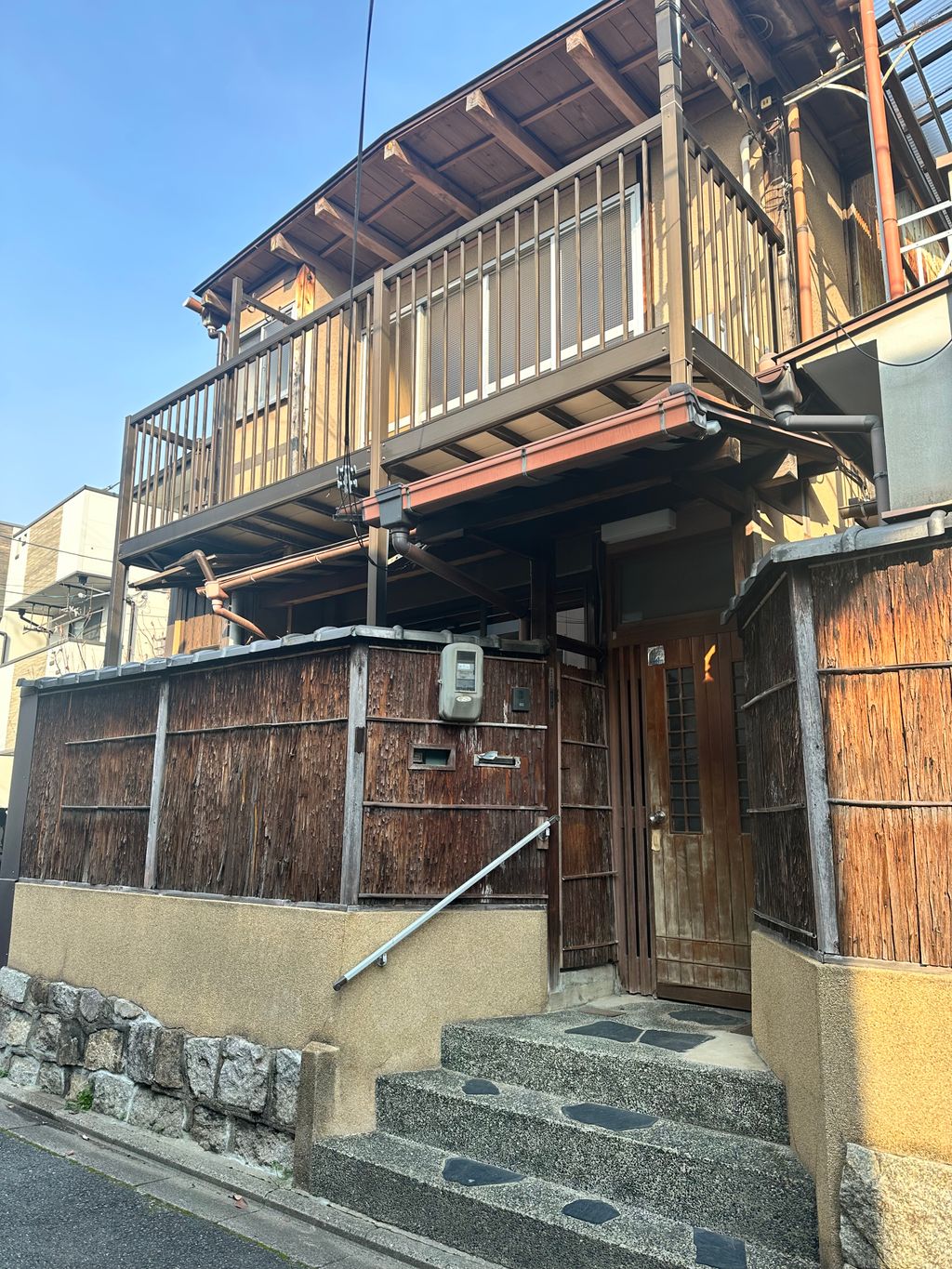
〒606-8315 7Yoshidakonoecho, Sakyo Ward, Kyoto-shi, Kyoto-fu
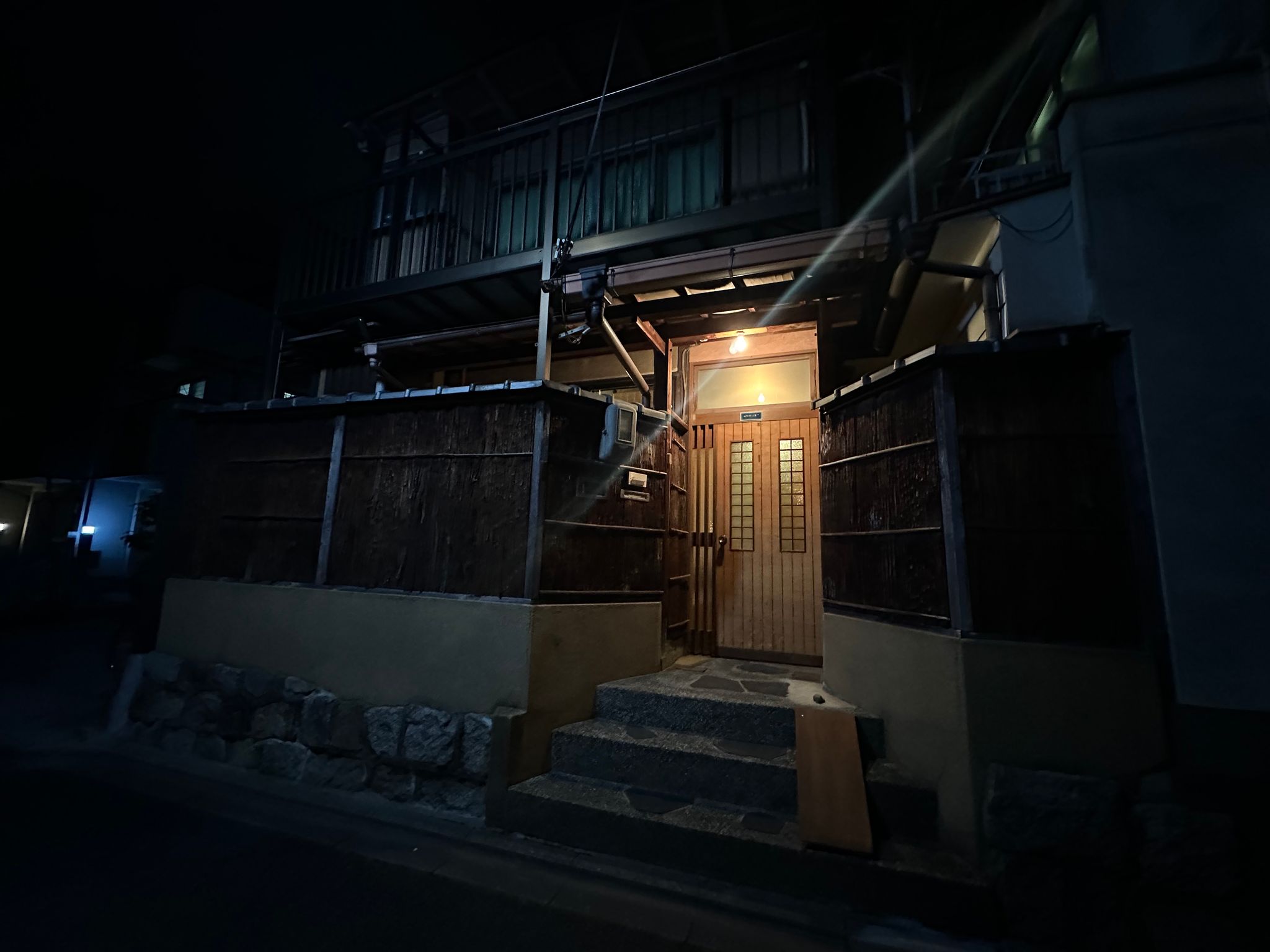
This is a residency facility located in a traditional Kyoto townhouse in Yoshida-Konoe-cho, Sakyo Ward, capable of accommodating two groups.
The facility is the childhood home of organizer Atsushi Heki’s father (a ceramic artist), where his grandparents (his grandfather was a university professor specializing in agriculture, forestry, and erosion control who supervised flood control projects both in Japan and abroad and was awarded the Medal with Purple Ribbon) later moved in. The house, built before World War II, has undergone several renovations.
In early 2026, it opened as “KONOE AIR 7,” a residency facility for artists visiting from around the world to study Kyoto, founded by Atsushi Heki—a dancer and cultural, artistic, and space development pioneer based in Kyoto—and Mio Heki, a lacquer artist.
The Yoshida district, where the facility is located, is a cultural hub home to Yoshida Shrine (the birthplace of Yoshida Shinto), famous for its Setsubun Festival; Kyoto University’s main campus; the Kyoto University Museum of Natural History; sake breweries; and the Japan-France Cultural Center. It stretches from east to west, from the gentle slopes of Mount Yoshida to the Kamogawa River, a popular leisure spot for locals. The area is home to many cultural figures, including researchers and artists, as well as a large number of university students, making it a place where encounters with a diverse range of people naturally occur.
2F Room
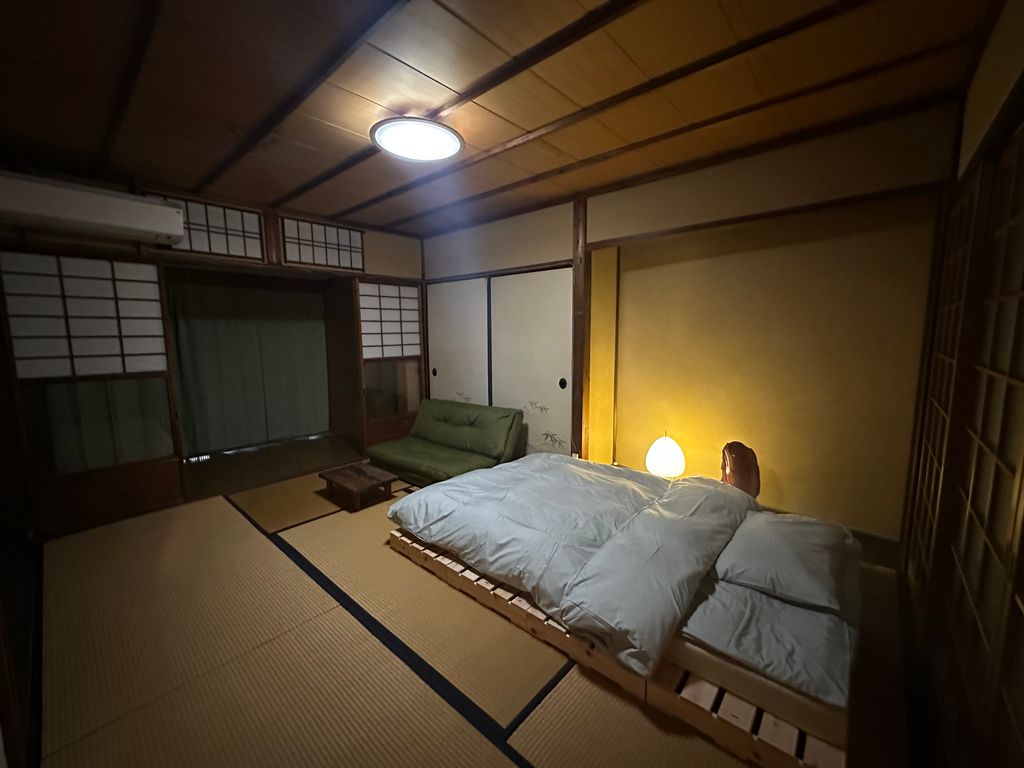
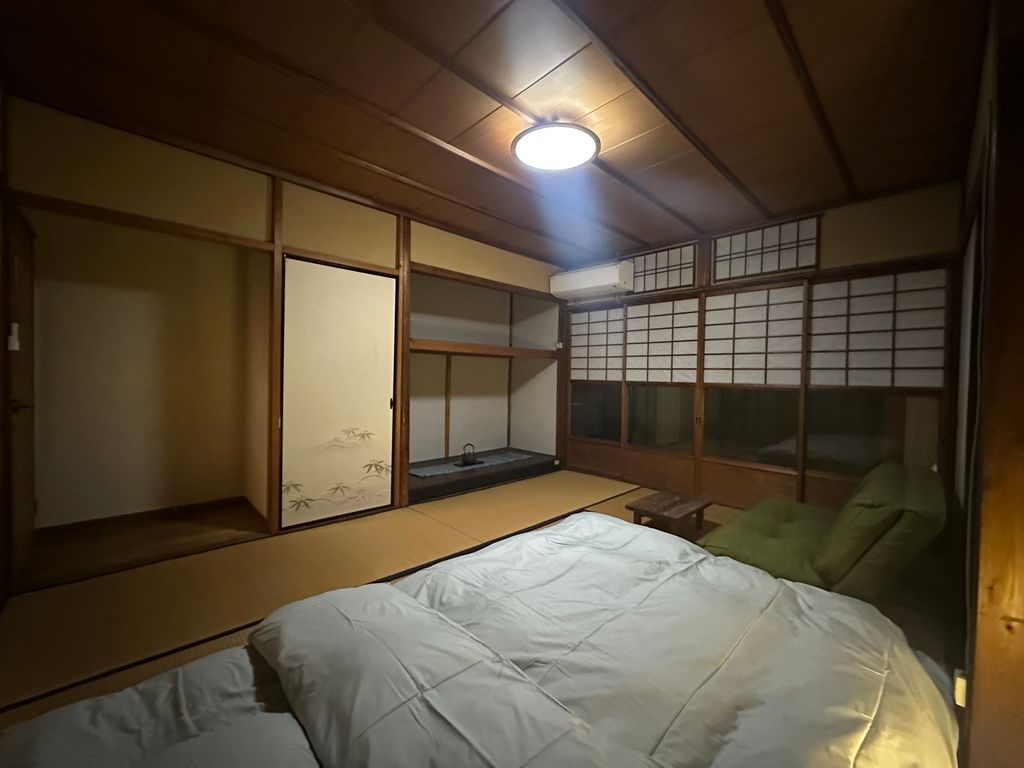
6-tatami-mat Japanese-style room + 3-tatami-mat room with hardwood floors + private toilet + private balcony
Tokonoma and built-in closet
Cypress slatted bed (with mattress)
Sofa and coffee table
Desk and chair
Clothes rack
Wi-Fi available / Air conditioning / One bicycle
1F Room
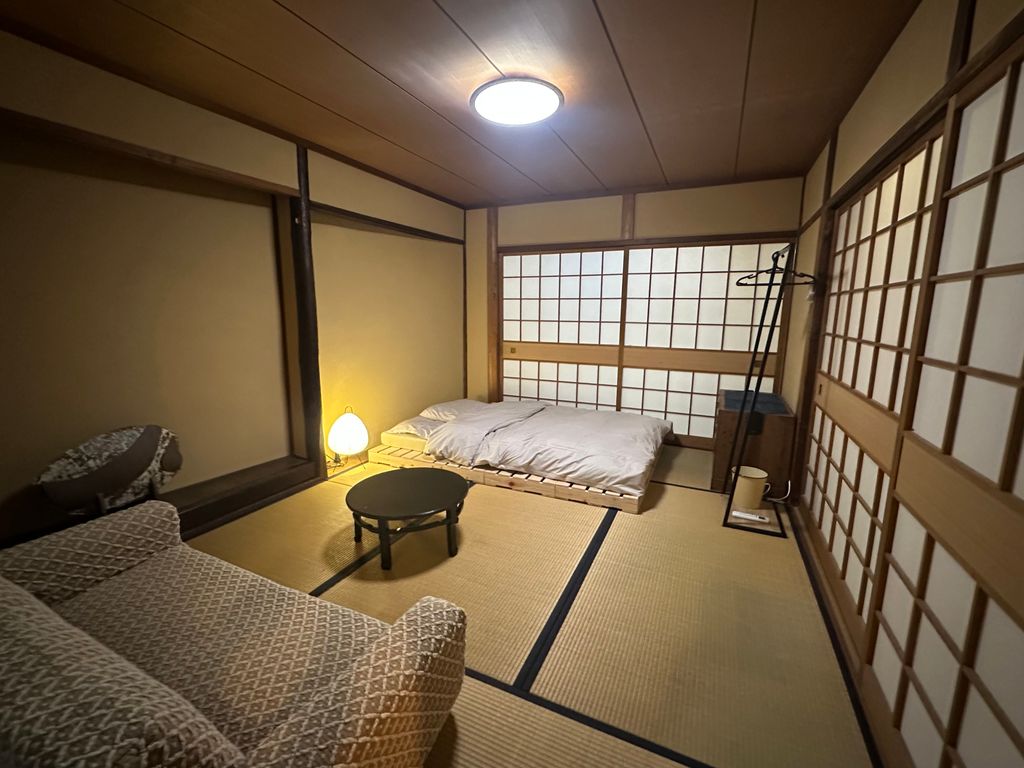
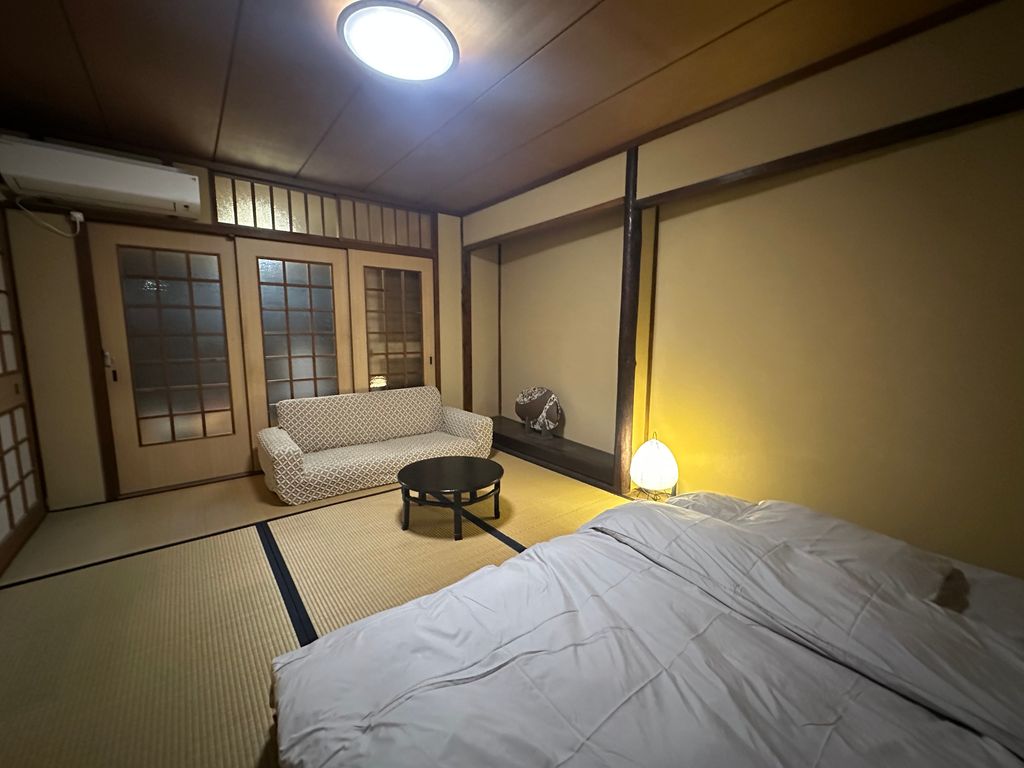
Tatami-mat room with a tokonoma / Toilet and a small courtyard for drying laundry next to the room
Cypress slatted bed (with mattress)
Sofa and coffee table
Chest of drawers (for storing clothes, etc.)
Clothes rack
Wi-Fi available / Air conditioning / One bicycle
Shared space
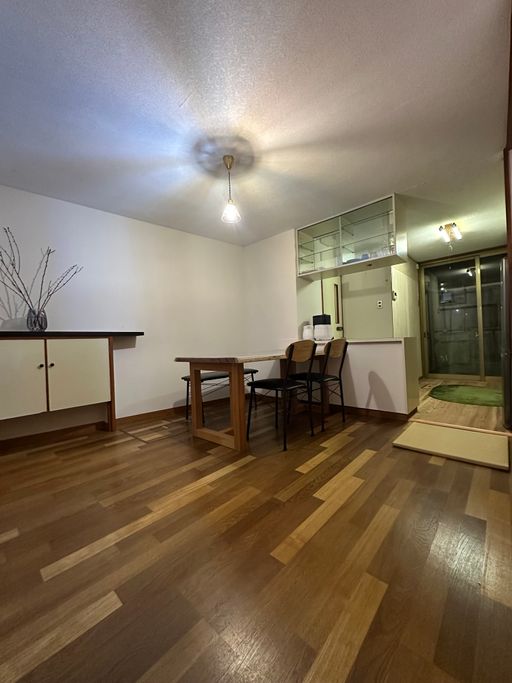
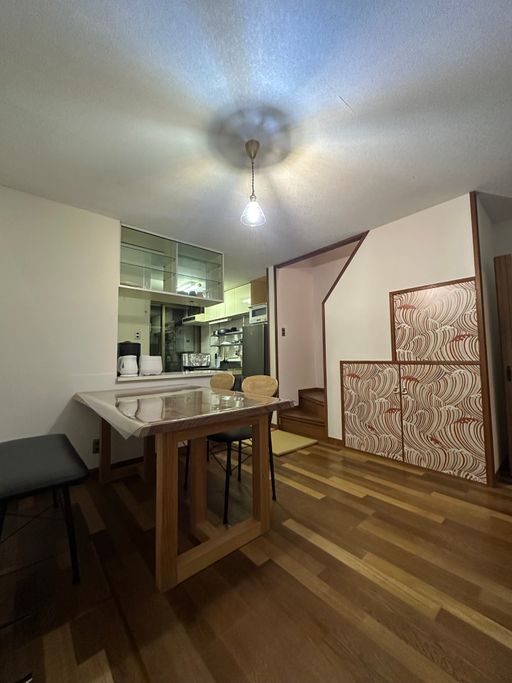
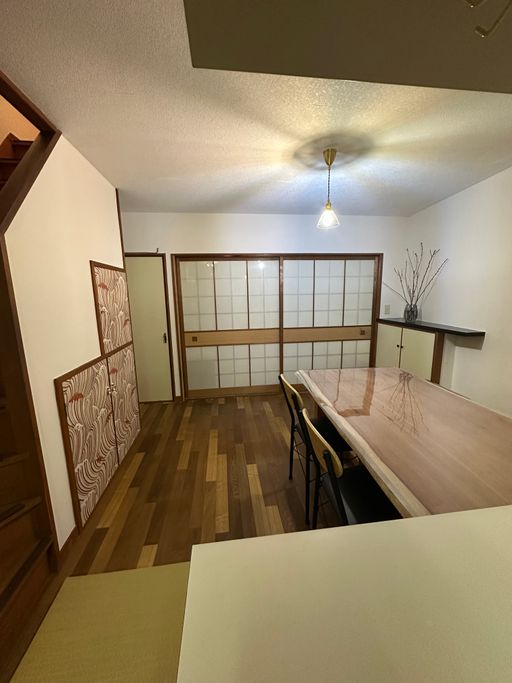
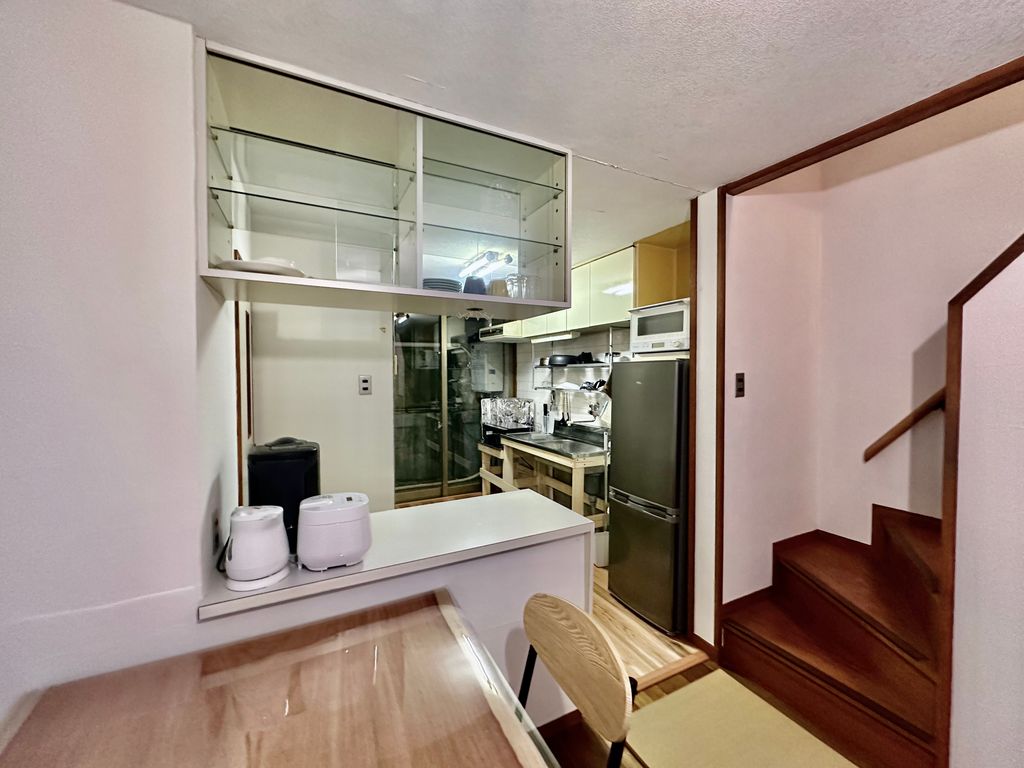
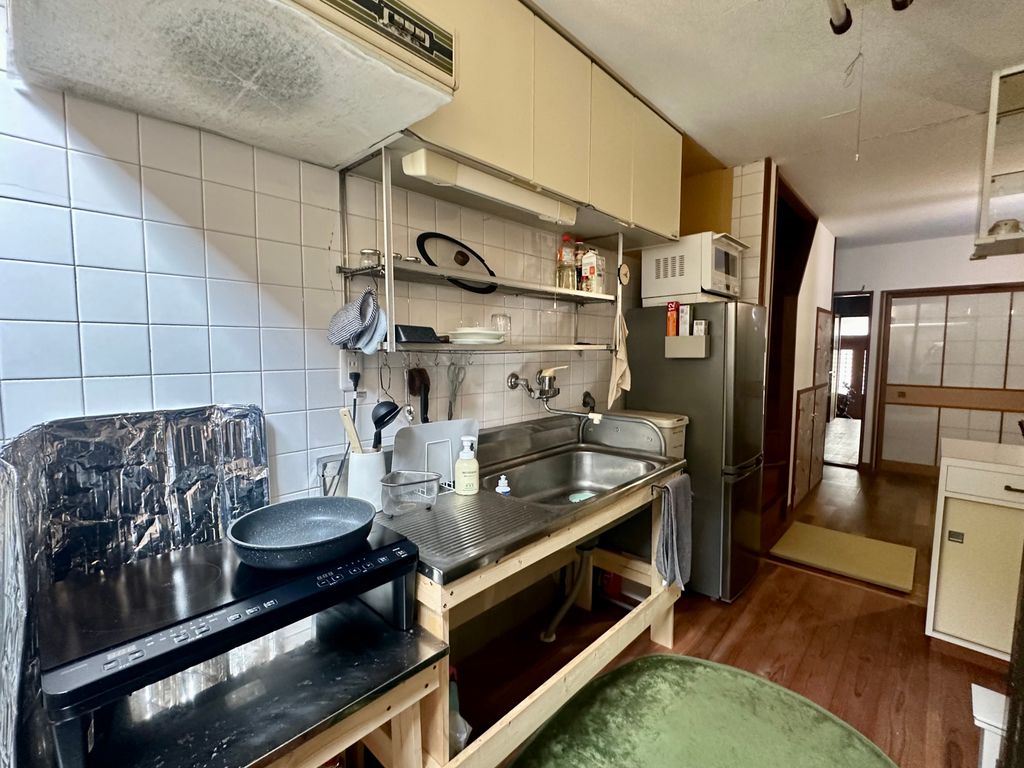
- Living room (1st floor)
- Fully equipped kitchen
- Bathroom and shower
- Laundry and wash area with washing machine
- Shared library and bookshelves in the hallway
- Microwave oven
- Toaster
- Rice cooker
- Cooking utensils and cookware
- Induction cooktop (IH stove)
- Electric kettle
- Hair dryer
- Iron and ironing board
Please feel free to use the dishes, cleaning supplies, and other items provided.
We ask that everyone take responsibility for the daily cleaning of the common areas and taking out the trash.
About the Neighbourhood
The surrounding area is a residential neighbourhood with many children and elderly residents. Please be considerate of your neighbours, especially late at night. The people in the neighbourhood are very kind. The facility is also a member of the neighbourhood association.