🪡
レア・エンベリ ワークショップ|Day1 10/3(土)COLLECT / CUT
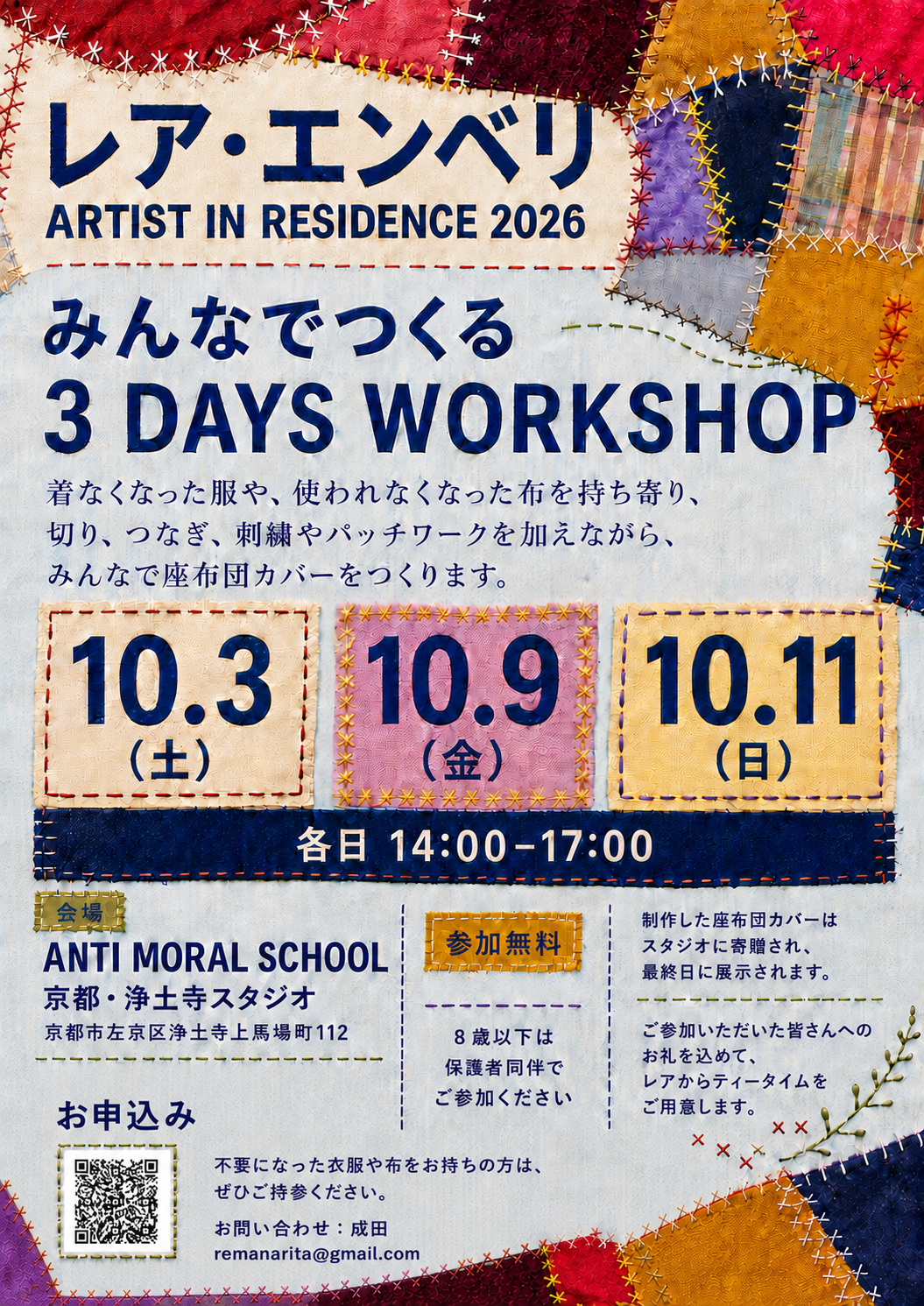
Vetett ágy(ヴェテット・アージ)をテーマに、地域の使われなくなった衣服や布から座布団カバーをつくる全3日間のワークショップ。2026年9月25日から10月19日まで、左京区のANTI MORAL SCHOOL 京都浄土寺スタジオに滞在するアーティスト、Lea Embeli(レア・エンベリ)とともに開催します。集めた布を切り、つなぎ、刺繍やパッチワークを加えながら、みんなで座布団カバーを制作します。完成した座布団カバーは、レジデンス終盤の展示で使用したのちANTI MORAL SCHOOLへ寄贈されるため、お持ち帰りいただくことはできません。感謝を込めて、各回にはレアによるティータイムもご用意しています。全3日間のうち、いずれか1日のみの参加も可能です。
A three-day workshop making cushion covers from clothes and fabric no longer in use, inspired by the Székely Hungarian tradition of Vetett ágy. Held alongside Lea Embeli's residency at ANTI MORAL SCHOOL Kyoto Jodoji Studio (September 25–October 19, 2026), it invites everyone to cut, join, embroider, and patch fabric together into shared cushion covers. The finished covers will appear in an exhibition near the end of the residency and then be donated to ANTI MORAL SCHOOL, so they can't be taken home — but as a thank-you, Lea will host tea time at each session. Feel free to join for just one day, or all three.
Day 1|10/3(土)14:00–17:00 COLLECT / CUT
アンチモラルスクールに滞在する、レアさんのワークショップ「布を集める・知る・カットする」シリーズ第一回。セーケイ・ハンガリー人の刺繍文化や日本の刺し子、プロジェクト紹介とドキュメンタリー鑑賞のあと、布のカットと刺繍体験を行います。
The first session of Lea's workshop during her residency at ANTI MORAL SCHOOL: collecting, learning about, and cutting fabric. After hearing about Székely Hungarian embroidery traditions and Japanese sashiko, an introduction to the project, and a short documentary screening, participants cut fabric together and try their hand at embroidery.
開催概要 / Event Details
会場|ANTI MORAL SCHOOL 京都浄土寺スタジオ Venue: ANTI MORAL SCHOOL Kyoto Jodoji Studio
住所|〒606-8416 京都市左京区浄土寺上馬場町112(らくらく整骨院の建物) Address: 112 Jodoji-Kamibaba-cho, Sakyo-ku, Kyoto 606-8416 (in the Rakuraku Seikotsuin building)
参加費|無料 Fee: Free
定員|10名 Capacity: 10 people
対象|小学生以上(8歳以下は保護者の同伴が必要です) Ages: Elementary school age and up (children 8 and under must be accompanied by a guardian)
言語サポート|日本語・英語 Language support: Japanese, English
申込先 / Apply here|お申込みフォーム / Application form
お問い合わせ / Contact|ANTI MORAL SCHOOL 成田/Narita:remanarita@gmail.com
※不要になった衣服や布をお持ちの方は、ぜひご持参ください。
If you have unwanted clothes or fabric, please feel free to bring them along.
※ワークショップ中、活動記録および広報のため、写真・映像の撮影を行います。
Photos and video will be taken during the workshop for documentation and promotional purposes.
EXHIBITION & FAREWELL PARTY
ワークショップで完成した座布団カバーは、レアが故郷から持参したクッションとともに、10月18日(日)の展示で公開します。展示では、セーケイ・ハンガリー人(Székely)の家庭に伝わる「Vetett ágy(ヴェテット・アージ)」を参照します。Vetett ágyは実際に眠るためのベッドではなく、女性たちが制作した刺繍や織物、枕、毛布など、大切な布製品を美しく積み重ねて見せるためのものでした。本展では、地域のみなさんと制作した座布団カバーを積み重ねることで、京都で生まれた現代の「Vetett ágy」をつくります。
The cushion covers completed during the workshop will be unveiled — together with cushions Lea brought from home — at an exhibition on Sunday, October 18. The exhibition draws on Vetett ágy, a tradition in Székely Hungarian households: not an actual bed for sleeping, but a way of beautifully stacking and displaying the embroidery, textiles, pillows, and blankets made by the women of the household. Here, the covers made with the local community will be stacked into a contemporary Vetett ágy, born in Kyoto.
日時 / Date|2026年10月18日(日)Sunday, October 18, 2026
展示 / Exhibition|11:00–18:00
Farewell Party|18:00–20:00
ワークショップに参加されない方も、展示およびFarewell Partyへご来場いただけます。
Even if you don't take part in the workshop, you're welcome to join the exhibition and Farewell Party.
ANTI MORAL SCHOOLについて / About ANTI MORAL SCHOOL
ANTI MORAL SCHOOLは、京都市左京区浄土寺にある、制作・展示・対話が混在する文化拠点です。かつて住居として使われていた建物をDIYで改装し、1階の小展示スペース、2階のオフィス、3階のシェアスタジオが垂直に連続する、密度の高い空間を形成しています。国内外の異なる文化的背景を持つクリエイターを受け入れ、共同制作、公開制作、展示、ワークショップ、トークイベントなどを実施しています。異なる身体感覚や思考、制作の方法が直接交差する機会をつくることで、既存の価値観や表現の前提を問い直し、新たな表現や関係性が生まれる場となることを目指しています。また、一時的なイベントの開催にとどまらず、滞在中に生まれた交流や制作のプロセスを拠点に蓄積し、継続的な文化交流へとつなげています。
ANTI MORAL SCHOOL is a cultural space in Jodoji, Sakyo-ku, Kyoto, where making, exhibiting, and dialogue overlap. A former residence renovated through DIY, it forms a dense vertical space: a small exhibition area on the first floor, an office on the second, and a shared studio on the third. It welcomes creators from Japan and abroad with a range of cultural backgrounds, hosting collaborative and public production, exhibitions, workshops, and talks — creating opportunities where different ways of sensing, thinking, and making meet directly, so as to question existing values and assumptions about expression and become a place where new forms of expression and relationships can emerge. Rather than treating each event as a one-off, it accumulates the exchanges and processes that arise during each stay, connecting them into an ongoing cultural exchange.