Where Cultures Overlap: Unfiltered Encounters in a City That Lets You Be
The Japanese version of this Article can be read from here!
“*** in Residence Kyoto” is a residency program where creators from abroad and Kyoto residents share everyday life, learn from one another, and cultivate new values and relationships together.
This time, we followed Takayuki Minakuchi, who runs a real estate company in Kyoto Prefecture and served as a residence owner for the first time, and Jean David Nkot, an artist from Cameroon.
Connecting Cameroon and Kyoto — a distance of nearly 14,000 kilometers — this residency became a space for exchange unbound by titles or formal roles, grounded instead in genuine, human encounters.
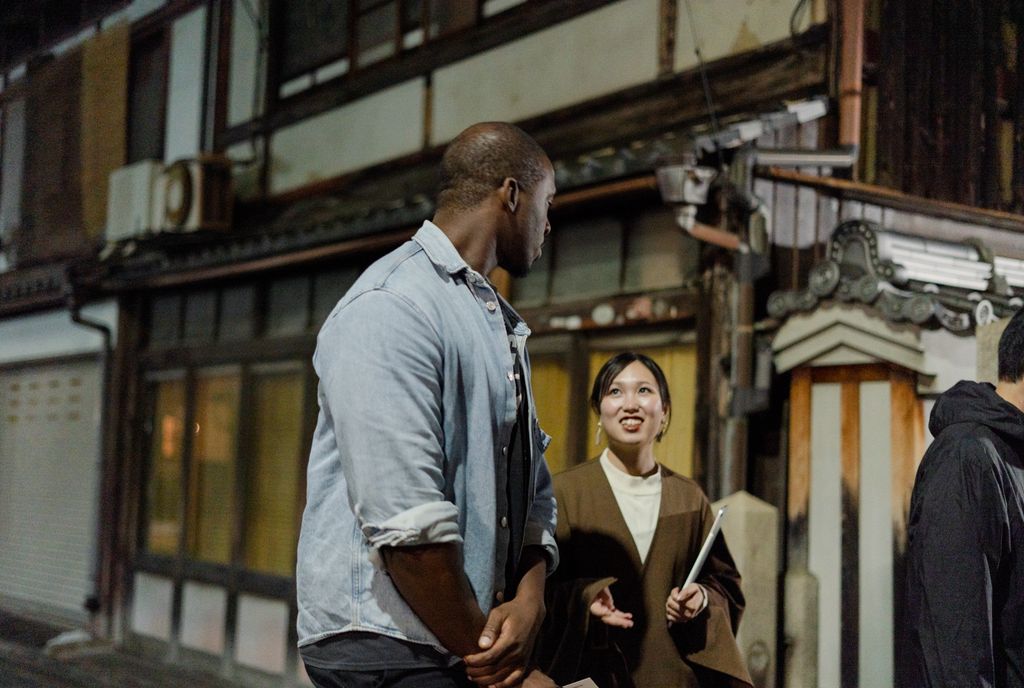
The setting was Umekoji, Kyoto’s historic district of commerce. In this neighborhood, people have long lived in close connection with one another. The bustle of the market, the rhythm of daily life, the glances and quiet presences moving through narrow alleys — within the living breath of this place, a “creative stay” unfolded. How did this environment shape the creator who stepped into it?
One distinctive feature of this program is that not only the creator and the residence owner, but also residents and other stakeholders become the subjects — the asterisks — of the creative stay itself.
Following Jean David’s Final Presentation, Youth Coordinator Towa Shinden looked back on the project together with curator Sten Kadji and residence owner Takayuki Minakuchi, tracing the memories of the residency.
- Interviewer & Article Writer / Youth Coordinator
Throughout this article, we have interwoven 🌀 YC Notes 🌀 written by the Youth Coordinators of *** in Residence Kyoto. Spending time alongside the creators and the residency owner, they observed the days from a position that was both inside and slightly askew — close enough to feel the texture of each exchange, yet distinct in perspective.
INDEX
CreatorResidenceInterview with Curator
— Sten Kadji2025/11/2 Weather:☂️☀️
16:00 at “Tsukune to Minch”An Encounter in Kyoto
ー A Month Where a Lifetime Met the Culture of Kyoto and UmekojiConnecting Kyoto and Cameroon
ー A Life Where Craftsmanship and Tradition ThriveThe Best moment of the Stay! ー A Month of Experiencing Kyoto with All Five SensesWhat Makes a City Distinct? ー Reframing “Kyoto” Through an Outside PerspectiveRelationship with Residence Owner
ー Creator and Owner Working Together Through Trial and ErrorInterview with Residence Owner
— Takayuki Minakuchi “I’m glad the residence owner was Taka”
ー A Friendship beyond the ResidencyA New Form of Art × Real Estate ー Residency Program as the First TryFinding the Balance
ー How Do We Design the Framework of a Residency?When Residency Meets Community
ー A Close Relationship Between the Umekoji Area and the CreatorMaking Umekoji More Interesting!
ー A Residency That Came Together Like Pieces of a PuzzleThe Dilemmas of Creator and Owner
ー The Difficulty of Choosing What to Prioritize in a ResidencyThe Best moment of the Stay!
ー Dialogue, Understanding, and Shared BackgroundsThe Future of Stay Support: Finding a Balance While Continuing to Build Relationships
Interview with Curator — Sten Kadji
2025/11/2 Weather:☂️☀️ 16:00 at “Tsukune to Minch”
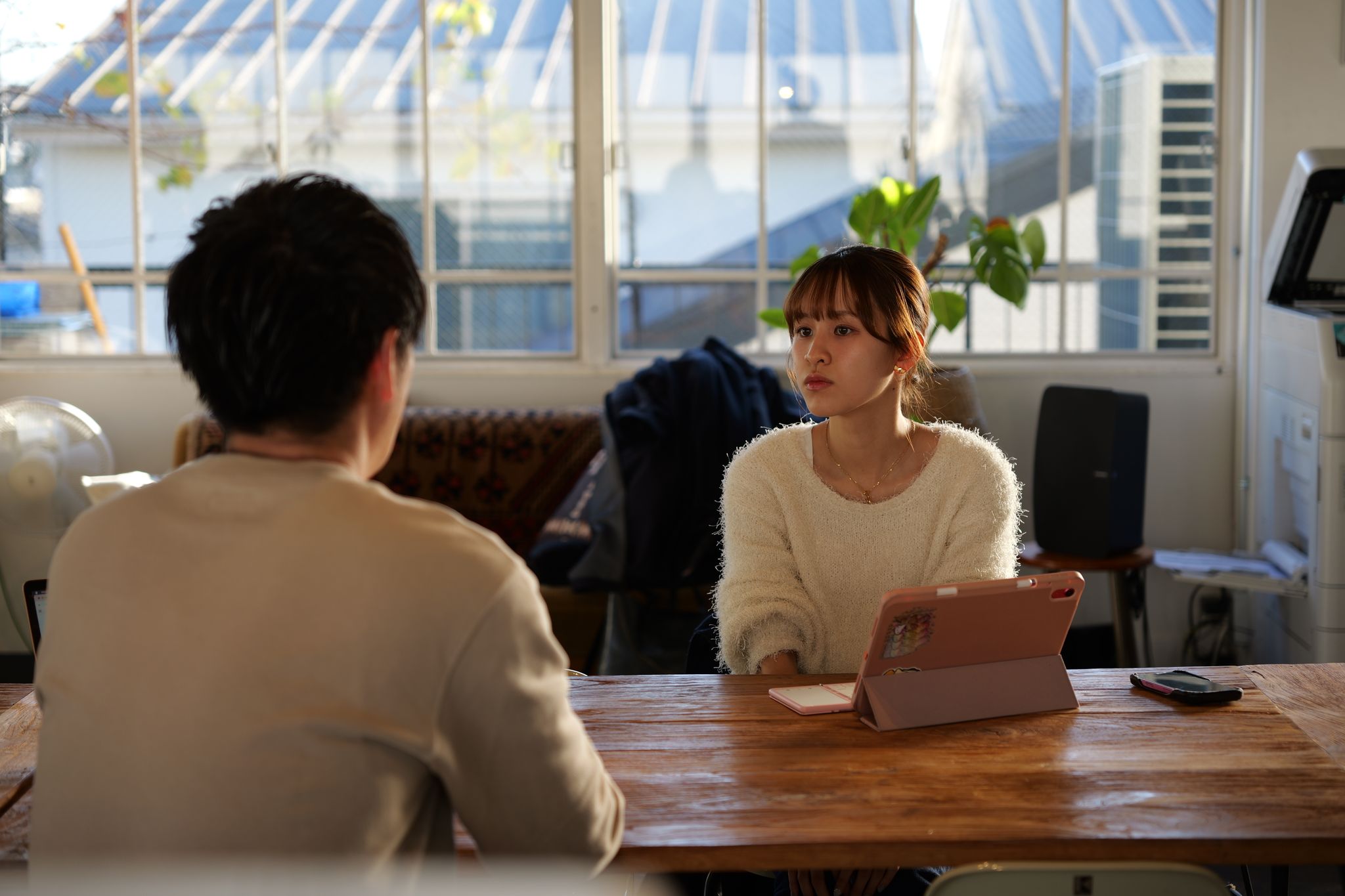
Interviewed the day after the Final Presentation & Farewell Party. Sten Kadji participated in the local Ohitaki Festival in the morning. Jean David took a break due to the production and hard work up until the previous day.
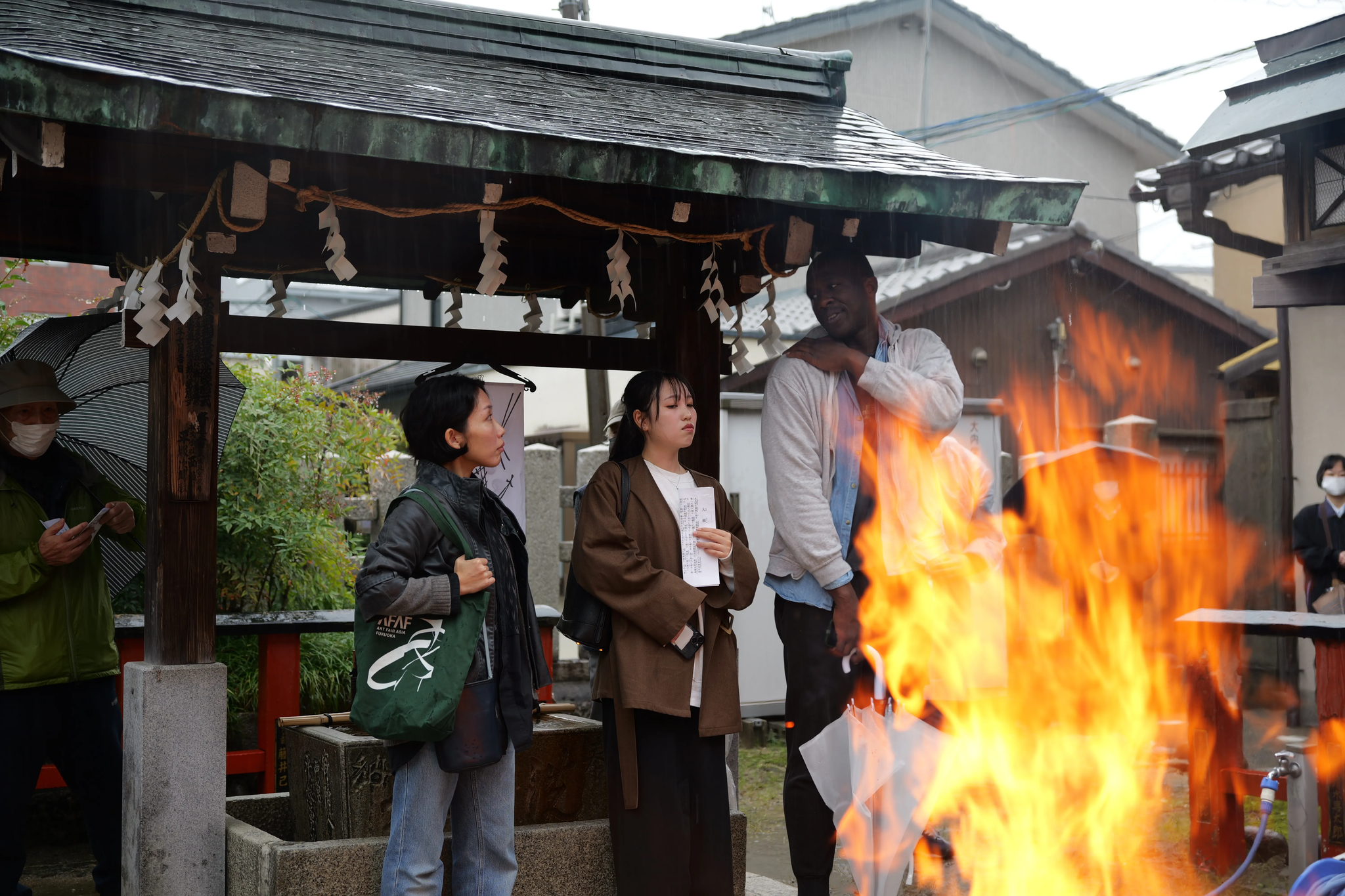
An Encounter in Kyoto ー A Month Where a Lifetime Met the Culture of Kyoto and Umekoji
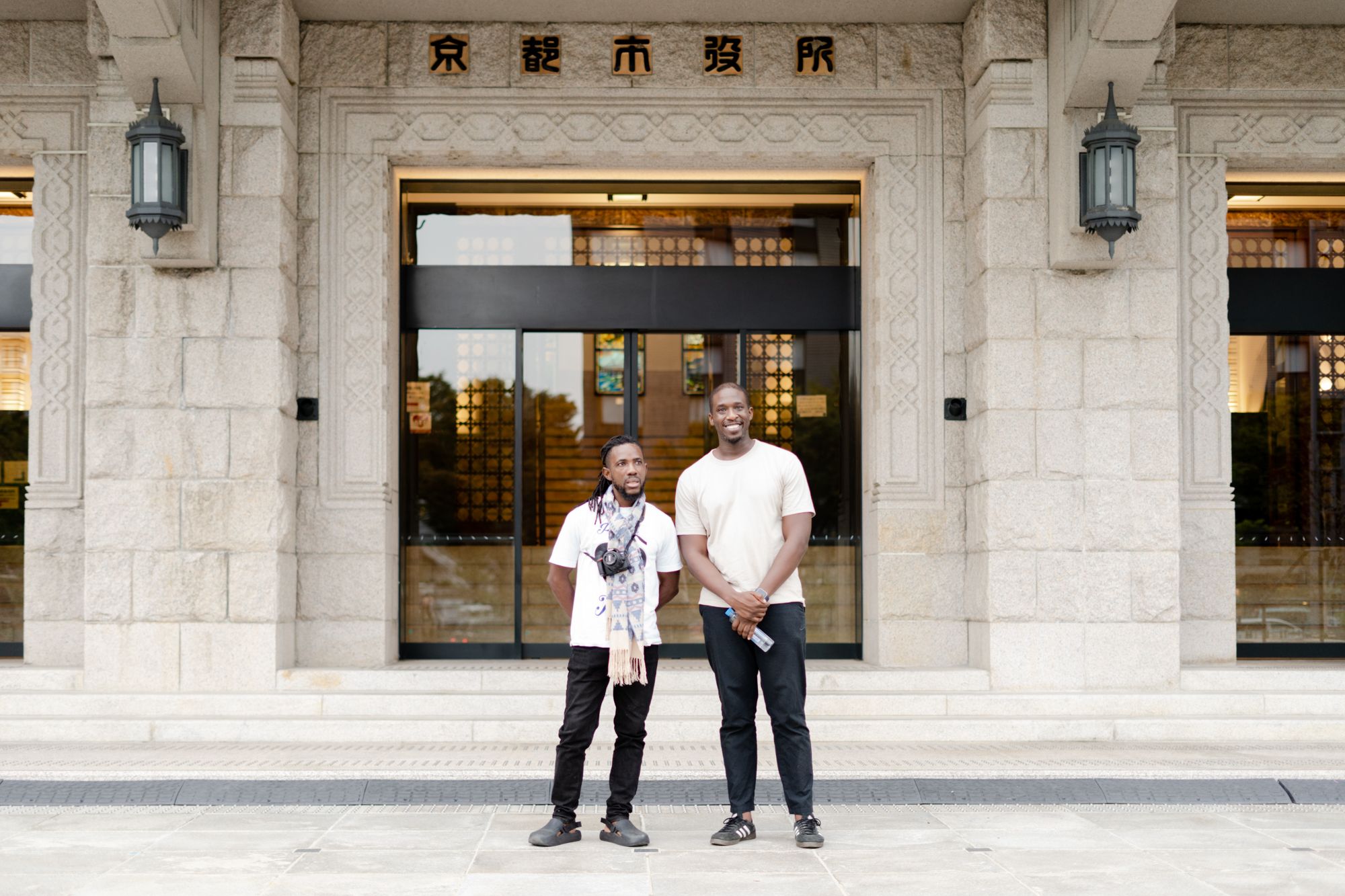
Youth Coordinator: Towa
How was your stay in Kyoto?
Sten Kadji (hereinafter referred to as the “Sten”)
It was simply amazing. It was my first time in Japan, and I learned so much about the culture and local community. It was a truly fulfilling month.
Towa
That's wonderful. Why did you decide to come to Kyoto?
Sten
Personally, both Jean David and I wanted to explore Japanese culture. Professionally, Jean David hadn't done shows or residencies in Asia and wanted to learn about the Japanese art market, while I wanted to connect with Japanese artists and galleries. That's about it.
Towa
So, when did your interest in Japanese culture begin?
Sten
Pretty much my whole life. From the food to all the manga I watched as a kid. I felt there were many similarities between Cameroonian / African culture and Japanese culture. These are distant places, yet they share many connections in daily life and history. Japan also has a history of colonialism and has been influenced by other countries, just like Cameroon. Since I was little, I've had a strong interest in Japanese culture. I was completely absorbed in everything, like “Captain Tsubasa” and “Dragon Ball Z”.
Towa
Kyoto is a city that has preserved a lot of that quintessential "Japan-ness," isn't it? Even within Kyoto, I think Umekoji has a particularly unique culture. What did you like most about the Umekoji area?
Sten
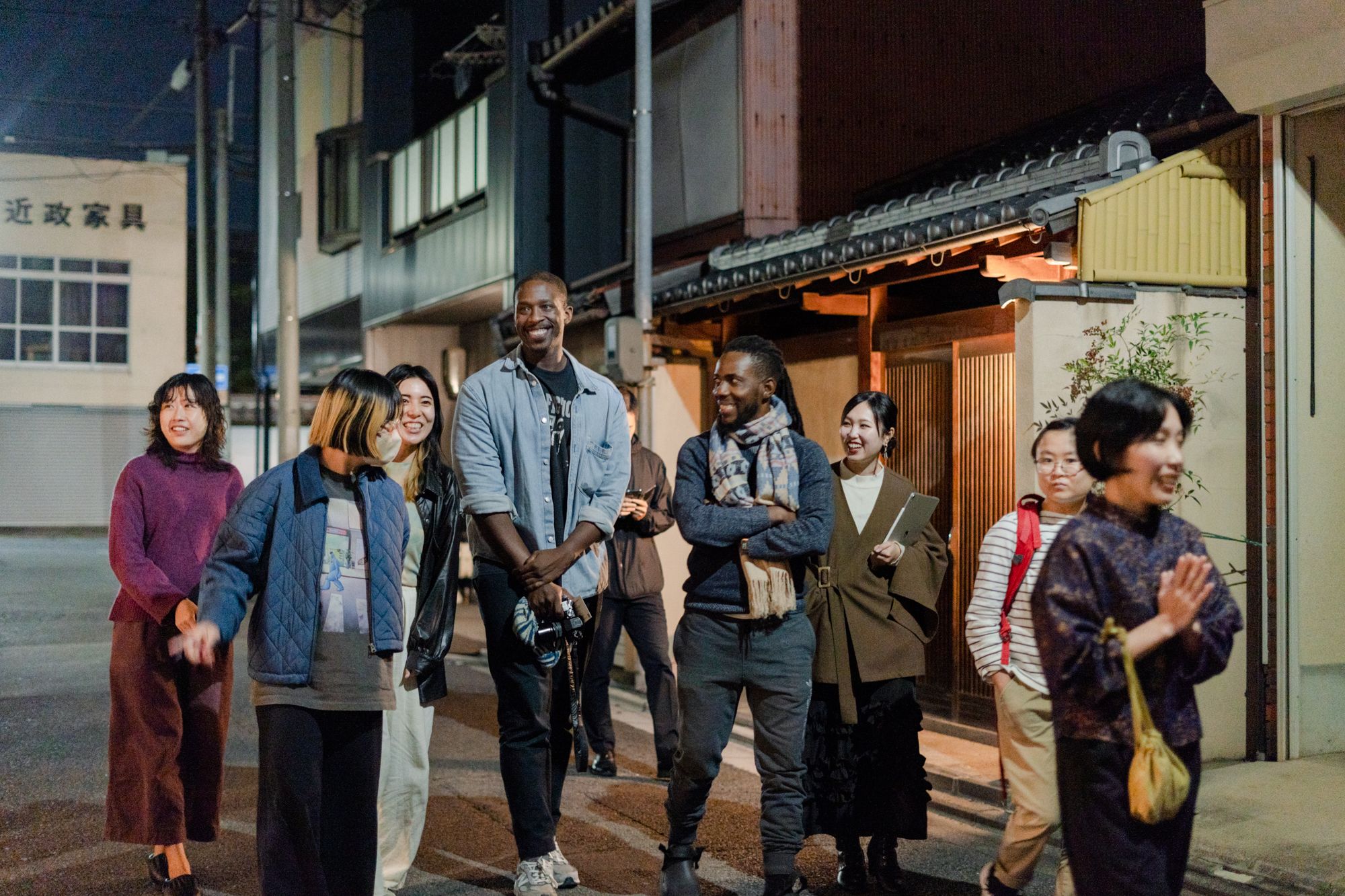
I felt Umekoji has a very strong community. Visiting the fish market was a lot of fun, and it seemed like many shop owners had been doing business here for years. Unlike the typical image of Kyoto, it wasn't overrun with tourists, and the strong sense of community was truly wonderful. I was also impressed by the people's sincere, and in a way, very traditional attitude.
Towa
What was your relationship like with the owner of the residence?
Sten
Now we're friends — very close friends, I'd say. He helped us in so many ways. For example, he showed us around the town and provided space for artists to create. We became personal friends, going beyond just him being the owner and creator of this program. We even met his family. Because he had been to Africa, he understood us deeply. It was a truly good relationship.
Towa
I heard you had wonderful encounters here, meeting people through Takayuki or through naturally forming connections. What kind of creators did you meet in Kyoto?
Sten
I met so many creators. What's wonderful about Kyoto is how traditional artisans and more contemporary, new creators blend together seamlessly. I met people using 3D printers, painters, sculptors, potters, and artists like Takeda-san who works with sound. Diverse creators using various media. Their work was often deeply connected to nature and their rooted relationship with the land.
Connecting Kyoto and Cameroon ー A Life Where Craftsmanship and Tradition Thrive
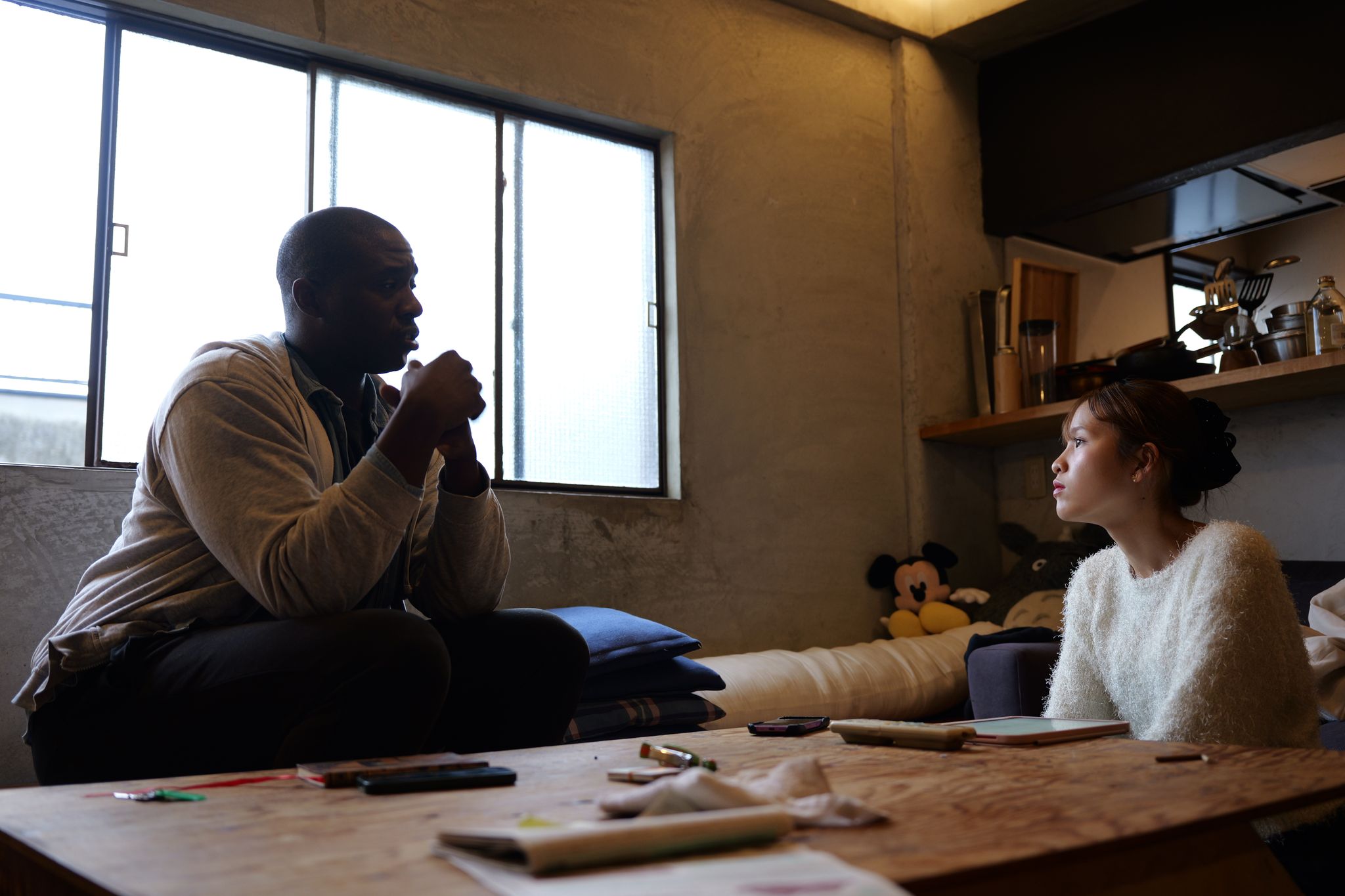
Towa
From your time in Kyoto, is there anything you'd like to bring back to Cameroon?
Sten
Kyoto gave me a huge motivation to focus on crafts, artisans, and materials. Cameroon has many textiles and diverse materials. Being surrounded by ceramics, textiles, and weaving in Kyoto made me strongly want to really focus on those artisans when I return to Cameroon.
Towa
I see. Going back a bit, you mentioned that the work of Kyoto's creators often reflects relationships rooted in the local area. It's widely said that compared to other regions, Kyoto has a strong influence of so-called "local ties" on people's relationships. Is there a similar atmosphere in Cameroon that connects people from all walks of life as part of a community?
Sten
Yes, Cameroon is also becoming a cultural hub where everyone can connect. Just like in Kyoto, I work with many architects, urban designers, urban developers, and classical artists like painters and sculptors. I want to establish a system in Cameroon similar to Kyoto's approach, where the city and various independent entities collaborate. Cameroon doesn't have as many resources as Kyoto, but I hope to make it happen in the future.
Towa
It's fascinating that these two distant regions share a commonality in the closeness of their communities.
Since I couldn't attend yesterday's exhibition, could you tell me about the cultural similarities and differences between Japan and Cameroon?
Sten
Actually, there are quite a few similarities. Yesterday, for example, we discussed animism, respect for ancestors, and the idea that ancestors are always with us. This is very important for my people, the Bamileke. The belief that nature and inanimate objects possess souls or life is also present in Cameroon.
So, we are also very collectivist. We prioritize community and group over the individual. Another commonality is that Cameroon also has many rituals, customs, and dances. And the concept of duality — that where there is life, there is death, and like male and female, everything exists in harmony to create balance.
This was also observed frequently in Kyoto. Western thinking tends to judge things as "good" or "bad," but returning to aspects like Japan's Shinto or those found in Cameroon, one can understand that everything exists within an imperfect equilibrium and balance.
During my stay, I also experienced Zazen meditation and had the opportunity to speak with a monk. He spoke extensively about Buddhism, and there were many shared perspectives there as well. It's the idea of combining two so-called "religions." In Cameroon, Christianity coexists with our traditional religion, and in Japan, I felt this coexistence was reflected in people visiting both temples and shrines.
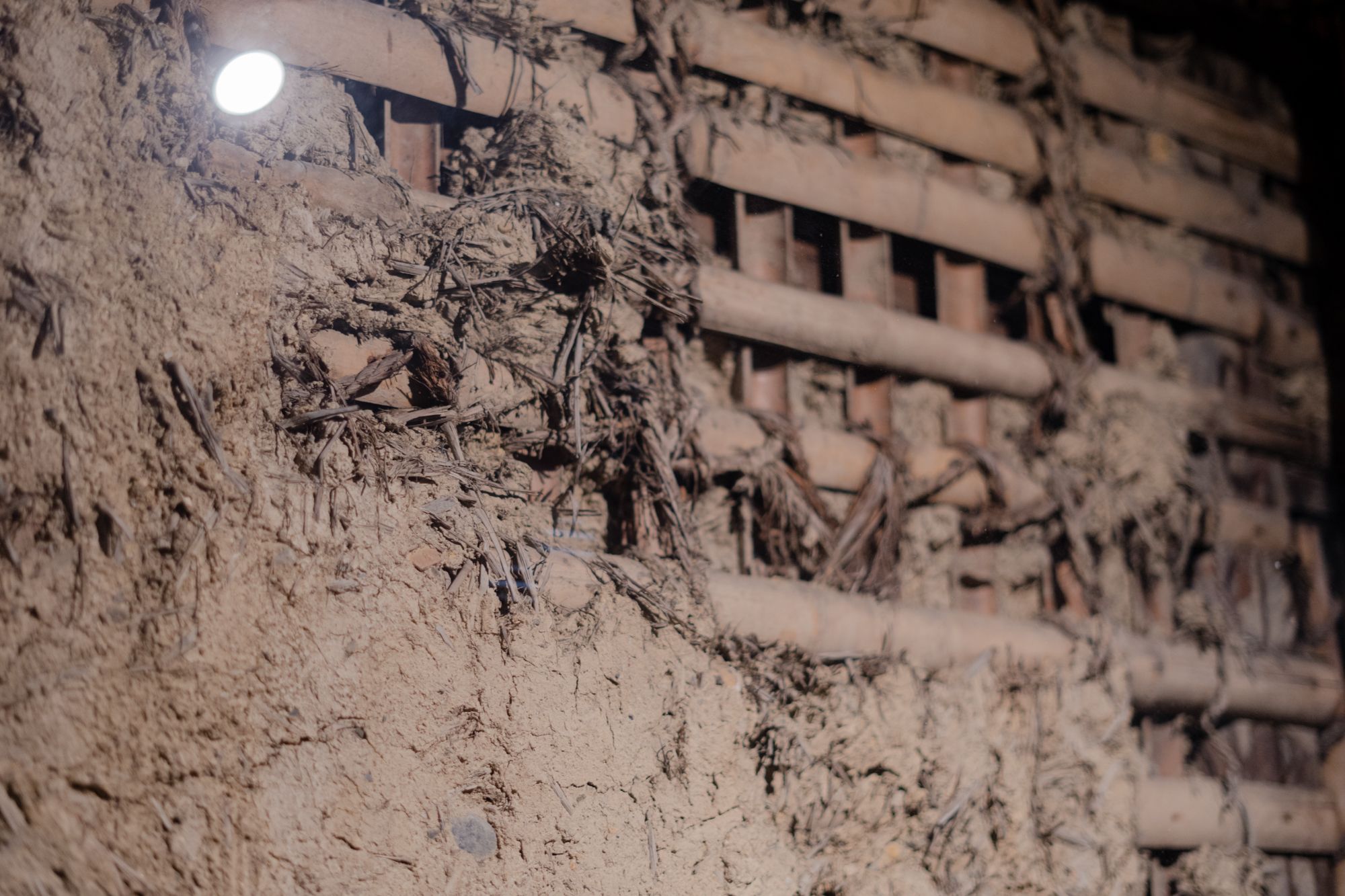
Furthermore, Cameroon also places great emphasis on crafts. There are artisans who work with readily available materials like wood, mud, and clay. I observed that craftsmanship is also very similar between Cameroon and Japan.
Towa
Not seeing things in binary terms. Not drawing a strict line between inside and outside. Perhaps it’s precisely because that mindset exists that the community here feels so rich.
What aspects of Kyoto were incorporated into Jean David’s works?
Sten
When he first arrived, he actually hadn’t decided what he would create. He only began producing work after staying here for about a week.
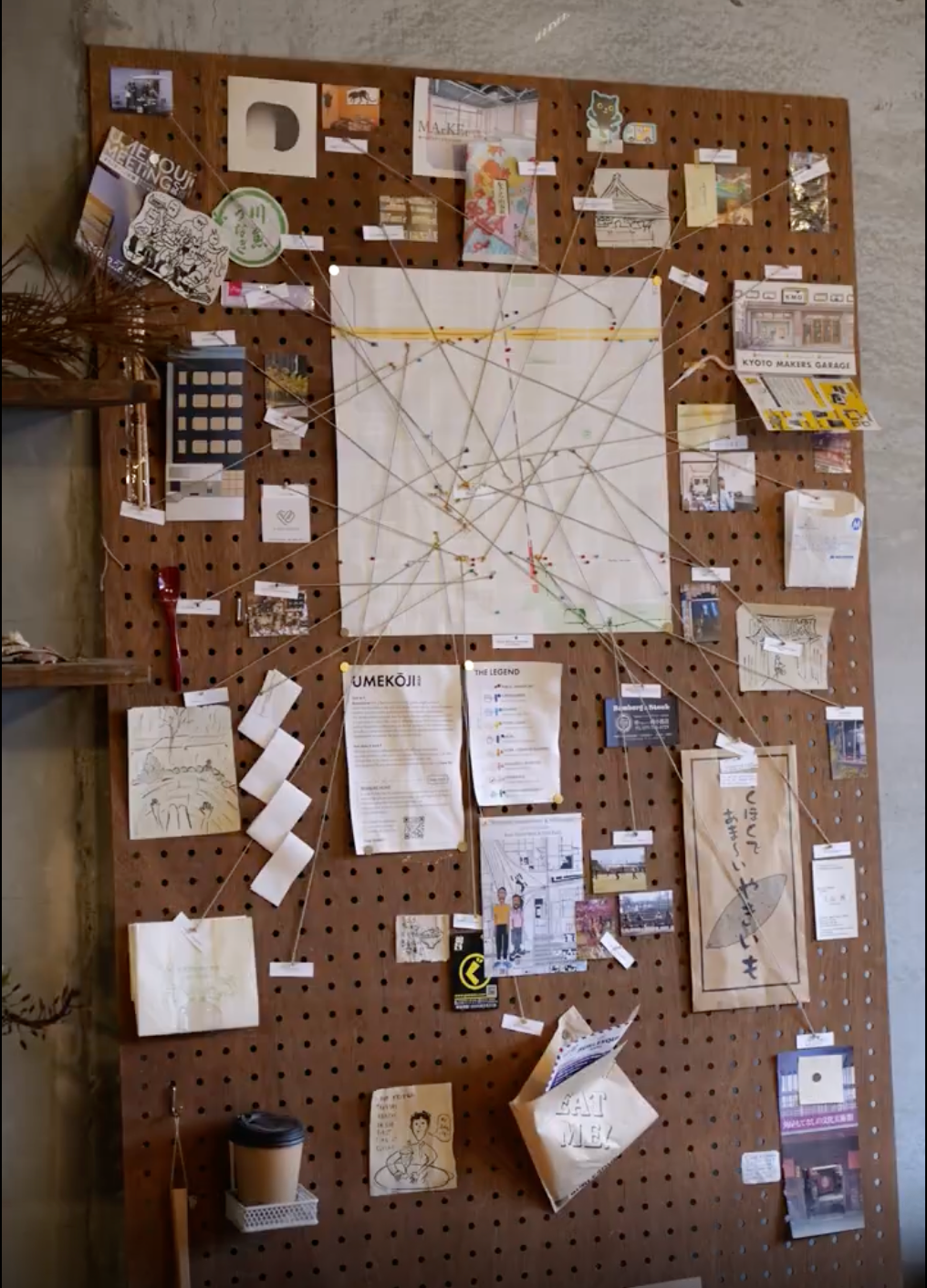
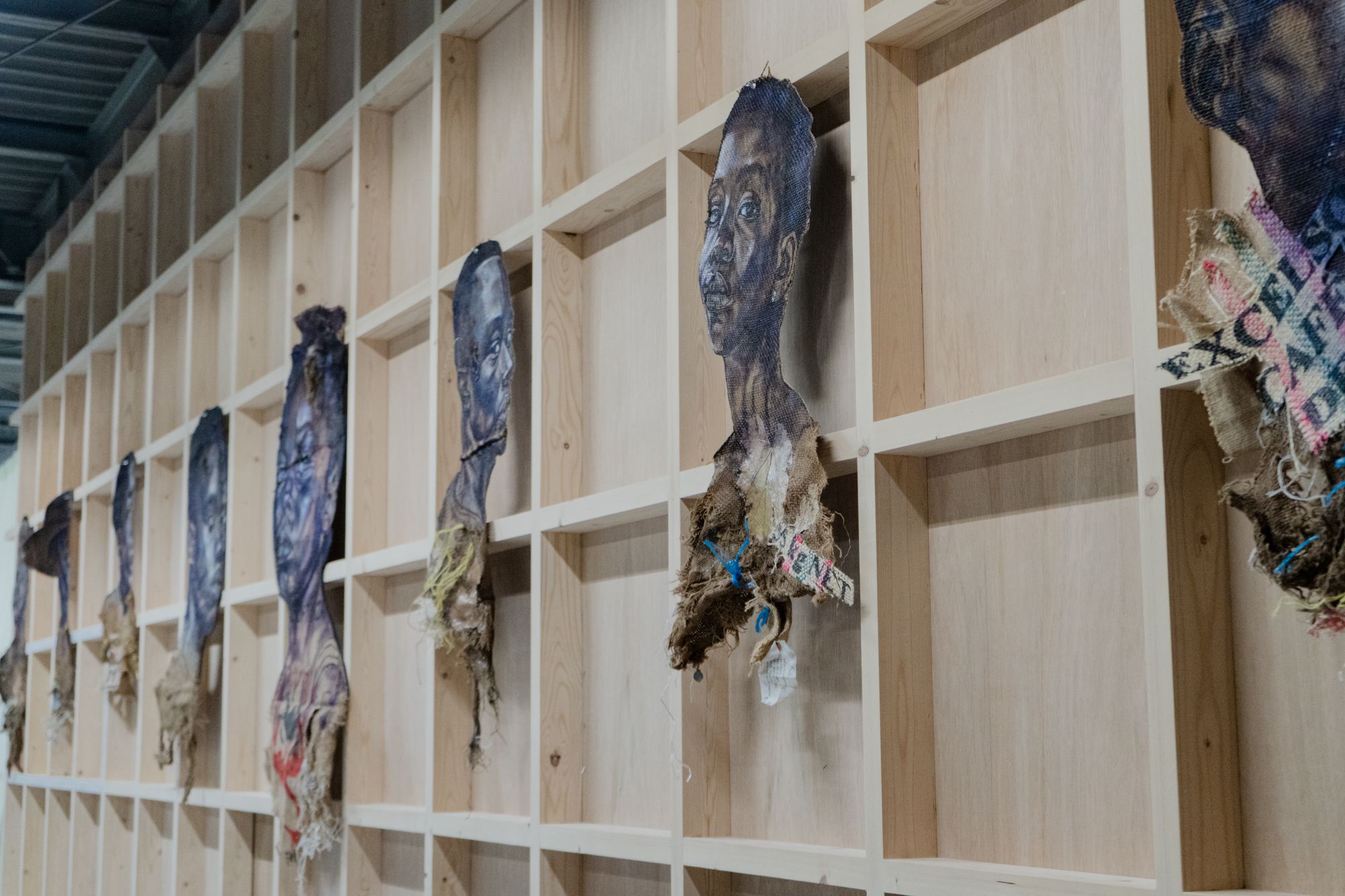
As for what aspects of Kyoto appear in his work, first of all, the coffee bean sacks he used came from a local coffee shop, Shiga Coffee. He became interested in Kyoto’s coffee culture. There are many coffee shops here, and their numbers continue to increase. He combined this emerging phenomenon, coffee, with his own artistic practice of working with raw materials such as cotton, cacao, and various minerals. Coffee is also a material he has only recently begun incorporating into his works. By using the phenomenon of coffee consumption expanding in Kyoto and around the world, he depicted the faces of coffee farmers from his homeland, expressing his own lived reality. He used local materials and produced the work here. He also engaged in patchwork and weaving, honoring traditions of craftsmanship. Through coffee bean sacks and the theme of coffee, he connected two worlds: Cameroon and Kyoto.
He also paid close attention to how people live and interact. Personally, I was struck by how generous African communities can be — how people open their doors to us and invite us to share meals at home. That’s common in Cameroon, though perhaps less so in Western contexts. So yes, he was deeply influenced by the people here, and by coffee itself as a product consumed in Kyoto.
Towa
You mentioned that he was influenced by the people here in Umekoji. Did you notice any changes in Jean David’s work or creative process after this residency?
Sten
He was asked that question after yesterday’s presentation. He said that this program would have a significant impact on him. Next year he will have a solo exhibition in Geneva, and I’m looking forward to seeing what he creates there. He will definitely be influenced. For example, we participated in a Kintsugi workshop. The idea of Kintsugi was something he had been researching for years, but actually working with his hands and seeing professional artisans at work had a profound impact — both artistically and personally. Please keep an eye on his future work. Kyoto will surely continue to shape it.
Towa
Did you feel that people in this area were open-minded?
Sten
Yes, absolutely. Everyone we met was very open. Because of the nature of residency programs, people who lend their homes tend to be open-minded to begin with — but it went beyond that. We even interacted with people from Kyoto City Hall, and everyone was wonderful. Since there are not many people from Cameroon here, people were very curious about us, which was a positive experience. Sharing our culture here was joyful and meaningful.
Towa
Compared to other parts of Japan, Kyoto has a feeling that you can enter communities without relying on titles or status. I felt that strongly after moving here from Tokyo this spring.
Sten
Yes, I agree. What I especially liked about Kyoto is exactly what you described; it feels deeply human. You can interact directly with shop owners and staff. It’s a very personal experience. Kyoto is a city where you can see each individual face. Jean David and I were both deeply moved by the fact that we could meet and connect with real people. Especially when working with a raw material like coffee, which carries a complex history, visiting many coffee shops, meeting people, and witnessing the process firsthand made it a much more human experience.
Towa
Is there a similar atmosphere in Cameroon — where people relate to you simply as a person, without titles?
Sten
Yes, absolutely. That’s why our experience here felt so smooth and sincere. There was a language barrier, but we were still able to connect easily. People in Cameroon are also very warm and welcoming, so in many ways, being here felt like being at home.
YC Notes | Towa
Through interacting with Jean David and Sten, I truly realized that language isn't the only tool we use to communicate. Since speaking isn't my strong suit, I mobilized every bit of body language and facial expressions to connect! Surprisingly, what I wanted to say got across!
The Best moment of the Stay! ー A Month of Experiencing Kyoto with All Five Senses
Towa
Please share three of the most memorable experiences from your stay.
Sten
There are so many! It's hard to pick just three, but definitely visiting Daishin-in Temple. I experienced Zazen meditation, tried the tea ceremony, and saw the Zen garden.
Fushimi Inari Taisha. We visited the large shrine perched on the mountain.
The food, definitely. Especially the mackerel sushi—it was truly delicious. I heard mackerel sushi is unique to Kyoto.
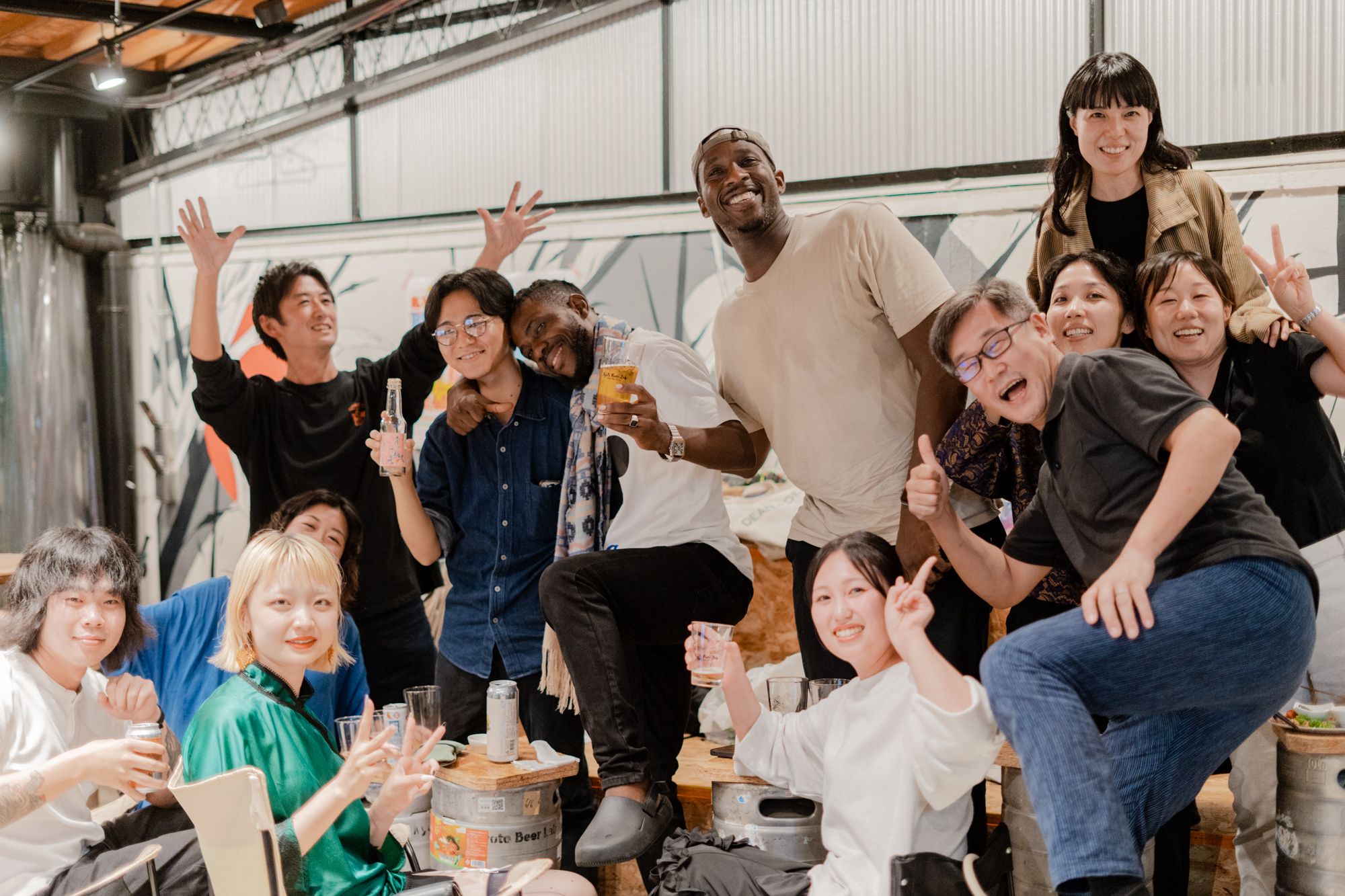
And as the best experience, I'd like to mention final presentation. Seeing everything come together perfectly and finish felt truly special. I was very happy to share knowledge about Cameroon with the people of Kyoto. It felt like it symbolized our entire month-long stay.
YC Notes | Hana
Sten expressed a strong interest in attending a Zen meditation session at the temple after the project. We did our best to arrange it, but unfortunately, it could not be realized due to the limited time available.
Towa
Did you feel the stay was too short?
Sten
Interestingly, I initially thought a month would be long. But looking back, it felt completely insufficient. While there are limits to what you can accomplish in a month, I think it's a good period for getting to know the city and its people, and for observation. Especially coming from Cameroon. The original plan was two weeks, but that would have felt too short. Over a month might sometimes become too much. So, a month felt just right.
Towa
Some artists say a month is too short for production. What do you think?
Sten
I think it depends on the artist. I came as a curator, so I didn't need to produce anything. But for artists, a month might be a bit short. That said, Jean-David, for example, produced 12 pieces, 12 faces, in one month. He spent a lot of time creating.
Towa
Do you have plans to visit Kyoto again? For tourism, or for a project like this one?
Sten
I want to engage with the artists. As a gallery owner, I want to build connections between artists in Kyoto and Cameroon. I also want to collaborate with local galleries to exhibit works by the artists I represent—whether they're local Kyoto artists or Cameroonian artists. I don't know when my next trip will be, but I'd be happy if it could happen in the near future. I hope to build some bridges and connections between Cameroon and Kyoto.
Towa
So you mean establishing a system like study abroad programs for young artists from Cameroon and Kyoto.
Sten
That's precisely the goal. On the professional side, I'm looking for galleries here interested in exhibiting his work. He's exhibited in many places worldwide—Europe, America, many parts of Africa—but this is his first experience in Asia, in Japan. So, for this program, we're approaching it with an open mindset, aiming to build connections both personally and professionally, and to deepen our research further.
We want to continue exploring further connections and similarities between African culture, particularly Cameroonian culture, and Japanese culture, or cultures surrounding Japan.
YC Notes | Towa
An exchange program for Cameroonian and Japanese creators sounds interesting!
What Makes a City Distinct? ー Reframing “Kyoto” Through an Outside Perspective
Towa
As I mentioned earlier, I'm originally from Tokyo. Living in both cities has taught me that each city has its own distinct character, its own color. While this is limited to just these two cities, I feel Tokyo and Kyoto each possess unique characteristics.
Sten
Absolutely. These are two major Japanese cities, and even after just a day or two in Tokyo, we could already sense the difference. Tokyo has a more typical big-city vibe—people move at a faster pace, focused on getting things done. Kyoto, on the other hand, blends tradition and modernity. Of course, places like Osaka are different too, but I'm really glad our first experience was in Kyoto. It just felt more aligned with my own sensibilities.
I wouldn't call it culture shock, but the way people function was fascinating. Kyoto people are very calm, conservative, and traditional. Yet we also saw another side of them—people who are sociable, very open-minded, and not afraid to step outside their comfort zones. I think that leads to growth. If this approach continues, the city and its community will learn and grow a lot.
Towa
You mentioned a certain duality. Did your image of Kyoto change during your stay?
Sten
Yes. Well, no, I could also say no. Because we came here with no expectations. We had no idea what would happen; it was a big adventure. We knew Mariko (Bridge Studio) personally, so we trusted her and came with a completely open mind. But through our stay, our connection to the city grew stronger. We witnessed how people are striving to preserve tradition while also projecting themselves toward a globalizing future.
In the Umekoji district, we saw many hardworking people, and individuals who are fighting to protect a specific way of being in this city.
From our share house mates to the professionals we met, everyone was incredibly warm and open-minded. It was truly a great experience.
Support Staff: Masahiko
Perhaps the warmth shared by communities in Kyoto and Cameroon made this residency, filled with so many encounters, possible. I’d like to ask about daily life in Cameroon. In what ways is it similar to Kyoto, and in what ways is it different?
Sten
Douala is very urban, a large city. So, at times it might feel similar to Tokyo. Everyone is busy, going about their daily lives. That said, I think everyday life is quite simple. The city isn’t overwhelmingly large, and it’s laid out in a grid, which may resemble Kyoto in some ways. It doesn’t take very long to get from one end of the city to the other—depending on traffic, of course.
As for me, I work an office job from 8 a.m. to 5 p.m. at my family’s company, a brewery. Do you know K-Bier? My family produces beer. I drank quite a lot of K-Bier yesterday.
There is a strong sense of community and a strong sense of family. My siblings all live there, and we meet regularly. Whenever possible, we leave the city to travel. The beach is about an hour away by car. Of course, there are fewer bicycles than in Kyoto (laughs).
But overall, daily life is very relaxed. There isn’t too much pressure. There are great restaurants, delicious food, and a lot of culture. So there is always plenty to do in Douala. I’ll send you some photos—I’d love to share what our daily life looks like. Jean David has also just opened a new studio, so he will be producing a lot of work there.
Daily life is full of connection—gatherings, moments of community—and also the usual bustle: work, exchanges, business. Douala is the economic center, so there’s a lot of business activity. Business and casual everyday life blend together. In that sense, it might resemble Umekoji in some way.
Relationship with Residence Owner ー Creator and Owner Working Together Through Trial and Error
Towa
May I ask about the residence owner, Takayuki?
Sten
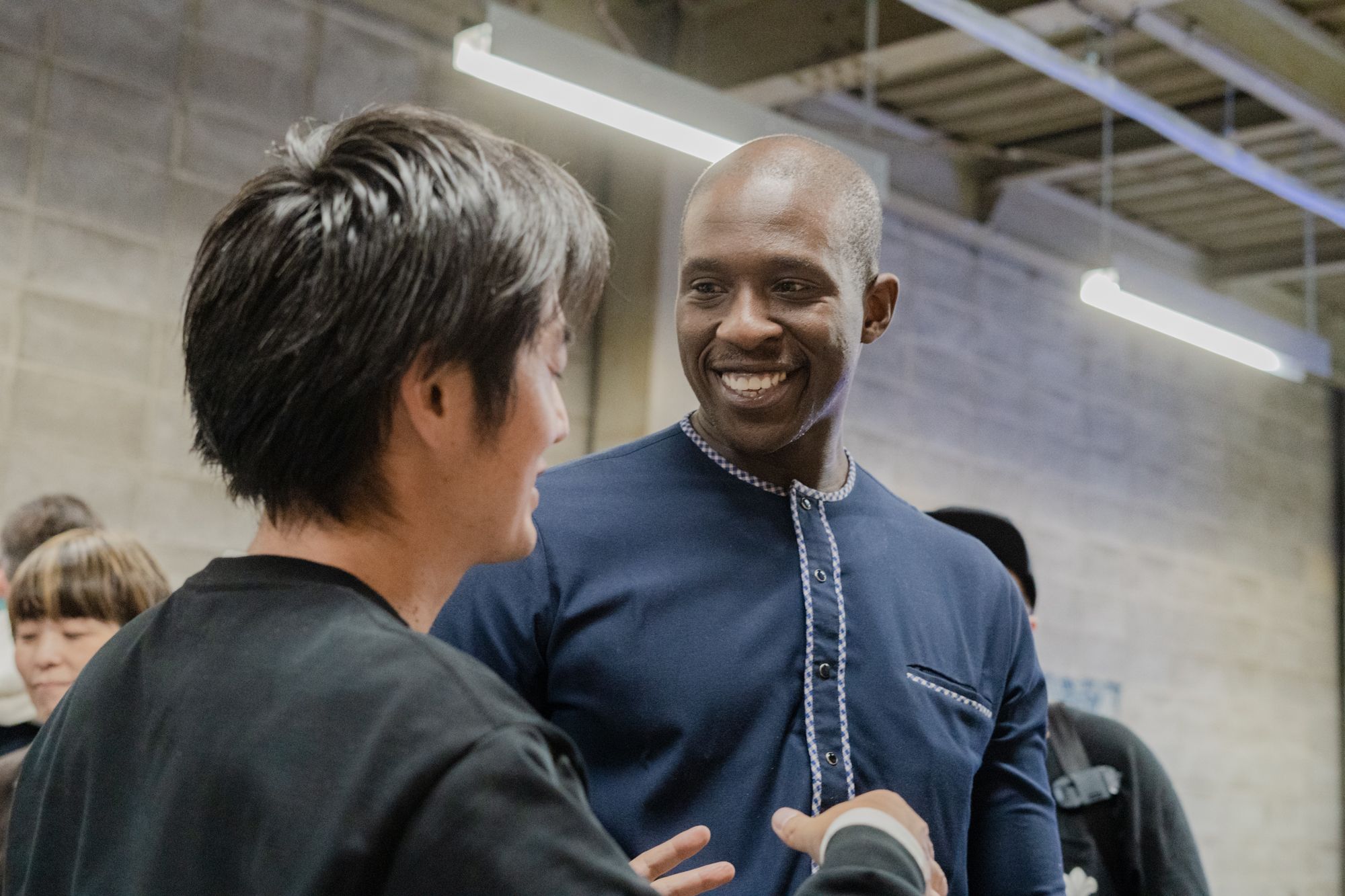
Absolutely! He's an amazing person. He's full of energy and represents the kind of people I'd recommend to anyone joining this project going forward. I think this is only his second or third time being an owner, but even without knowing everything, he understood this was an adventure and tackled it with conviction.
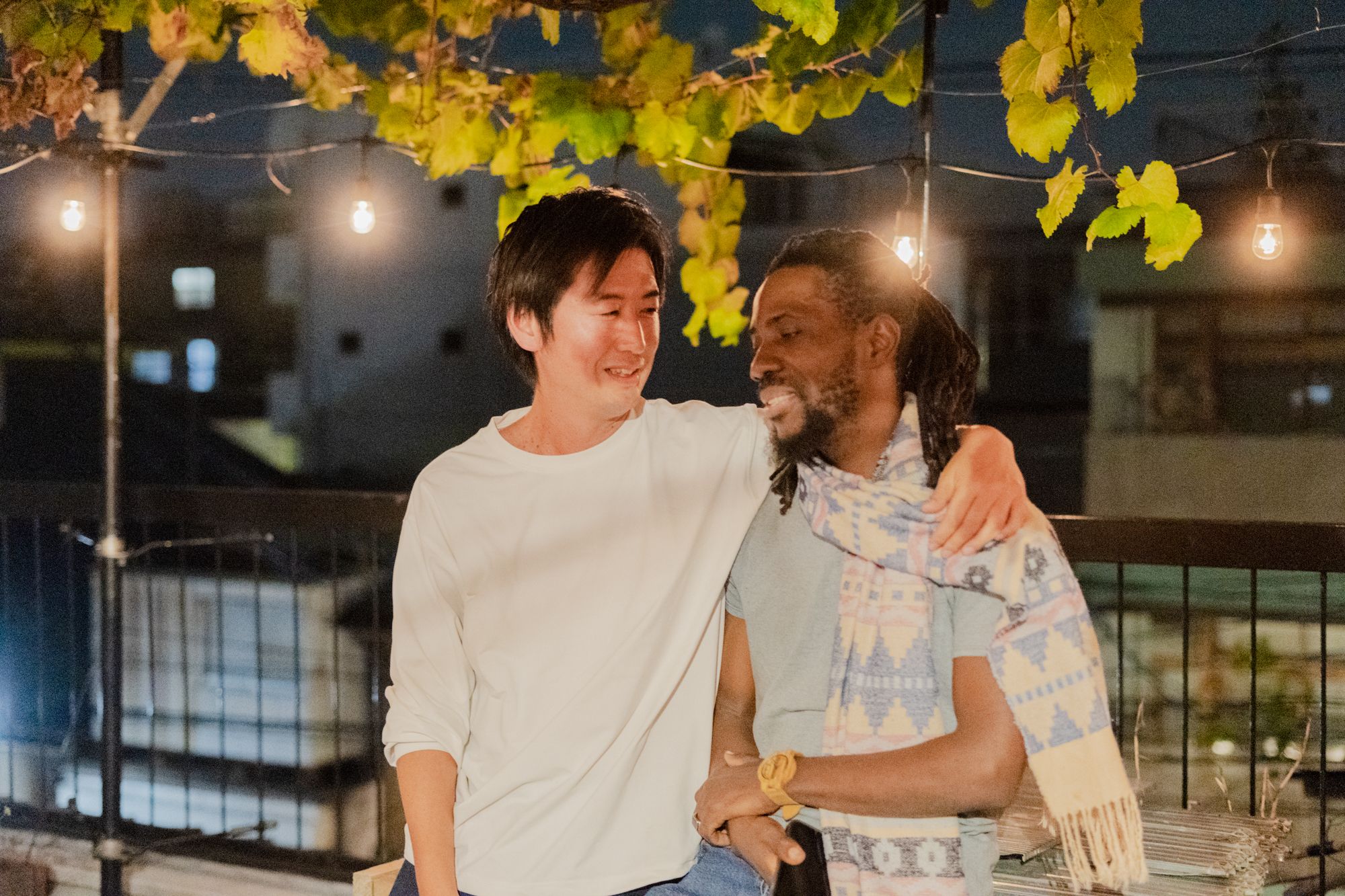
Again, we became friends. We had many personal conversations, opening up as people, sharing very intimate moments unrelated to art or work. He's fantastic. He's incredibly witty, knows many people in Kyoto, and connects that network to creators. And he's purely curious. He drew no boundaries between himself and his guests. He was open-minded and took us to all sorts of places.
He discovered new places with us too. Even though he's from Kyoto, we went to the Kawai Kanjiro Memorial Museum, a place he'd never been. Since it was his first time there too, we could compare his experience as a local Kyoto resident with ours as visitors. It was a very human connection. I'm happy to now call him a friend.
Support Staff: Masahiko
He always said, "It's okay, it's okay," didn't he?
Sten
Yeah. After a day or two, he was completely at ease.
Once again, I'm grateful for this opportunity. It was truly wonderful. Without the people we connected with in Kyoto, our experience there wouldn't have been nearly as amazing. I'm also thankful for inviting people from Cameroon, or the African continent. Not everyone is this open and relaxed, but we felt like fish in water. It was very peaceful, a truly wonderful stay.
Interview with Residence Owner — Takayuki Minakuchi
“I’m glad the residence owner was Taka” ー A Friendship beyond the Residency
Towa
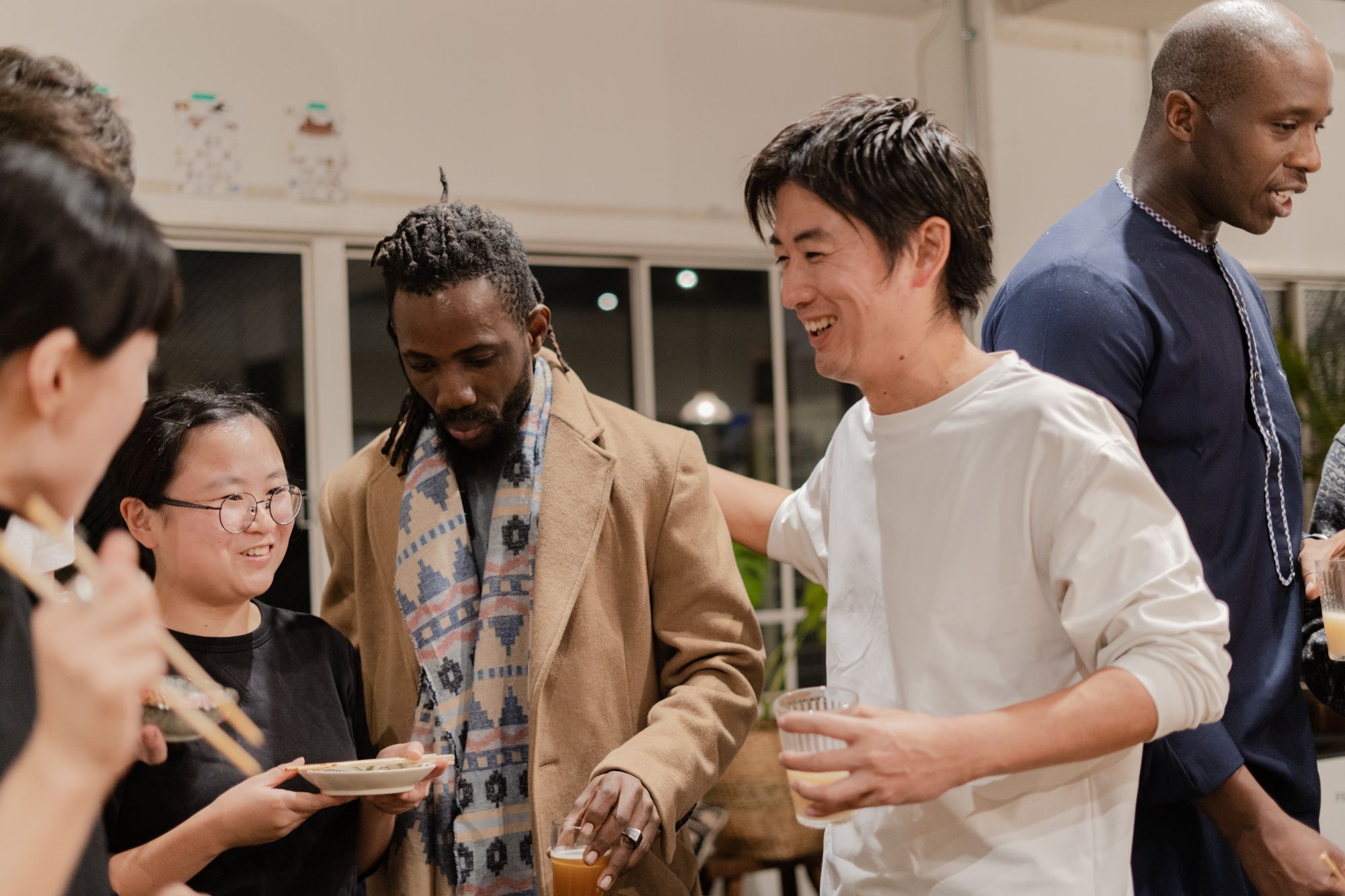
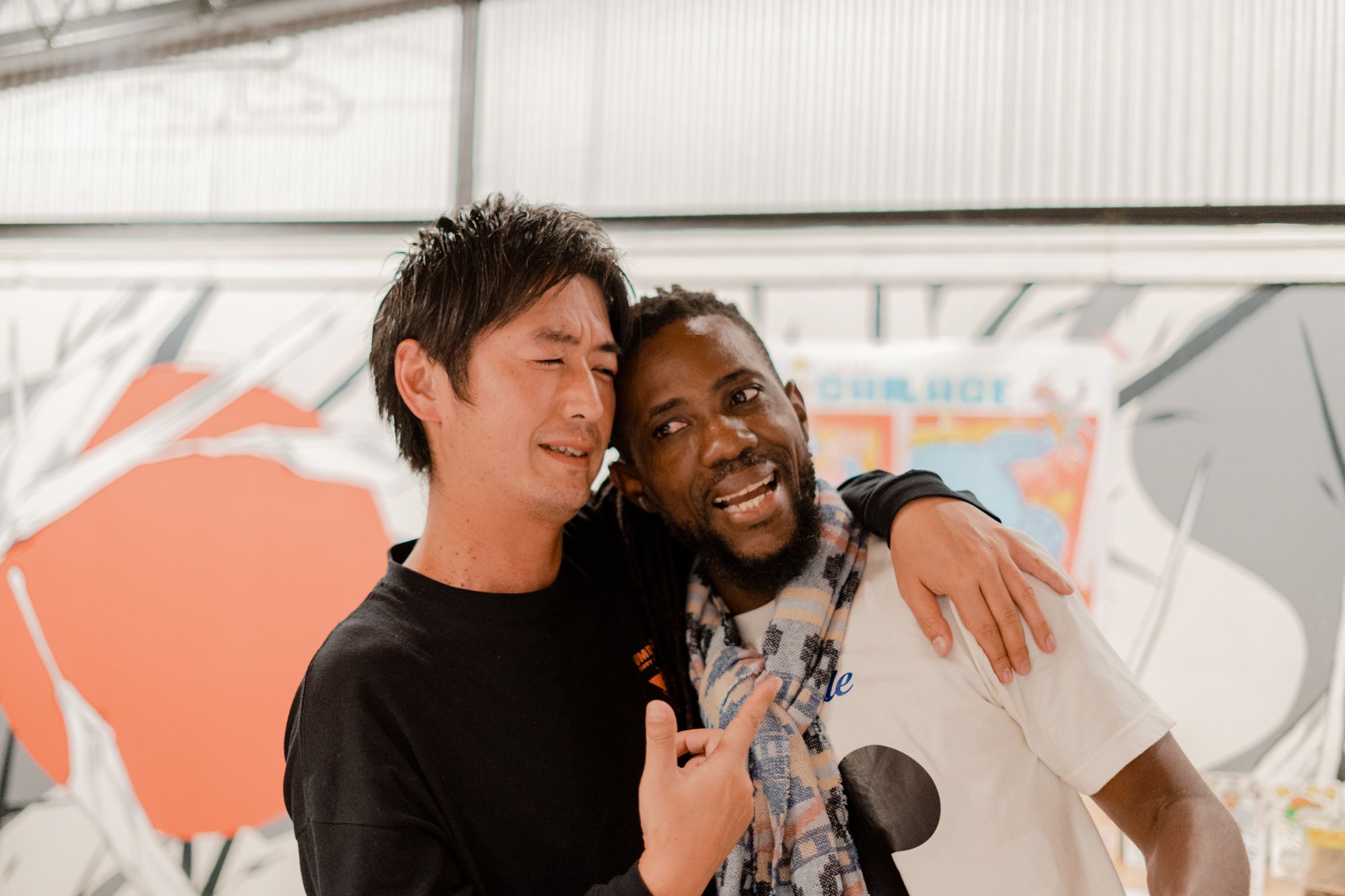
I also interviewed Sten, and he repeatedly said he was glad you were the residence owner. He told me "He's my best friend!"
Takayuki Minakuchi(hereinafter referred to as the “Takayuki”)
That's true. We still chat on WhatsApp.
Towa
What kind of things do you chat about?
Takayuki
"I miss you"—that's pretty much all we talk about (laugh).
Towa
It's really wonderful that your relationship continues even after being apart.
A New Form of Art × Real Estate ー Residency Program as the First Try
Towa
What made you decide to take on the role of residence owner this time?
Takayuki
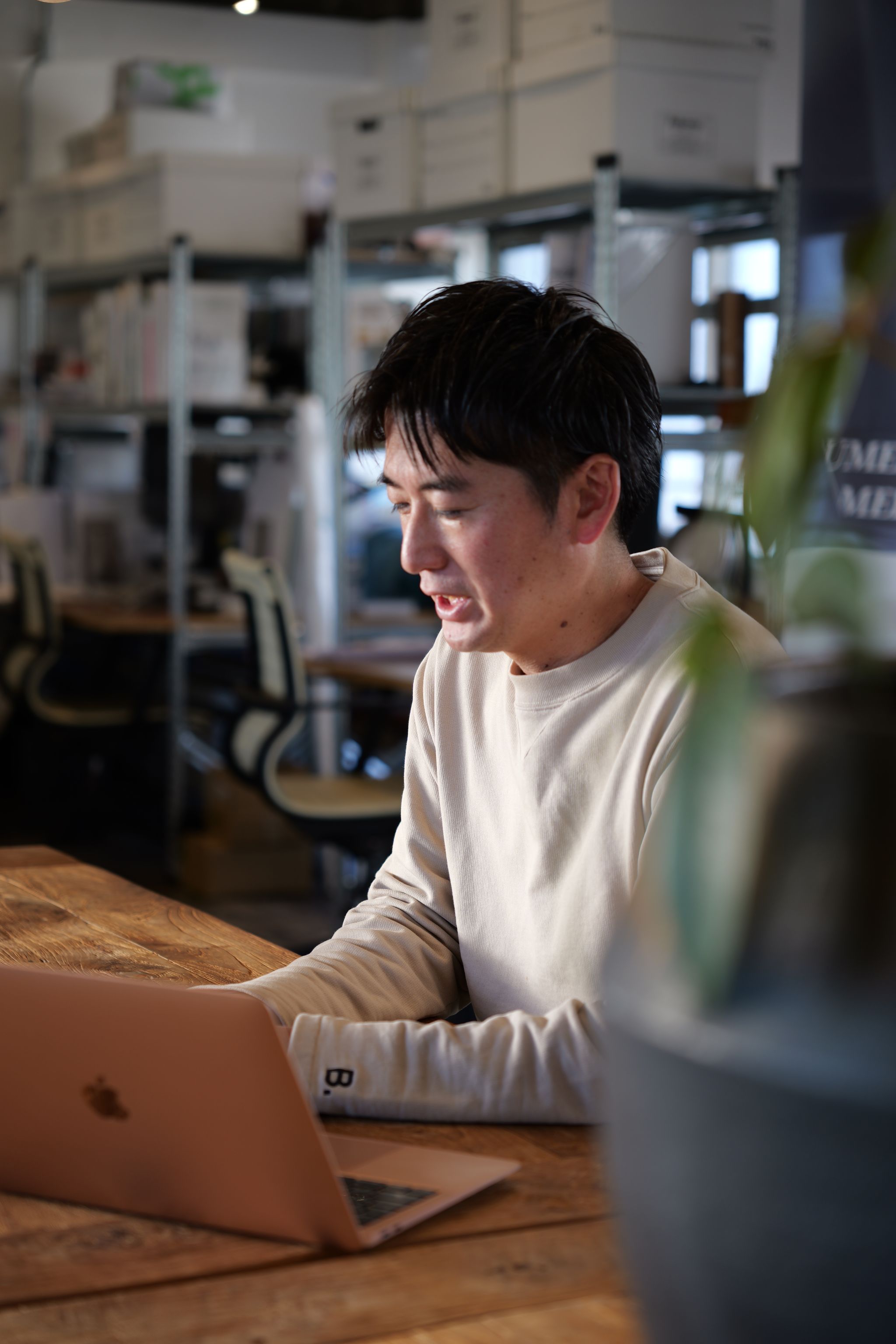
I already knew about the artist in residence model. I also run an art hotel, so I understood the idea of artists staying somewhere and creating work during their stay. But I didn’t really know how to go about organizing something like that myself. I was interested, but I couldn’t quite take the step. Then I attended the information session for *** in Residence Kyoto. I happened to know Mariko Sugita (Bridge Studio), so we talked, and I thought, “I’ve never done this before—maybe I’ll give it a try.” That’s more or less how it started.
Towa
Did you already have some kind of connection to the art world?
Takayuki
I’ve hosted art exhibitions at the hotel. Through that, I started communicating with artists and found it interesting. That said, this time it was really more a matter of circumstance.
This was a new challenge—a way to test that possibility.
For us, we thought that accepting artists could be one possible way of using the space. But starting something like that on our own from scratch would have been difficult. So participating in this program gave us a foothold.
Finding the Balance ー How Do We Design the Framework of a Residency?
Towa
You mentioned that you’re still unsure whether you want to continue running a residency. What exactly are you struggling with?
Takayuki
If you want to continue something long-term, you have to maintain balance. First of all, there’s financial balance. But when you talk about balance, it’s not just about money. There’s also motivation, scheduling, and many other aspects that need to be balanced.
Right now, I’m reflecting on whether I can realistically maintain that balance going forward.
Towa
I see. From the perspective of motivation, did hosting Jean David and Sten increase your desire to continue?
Takayuki
Of course it did. Communicating with people from overseas is enjoyable. There are new discoveries. It enriches your life. In that sense, it’s wonderful.
Towa
Yes, figuring out the financial structure of a project like this is definitely challenging.
Takayuki
There are so many different models for artist residencies. In some cases, the owner simply provides the space and says, “You cover all your own expenses.” In other cases—like this time—the host provides a certain level of production support. So when it comes to financial responsibility, there isn’t a single answer. There’s no fixed format. All of these models can be called “artist residencies.” So the question becomes: how would we want to do it in our case?
Towa
So this time you used the framework of *** in Residence Kyoto to try implementing an artist residencies once, and from here on, within the broader concept of artist residency, you’ll explore what format best suits your own project.
Takayuki
Exactly. For artists, the reasons for doing a residency are fairly clear. It becomes experience, their career and they can integrate what they learn in a new country into their work.
Some artists pay their own way. Some receive funding from their country. Some are paid by the host. In each case, a certain balance is achieved. But when it comes to why an owner would do it—and how that balance works—that’s less obvious. For example, with my art hotel, there’s PR value. There’s the idea that this kind of lifestyle feels meaningful or fulfilling.
There’s also the possibility of profit. It’s a balance that’s hard to quantify, and I think everyone is combining those invisible elements in their own way. This time, I decided to set profitability aside completely and provide thorough care and support. And precisely because I did that, I realized that if I continued at that level, it wouldn’t be sustainable.
Towa
I interviewed Sten earlier, and he mentioned that you offered full support—that you told them they could ask for anything, and that it made them feel secure throughout the stay. Hearing you now, it really sounds like it was an extraordinary level of support.
Takayuki
You don’t know where to draw the line until you try it. So for this first time, I decided to go all in. That was a conscious choice.
When Residency Meets Community ー A Close Relationship Between the Umekoji Area and the Creator
Towa
I'd like to hear about specific episodes or how Jean David and Sten's stay influenced this area. Also, I'd like to hear if any changes happened for Mr. Minakuchi.
Takayuki
A few years ago, I set up my office in this area. And there's this vibe here that's kind of casual, which I really like. People who enjoy this atmosphere started gathering here more and more.
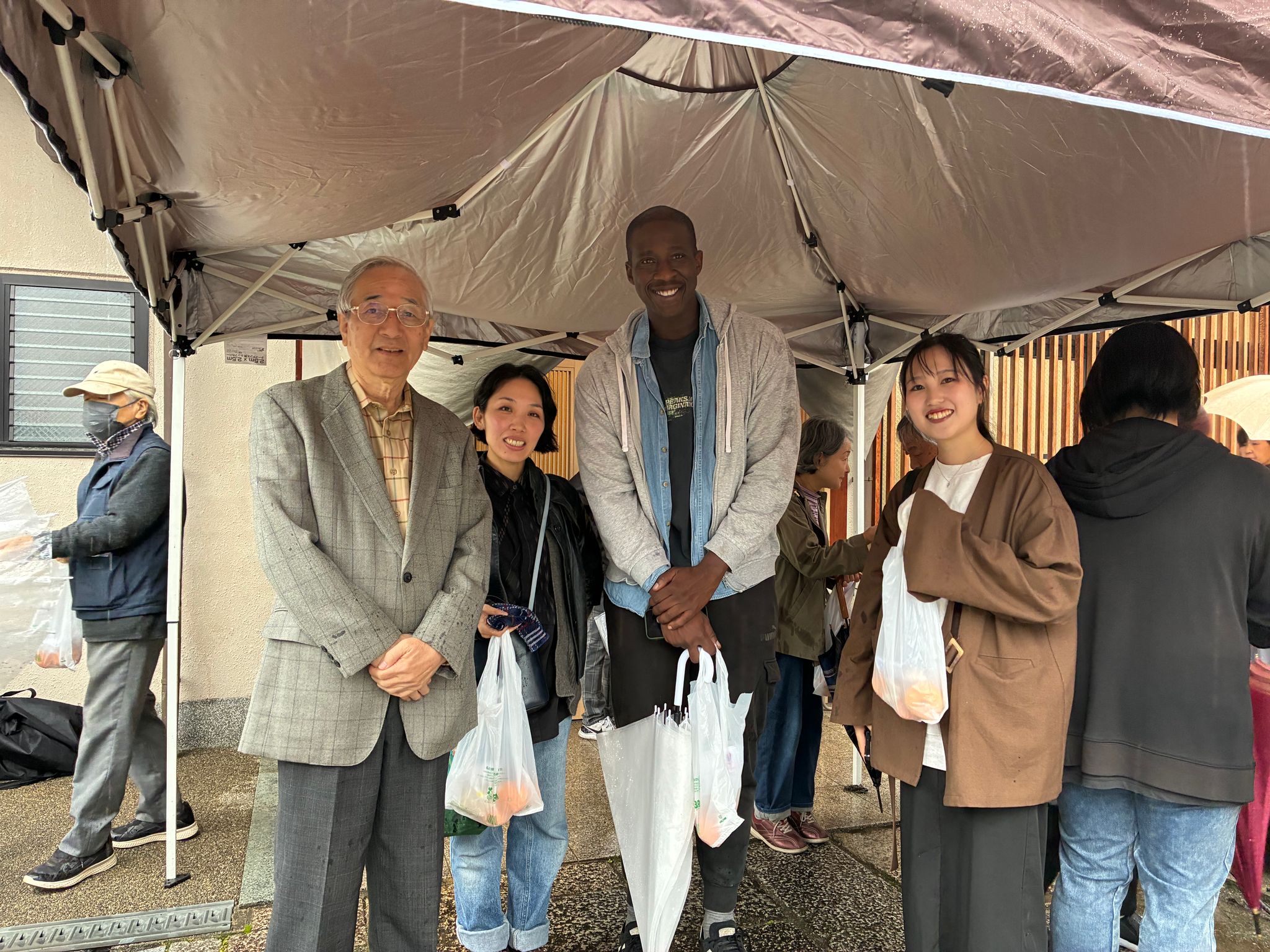
The locals here are really tolerant of others. There wasn't any negative reaction at all. What made me happy was when they said in their final presentation that they didn't feel like outsiders.
Masahiko
On the way back from the Ohitaki Festival, they said they'd head back first since the day before had been tough, so we split up. But then, even on the roadside, they got mobbed by townspeople saying, "We'll miss you!" and ended up having their picture taken with about ten people.
Takayuki
People in this area don't speak much English, but they were consistently welcoming.
Masahiko
Seeing that, I almost started crying.
Takayuki
I feel like it was a good chance to take on the challenge of inviting overseas creators to help realize my vision of making this area more interesting.
Towa
You played a significant role in helping Sten and Jean David integrate into the Umekoji area, right? In that case, did you decide beforehand where to introduce them? Or was that also pretty much left to chance?
Takayuki
I introduced them to people I'm close with.
Towa
Ah, I see. So it was just a matter of naturally introducing people when acquaintances came by, regardless of whether they were foreign or Japanese. Then relationships just naturally formed on their own, I suppose?
Takayuki
Once they realize, that the creators are staying at my place, it become easy to have friends. If they went with me the first time, they'll be fine going alone next time. I went to the public bath first, but after that, they started going on their own.
Making Umekoji More Interesting! ー A Residency That Came Together Like Pieces of a Puzzle
Towa
You mentioned earlier that making Umekoji more interesting was one of your motivations—and that bringing in people from overseas could make it even more interesting. I’d love to hear why you started thinking that way, and what kind of “interesting” you imagined might emerge.
Takayuki
To begin with, I’m not really a conservative person. I enjoy traveling abroad, and I find it exciting to encounter different people and cultures. Kyoto, on the other hand, I feel like it tends to be more conservative in many areas. That was something I didn’t like. I wanted to be somewhere more relaxed—somewhere you don’t have to be so tense. That’s partly why I chose this area. And when I actually came here, it really was that kind of place.
The guys at the market, they welcome anyone. As I thought about expanding this kind of openness, interesting people naturally started gathering. And I thought, if we add people from overseas into that mix, it would become even more interesting. But when people just visit as tourists, we don’t really build deep relationships. So I figured, if they’re going to come, it would be much more meaningful for them to stay longer.
Towa
What countries have you visited?
Takayuki
Quite a few. This year, I went to Africa with a friend who lives nearby.
Towa
Did that experience influence your decision to host artists from Africa?
Takayuki
I think that was part of why Mariko(Bridge Studio) thought they could stay here. A lot of puzzle pieces fit together.
Towa
Hearing you talk, it really does seem like many puzzle pieces aligned to make Jean David and Sten’s stay happen.
Takayuki
I have a Japanese friend who lives in France and knows a lot about art. I told him, “We’re going to start an artist residency.”
When I explained that it is organized by Kyoto City , he was surprised. From his perspective, artist residencies are usually more spontaneous—something that just starts organically and ends organically.
It’s rare, he said, to see administrative backing like that. The starting point is completely different. Originally, residencies are something natural. But now, from the government’s perspective, they’re connected to things like addressing vacant houses and preserving Kyoto’s cultural vitality. Also, Japan doesn’t really have this kind of culture. Without a system like this, very few people would take the first step. So in that sense, maybe this kind of framework is necessary at the beginning.
Towa
So it’s like creating a system that eventually allows it to become more organic?
Takayuki
Exactly. In Europe and the U.S., society is very open. It’s normal for people to stay at your house or to host parties.
But Japan isn’t like that. There’s only few culture of welcoming strangers into your home.
Towa
It’s difficult. Bringing artist residencies into Japanese culture is already challenging—and then trying to monetize it makes it even more complicated. Listening to you today, it really feels complex.
It’s difficult. Bringing artist residencies into Japanese culture is already challenging—and then trying to monetize it makes it even more complicated. Listening to you today, it really feels complex.
Takayuki
Yes. You don’t understand that kind of relaxed distance—the right sense of space—until you actually try it.
But now I feel like I understand it. And just understanding that makes it worthwhile to have done it once.
Towa
Even if it’s casual, without interaction between the owner and the creator, you wouldn’t get any real synergy between the two.
Takayuki
I hope different forms can emerge. For example, I think it could work to have one room in a share house reserved for that purpose. Imagine an apartment building with eight units, all functioning as a share house, and keeping one room open for an artist.
The Dilemmas of Creator and Owner ー The Difficulty of Choosing What to Prioritize in a Residency
Takayuki
Since I'm involved in real estate and construction, I think I can explore new avenues through that. Right now, I'm looking at various properties and stuff. Like, maybe I should just make a share house for foreigners, or something.
Masahiko
It'd be fun if we could do it in Umekoji.
Takayuki
I we could do it here, that would be the best.
Tow
Sten mentioned that a non-touristy spot would be ideal. Jean could really focus on her creative work there.
Takayuki
This area feels more like staying in the neighborhood itself rather than just the property. It really had that distinct neighborhood vibe.
Towa
That's quite distinctive, isn't it?
Takayuki
Well, that's what we wanted. And I think it turned out well.
Towa
It really felt like relationships were forming within the share house itself. On the final day, we did Sten's interview at the share house, and someone living there mentioned they were having an oden party since it was the last day. Seeing those connections develop within the share house, I just thought it was really wonderful.
The Best moment of the Stay! ー Dialogue, Understanding, and Shared Backgrounds
Towa
The last thing I ask everyone is their top 3 Best Moments of their stay. I know this question always stumps people... But I'd love to hear anything that left a lasting impression, not just specific moments.
Takayuki
Top three. Hmm... Going to the public bath. The bath was great. They said the bath was their absolute favorite part. They said it was the highlight of the trip.
What else? My case this time was pretty unique, right? Both the curator and the artist came. Understanding that dynamic might have influenced things. So, maybe it was experiencing their relationship. For example, Jean gets inspired and enters this zone sometimes. Sten, being the mediator, really respects Jean while talking with us—I think I understood that well.
The third thing was definitely when I asked about the local country. Cameroon is a poor country with a deadlocked political situation and not much freedom of expression, but I heard about why they're creating art there.Many Cameroonians who go abroad don't return because they can earn more money overseas. On the other hand, David talked about building structures to provide proper art education locally, the history of colonization, and other topics we discussed over drinks. Those conversations, hearing about the culture, were really valuable.
Towa
The relationship that developed because Mr. Mizuguchi accompanied him so meticulously and stayed with him the whole time is really significant, right?
Takayuki
Yeah, going to places like Kiyomizu-dera Temple, talking while we were out.
We also went to the Kawai Kanjiro Museum. I understood what kinds of places he might be interested in, and taking him to places that matched that made him really happy.
The Future of Stay Support: Finding a Balance While Continuing to Build Relationships
Takayuki
I just got an inquiry email asking if we're actually running the residency. It's from an American living in Korea, and I'm debating whether to accept them. I'm thinking of sorting out the conditions now.
The tricky part is the distance between the owner and the creator. This is difficult because the more you care, the higher their satisfaction level becomes, right? So, making them happy is easy.
However, doing those risks upsetting your own balance. When considering that balance, I think a crucial point for the asterisk in residence project is how people who haven't done it yet feel about trying it in the future.
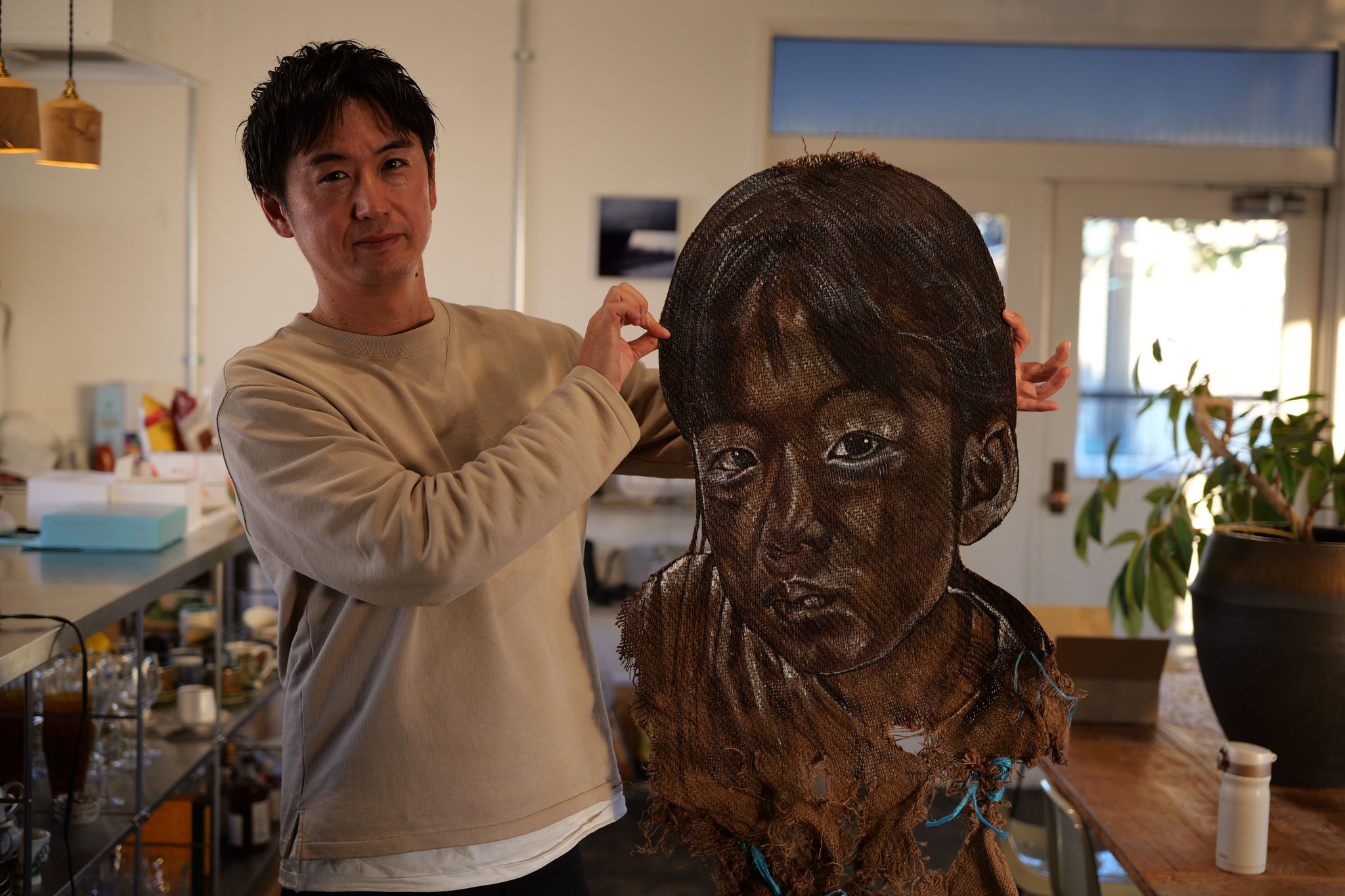
The satisfaction expressed by creators and residence owners after their stays, and their outlook for the future. Listening to their stories and transcribing them revealed the need for a flexible system design within asterisk in residence and the depth of Kyoto's cultural soil that allows for such flexibility.
The traces of cultural intersections born through the residency program remain in the community even after the creators depart, gradually blending into the local fabric.