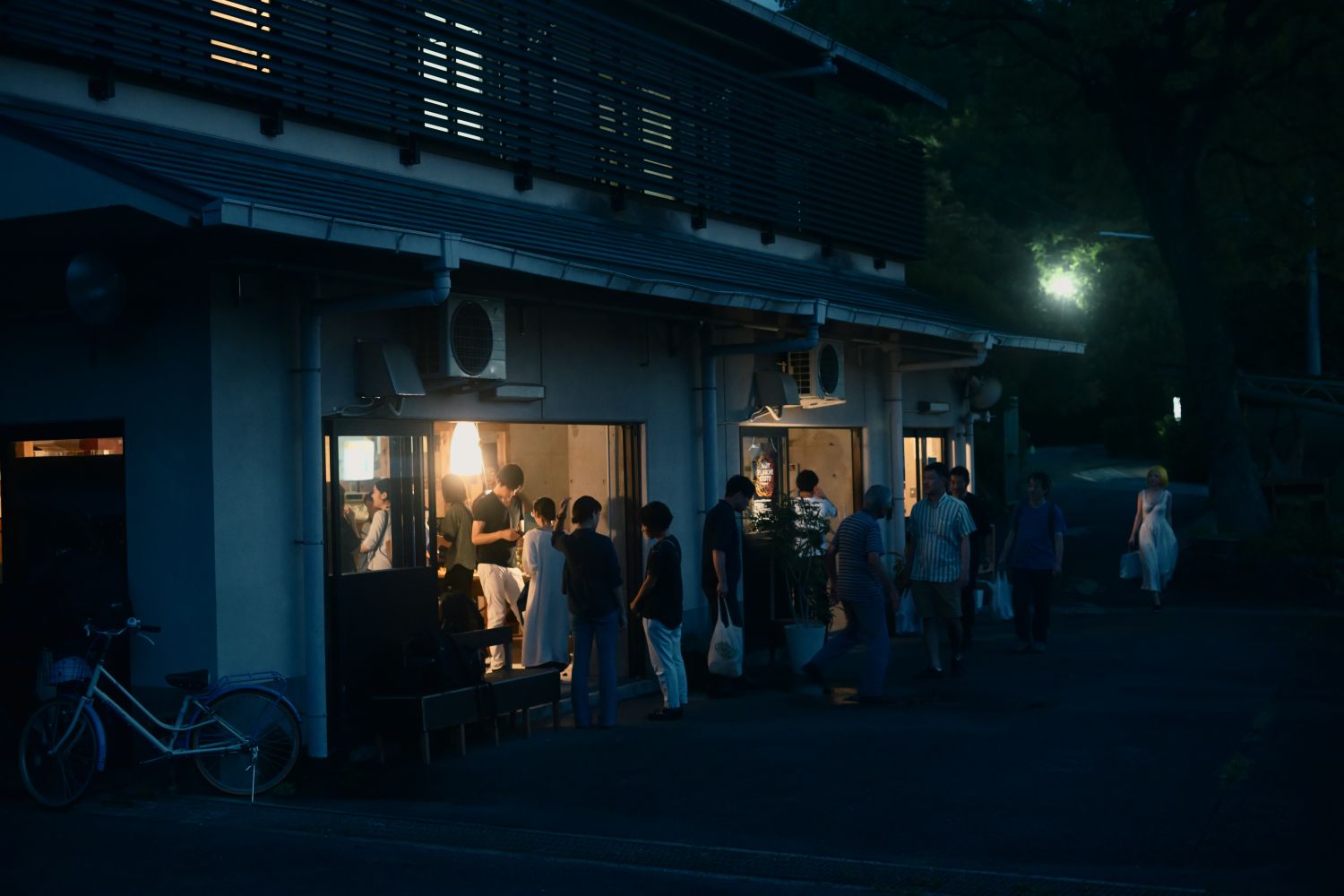
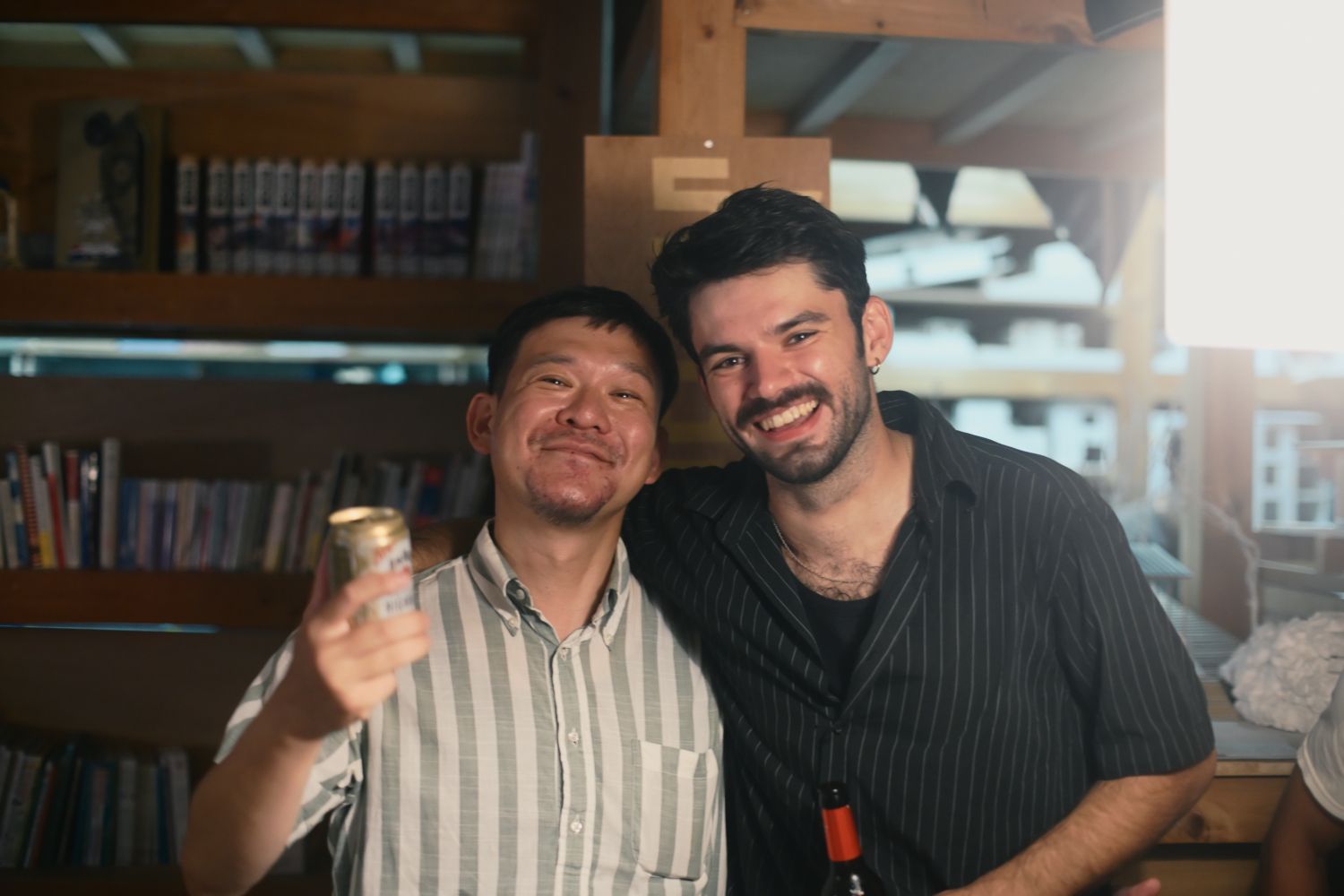
From Architecture Office to Living Room: Life Beside the Park
The Japanese version of this Article can be read from here!
*** in Residence Kyoto is a residency program where creators from abroad and local residents of Kyoto share everyday life, learn from each other, and cultivate new values and relationships together.
In 2025, performing creator Jules Goliath from France stayed for about a month at the design studio STUDIO MONAKA, located right next to Funaokayama Park in Kita Ward, for an immersive creative residency.
Daily studio work, interactions with local residents, and observations in the park—
through these everyday moments, what became visible were the learnings and questions behind the act of “exchanging things,” as well as the moments where different cultural backgrounds intersected.
Youth Coordinator Xian Yuxin (Kan Wukin) closely followed creator Jules and STUDIO MONAKA staff member Yukiho Okuyama, retracing the memories of the residency.
- 聴き手・記事執筆 ユースコーディネーター
Throughout this article, we have interwoven 🌀 YC Notes 🌀 written by the Youth Coordinators of *** in Residence Kyoto. Spending time alongside the creators and the residency owner, they observed the days from a position that was both inside and slightly askew — close enough to feel the texture of each exchange, yet distinct in perspective.
INDEX
CreatorResidenceInterview with Residence Owner
ー Yukiho Okuyama, STUDIO MONAKA From Architecture Office to Living Room: Life Beside the Park Interview with the creator
— Jules GoliathNew Landscapes Shaped by Walking and Exchange
— Kyoto as the Project’s InevitabilitySetting Plans Aside, Guided by the Breath of the SiteForms of Communication Beyond WordsThe Story Behind the Journey Without MoneyEncounters of Ichigo Ichie and Gratitude to All Involved
Interview with Residence Owner ー Yukiho Okuyama, STUDIO MONAKA
From Architecture Office to Living Room: Life Beside the Park
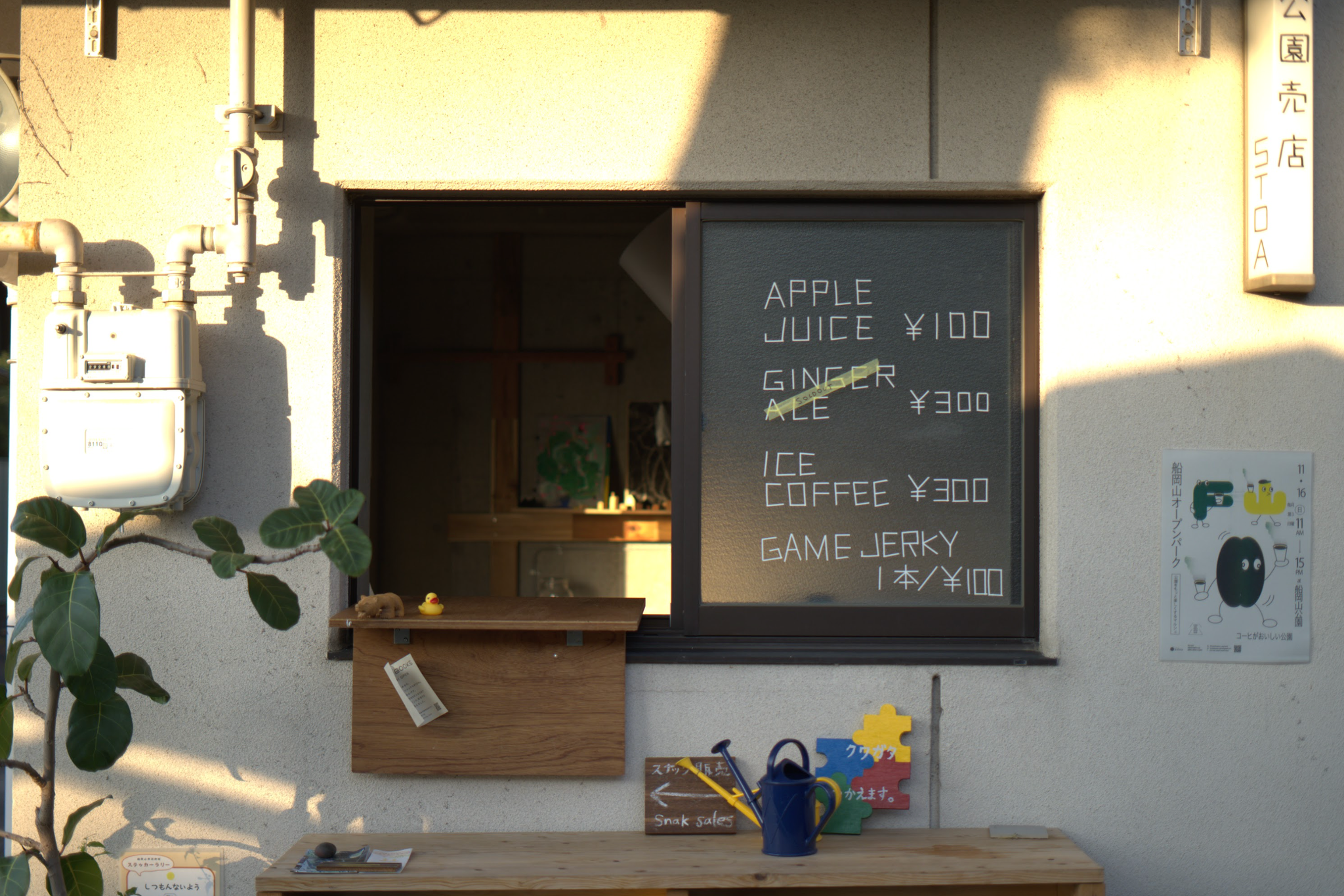
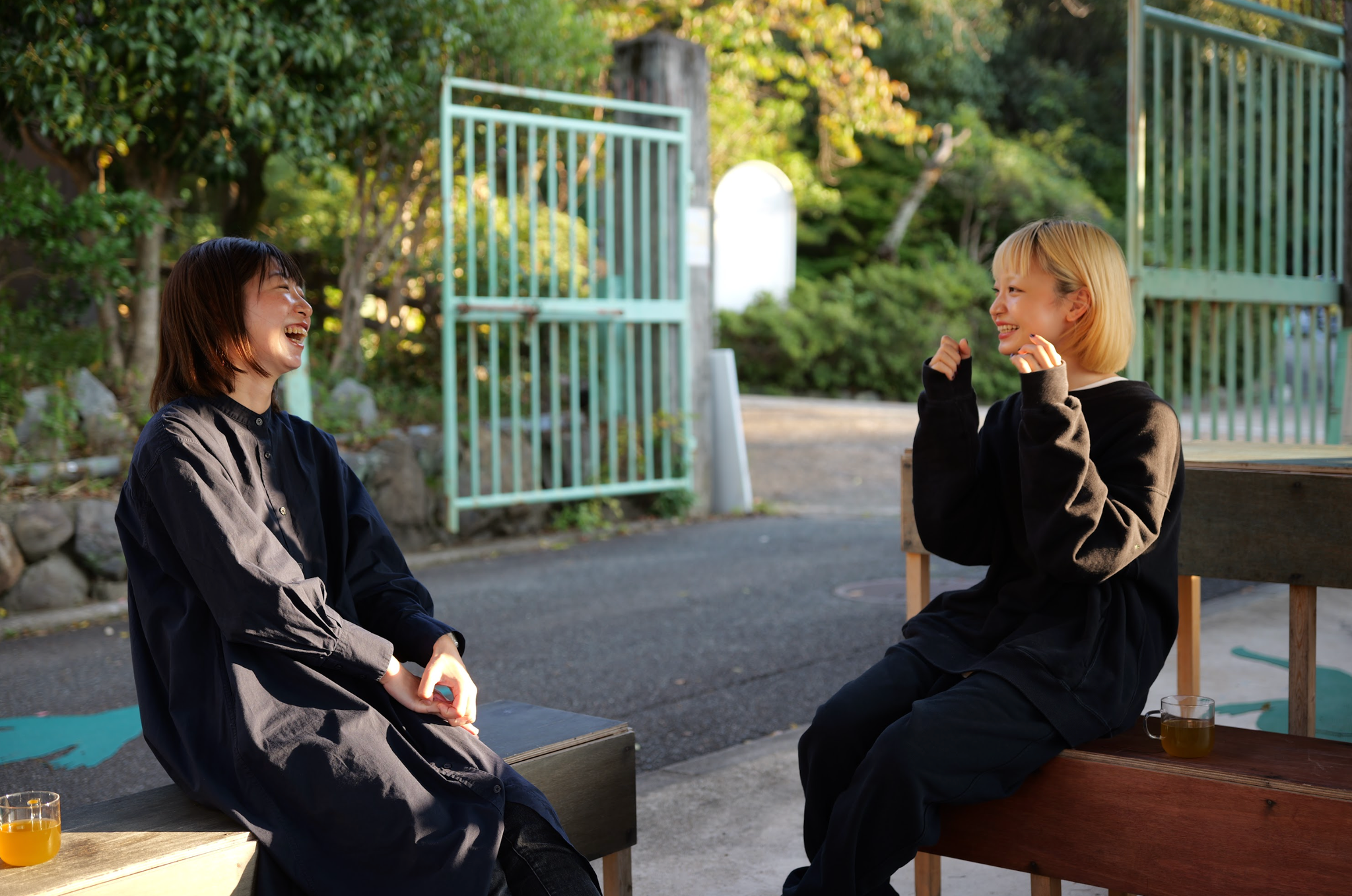
Youth Coordinator: Xian Yuxin(hereinafter referred to as the “Yuxin”)
This place feels very open.
Residence Owner: Yukiho Okuyama (hereinafter referred to as the “Yukiho”)
Yeah, kids come and play here, people drop by while walking their dogs, and sometimes they just pick up toys lying around and start playing.
Yuxin
Could you tell us about STUDIO MONAKA?
Yukiho
STUDIO MONAKA is an architecture studio, but it also functions as the management office for Funaokayama Park. The reason our design studio operates from within the park’s management office is that we’re experimenting with what we, as architects, can do in relation to designing a park that is open as a public space.
One example of this is the monthly event we host called “Funaokayama Open Park.” I see our participation in ***in Residence Kyoto this time is also one of those experiments and challenges as well; exploring how our studio could function simultaneously as a public space and an exhibition platform.
Yuxin
How did you interact with Jules Goliath on a day-to-day basis?
Yukiho
We tried to stay in pretty close contact like messaging, “What are you up to today?” When we reached out like that, Jules would respond with, “I’ll head over at this time today,”. I wanted to make sure he felt that he could really come here anytime. We probably saw each other almost everyday. Soon STUDIO MONAKA became like a living room.
Yuxin
When I first came here, I found the relationship between the office and the park really interesting. The park feels like an extension of everyday life, truly like a living room.
Yukiho
Jules takes time to observe things carefully, and at the same time makes bold proposals. I found it fascinating that he treated both the park’s everyday use and its connections with the local residents as part of the design.
Yuxin
What kinds of things was Jules doing at STUDIO MONAKA?
Yukiho
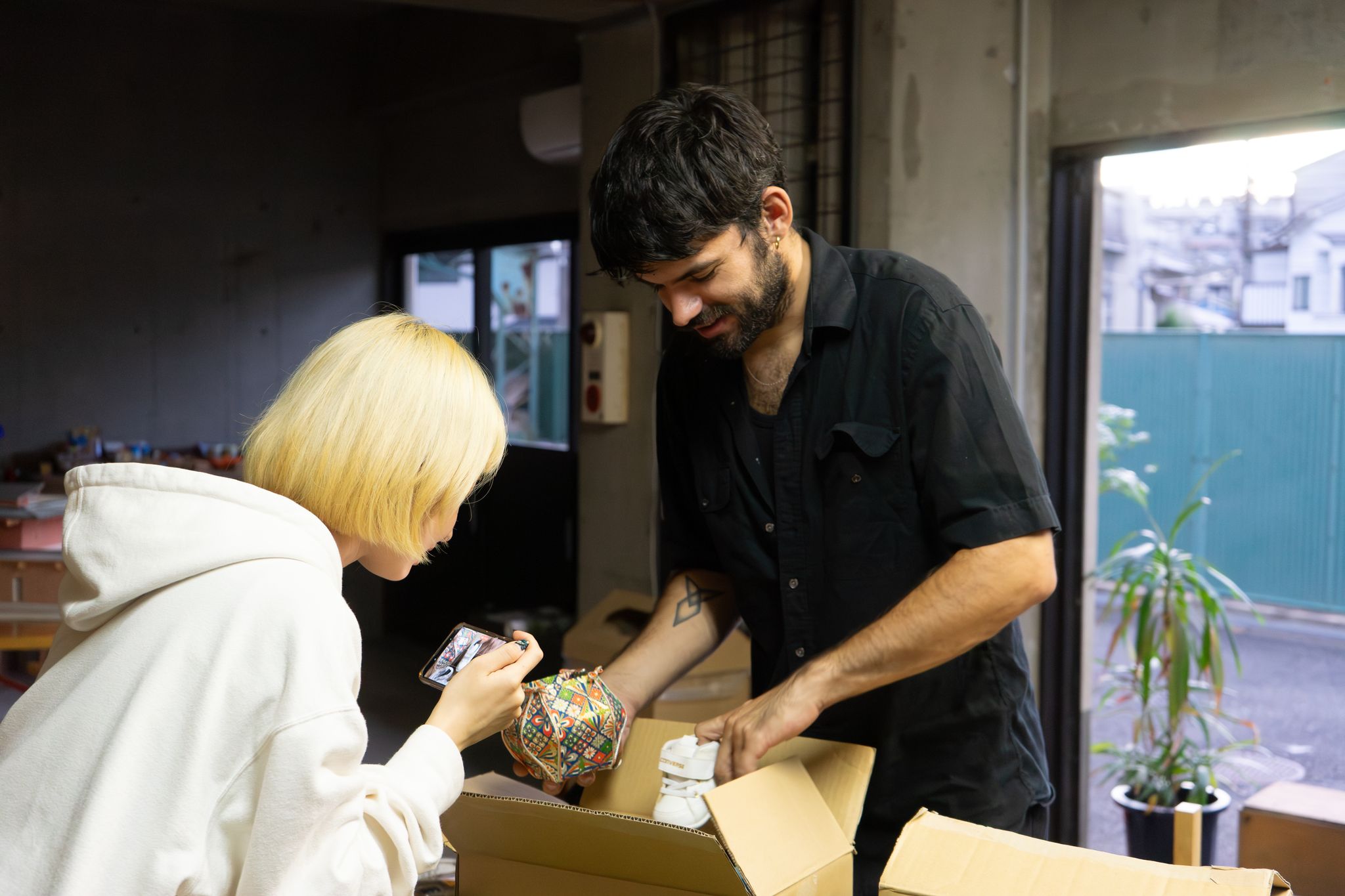
Right here in this space, he would spread out a furoshiki cloth and exchange items with people. Not only that, but he also stayed with each interaction, spending time in genuine conversation with visitors.
Yuxin
After Jules arrived, did you notice different kinds of people coming — people who wouldn’t usually be here?
Yukiho
Yes. I got the impression that quite a few people who had never been here before visited during the month Jules was here. Of course, us STDUIO MONAKA also introduced Jules to many interesting people, so there were plenty who already knew us and came by as well.
But thanks to Jules, many visitors came who probably never imagined this place was an architecture studio. And we were able to introduce the events that we organize and also talk about our projects and activities. In that sense, it really led to new developments for us.
Yuxin
Was this the first time hosting an artist-in-residence at STUDIO MONAKA?
Yukiho
Yes, this was our first time. Even before we were approached by ***in Residence Kyoto, we’d been talking about how nice it would be to hold pop-up exhibitions here featuring artists’ work, but we’d never actually made it happen.
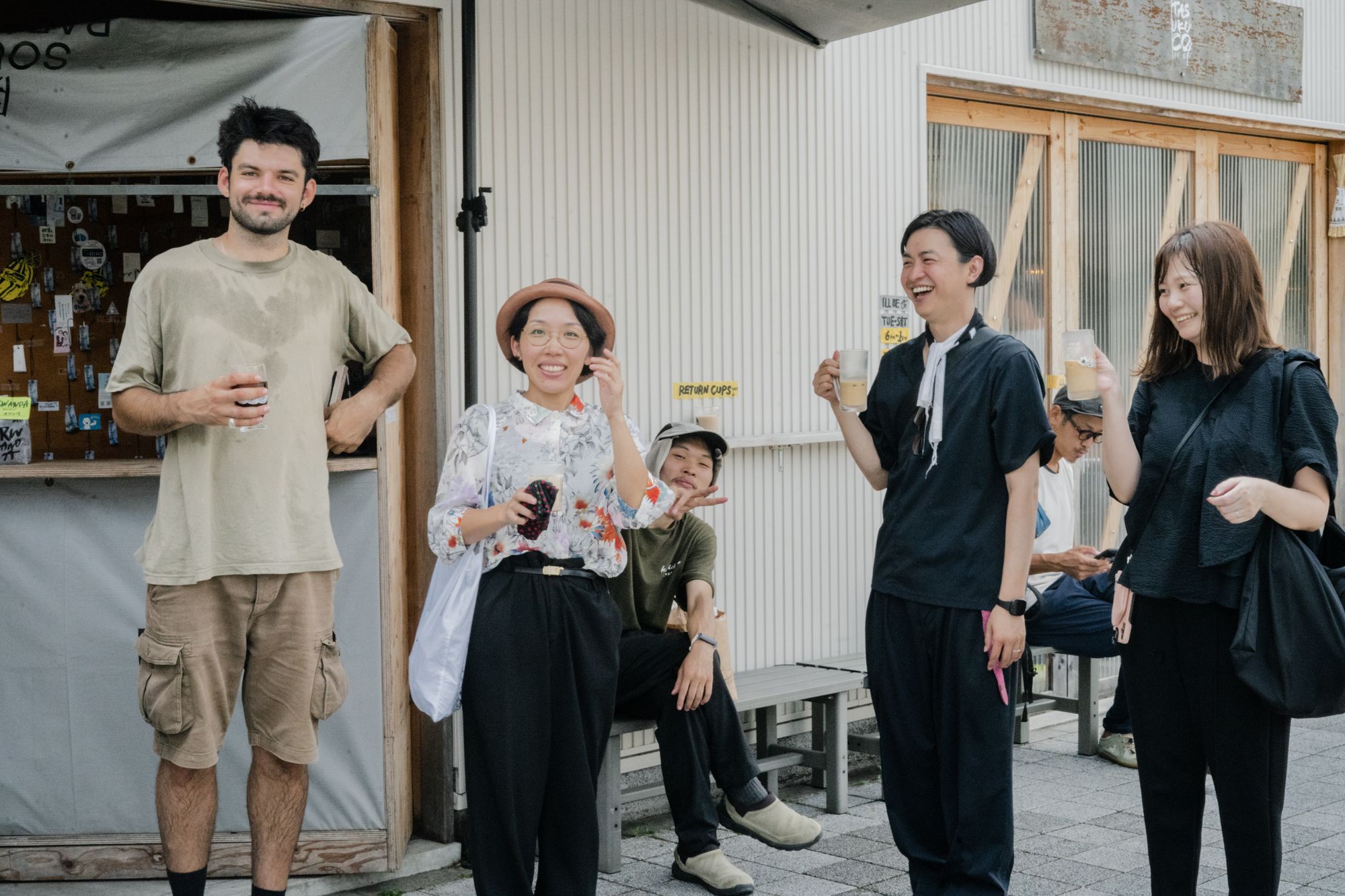
Having Jules here made it possible for us to transform this place into an exhibition space. It was exciting to experience something like, “Wow! The park office can become this kind of space!”
Until then, we honestly couldn’t quite visualize what kinds of exhibitions is possible here. So, in a way, it felt like we were experimenting together with Jules.
Yuxin
Are you hoping to host more creators here in the future?
Yukiho
Yes! We’ve been talking as a team about how we’d love to continue doing this.
Yuxin
Do you have any particular kinds of artists or creators you’d like to invite next?
Yuxin
It’s hard to point to a specific type of person, but I do feel that next time, we’d like to stage a larger exhibition within the park. In a spacious park like Funaokayama, it’s probably quite rare to hold an exhibition outdoors, especially in Kyoto. I think there’s a real advantage here in being able to present large-scale works outside.
Inside the office, we also have a small workshop equipped with woodworking tools. I think it would be really interesting if artists could use that space to create their work and then exhibit it in the park.
For this residency project, we had concerns that the exchanged items might get wet in the rain or be blown away by the wind, so the exhibition ended up being indoors. But in the future, it would be great if we could also present artworks out in the park itself.
YC Notes | Hana
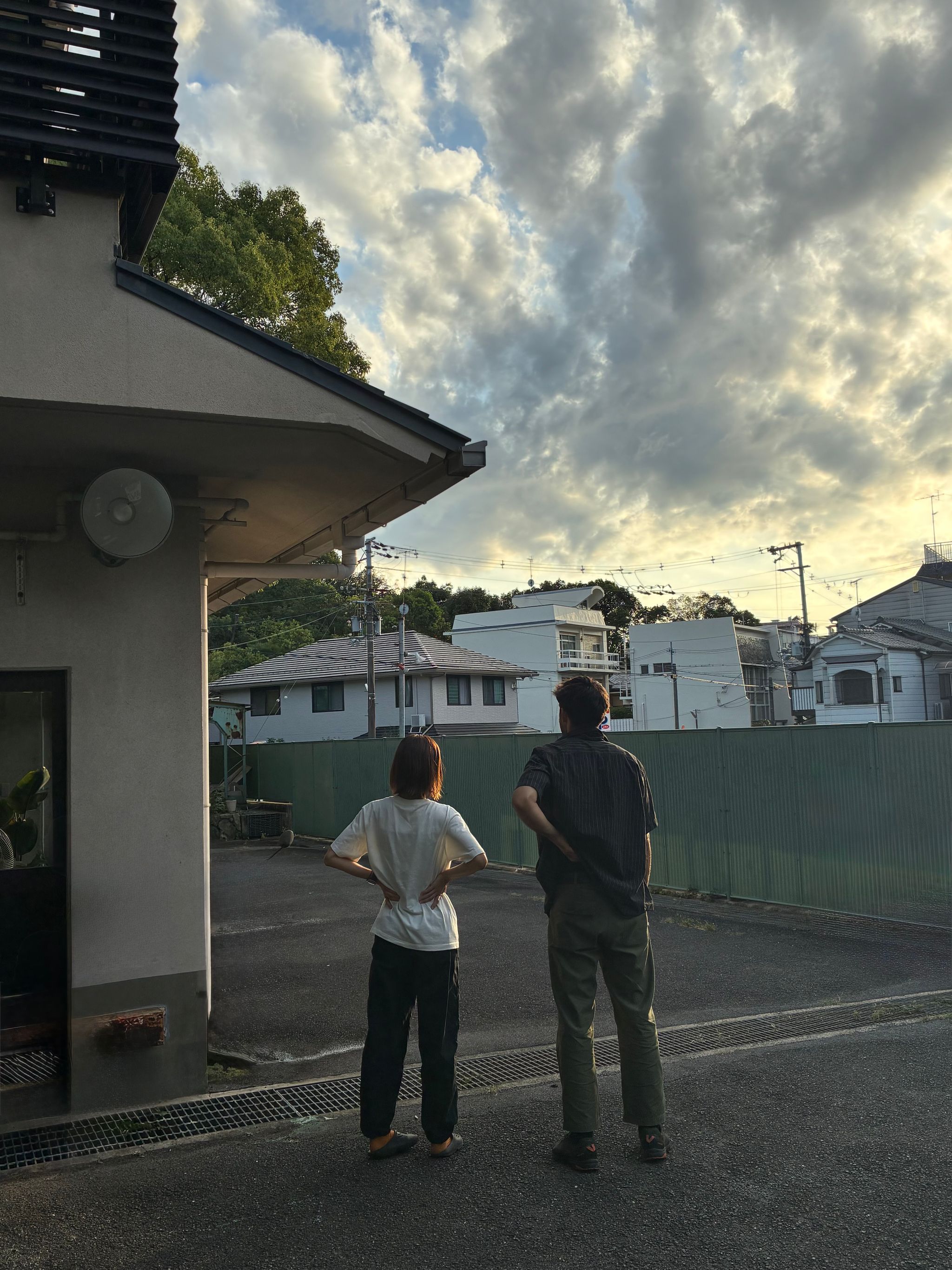
When deciding on the outdoor exhibition design, the open space of Funaokayama Park—which offers a panoramic view of Kyoto city and is equipped with woodworking tools—provides a unique advantage. It seems likely that the space can be used even more seamlessly, allowing the creative process to flow directly into the exhibition.
Interview with the creator — Jules Goliath
New Landscapes Shaped by Walking and Exchange — Kyoto as the Project’s Inevitability
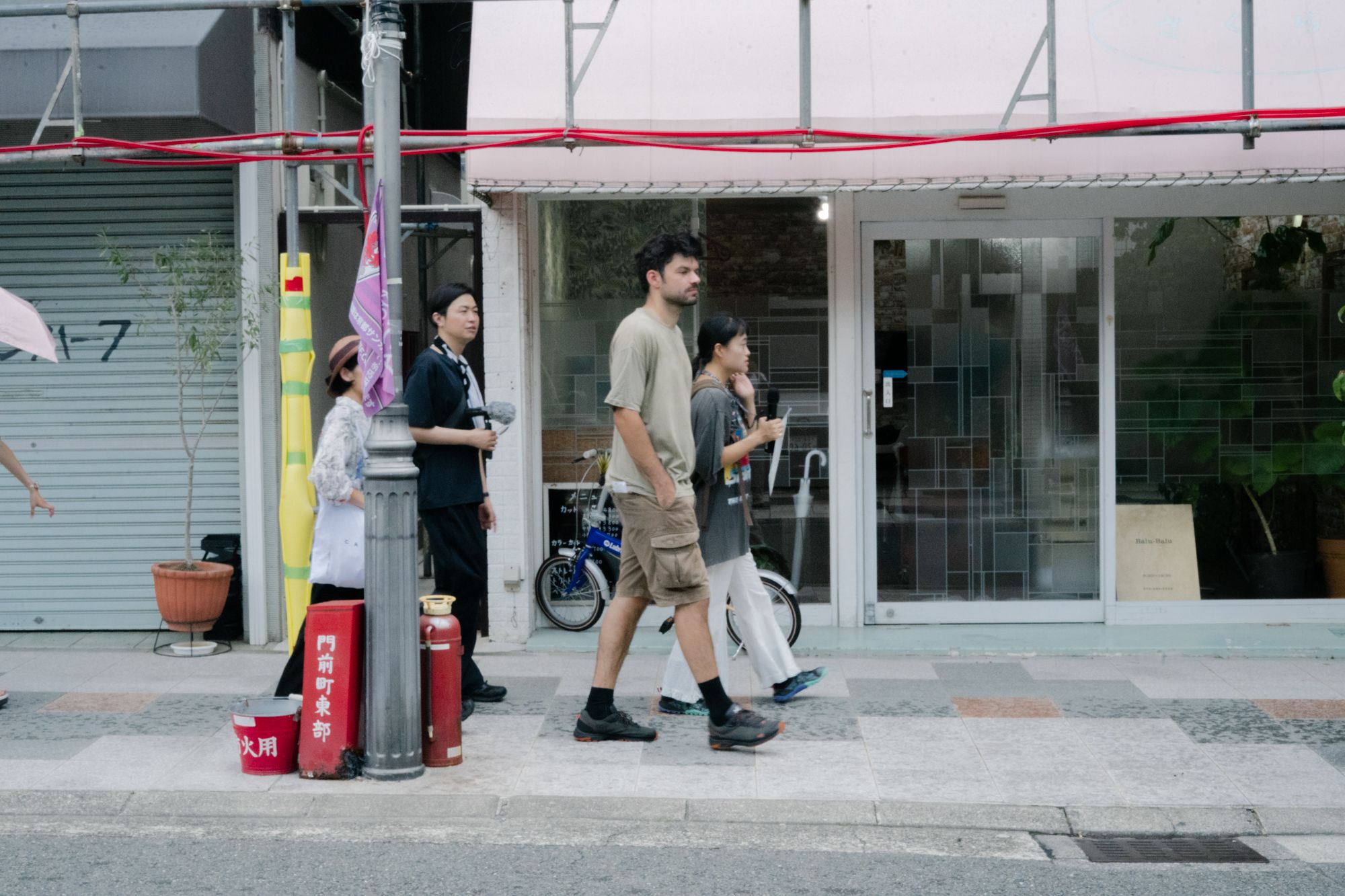
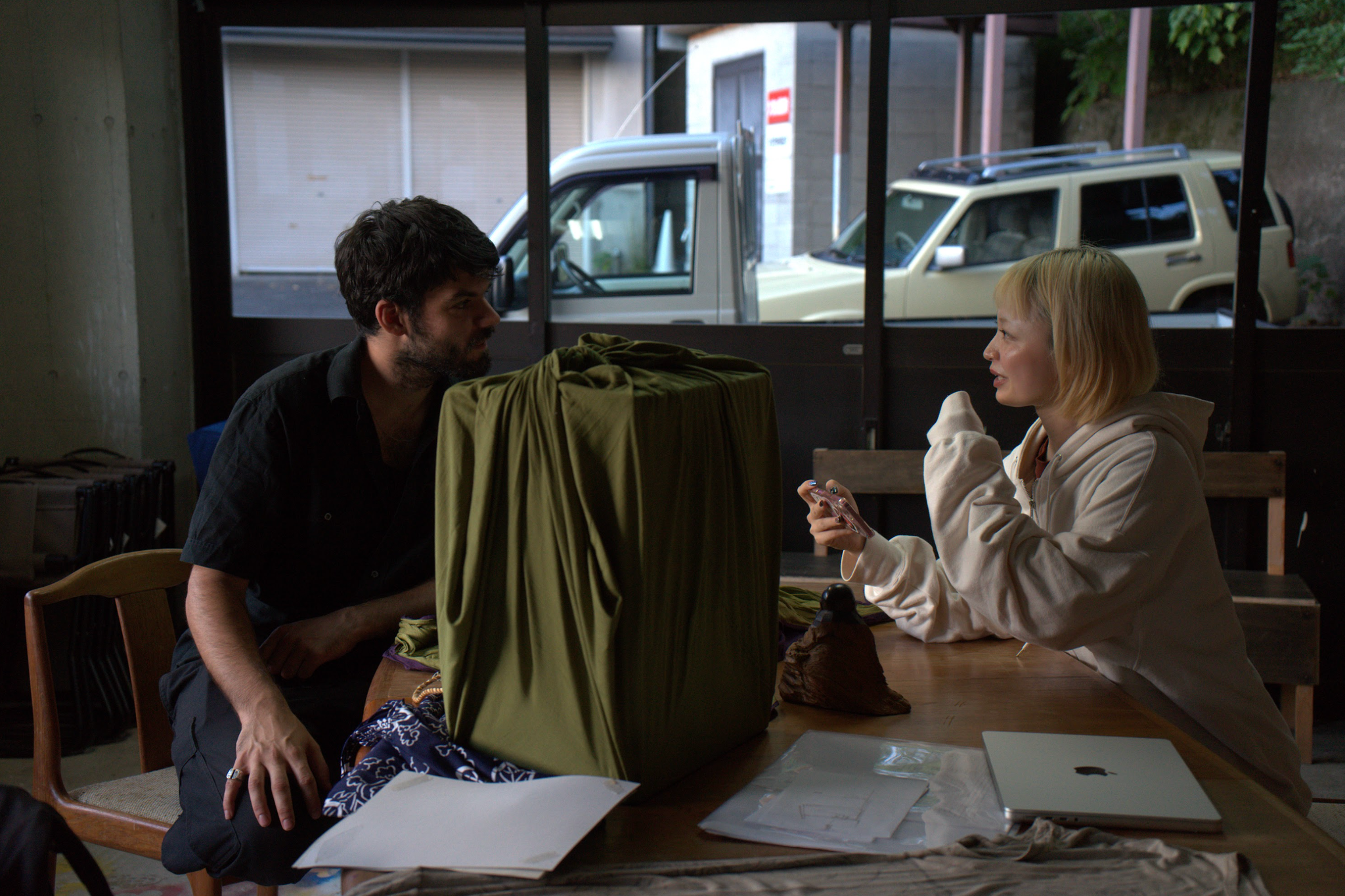
Yuxin
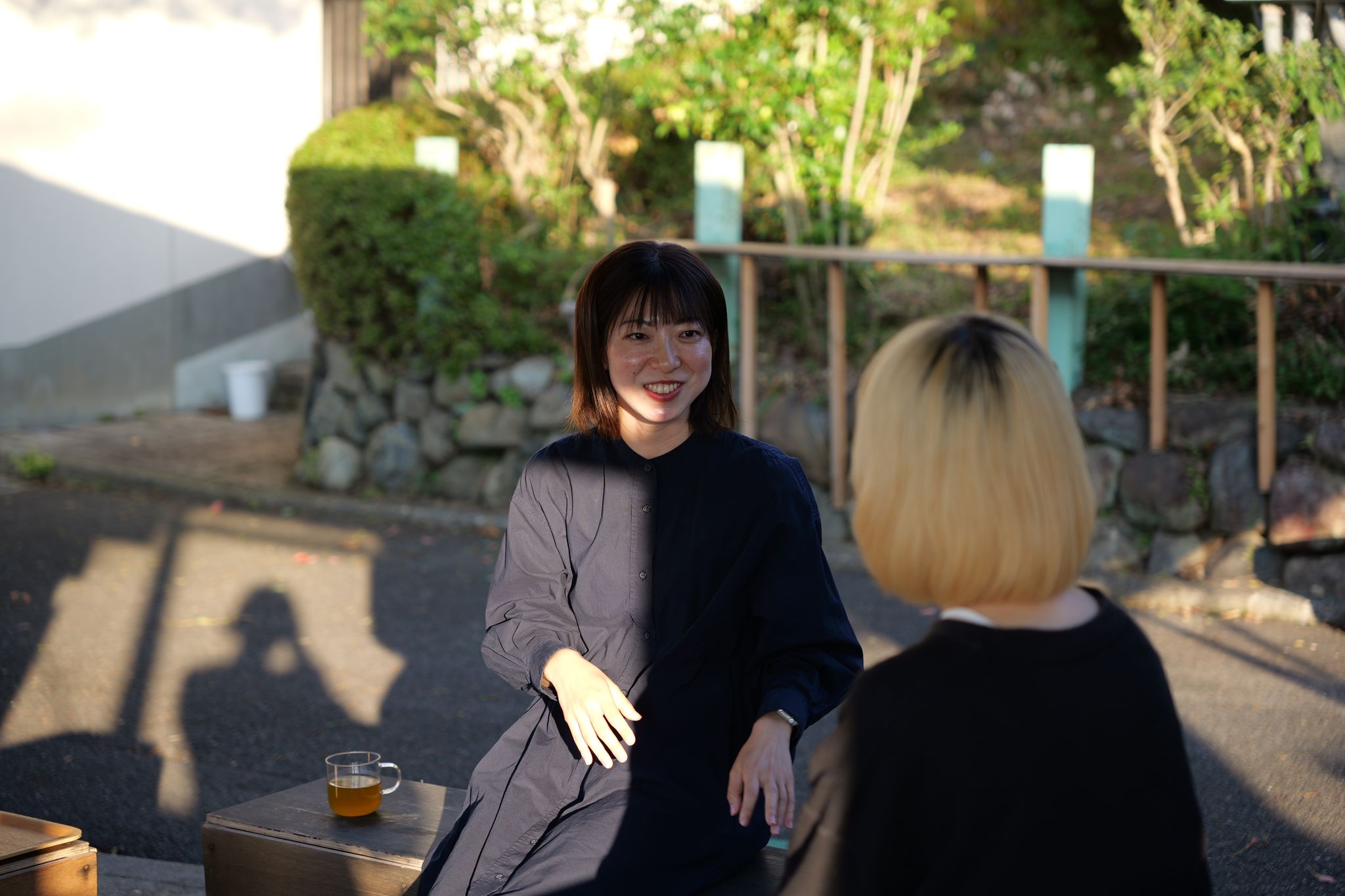
What made you decide to take part in this residency, Jules?
Jules
About 8 years ago, I stayed in Kyoto through a project with Saga University of Arts, and that experience was truly wonderful. It has such an incredible atmosphere for creative work, and my interactions with people there were truly engaging. So, when I thought, “This is a chance to start something again in Kyoto,” I didn’t hesitate.
Yuxin
What made you think that Kyoto, rather than another city, was the right fit for your project?
Jules
When I started thinking about setting this project in motion again, I had this strange intuition that it would somehow become a distinctly Japanese project. There’s a delicate attentiveness here to the spirit that resides within objects, and a culture of caring for tools with great respect.
Even the presence of the bag I created felt, in some way, inherently Japanese to me. That’s why I strongly wished to realize the project in Japan, and more specifically in Kyoto, where a deep sense of spirituality is rooted. I felt that the way people in Kyoto find rich meaning within objects might resonate with my own way of seeing things.
Yuxin
That’s true, the way people in Kyoto relate to objects might be a little different from the Western culture. There’s a sense of caring a single object over a long time, tending to it thoughtfully.
Jules
Yes, I think so too. Even the way people think about money feels slightly different here.
Setting Plans Aside, Guided by the Breath of the Site
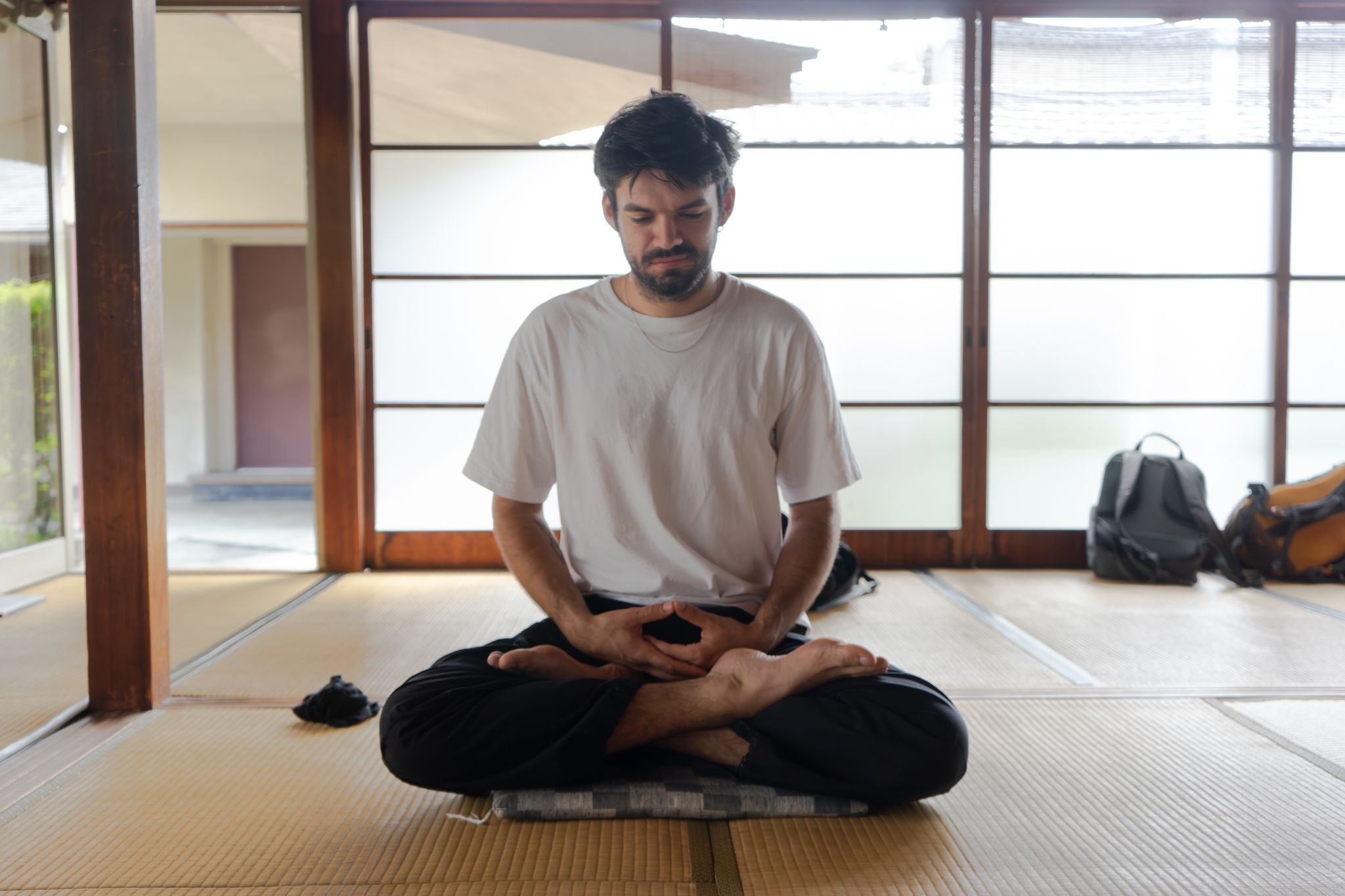
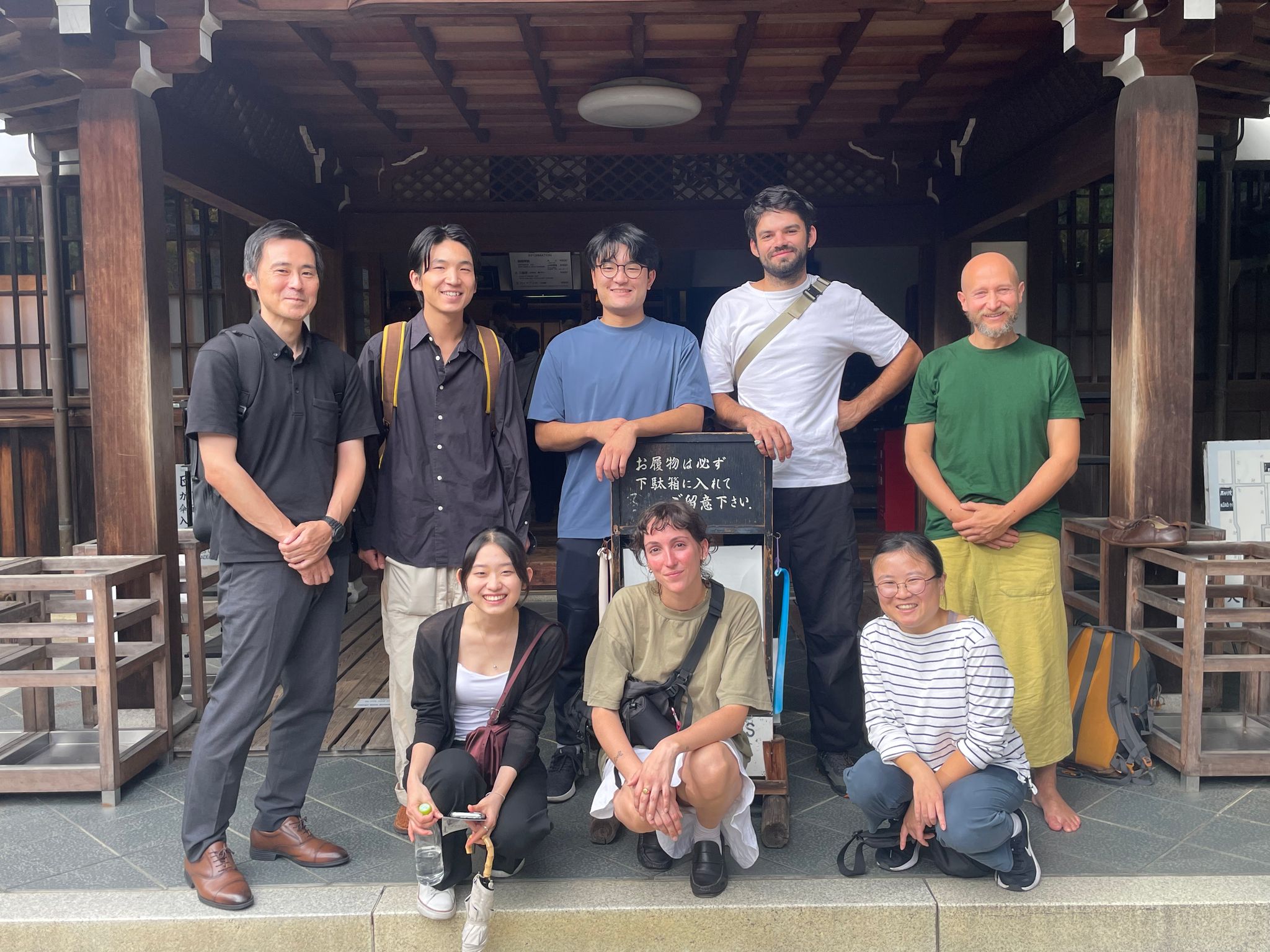
Yuxin
After actually arriving in Kyoto, did you experience any changes in yourself or in the project?
Jules
There was a major shift! Originally, I was planing to walk a long stretch of the Tango Kaidō, the historic route that runs from northern Kyoto while carrying a device I had built myself.
But as soon as I arrived at STUDIO MONAKA, I realized something. That this place was already astonishingly open to the local community. I began to feel that there was no need to go searching elsewhere on foot. Rather, I should remain in the place where people seemed to need or welcome me.
Yuxin
Mr. Okuyama from STUDIO MONAKA also described this place as being “like a living room.”
Jules
That’s exactly right. Even though STUDIO MONAKA is an architectural design studio, they place great importance on what you might call a “side mission”, creating a place where people come together.
That’s why I decided to stop moving and remain here instead. And interestingly, rather than me walking out to meet people, neighbors began approaching me! Saying things like, “There’s this strange guy here, apparently you can exchange objects with him”.
It was the complete opposite of what I had imagined. But in the end, it was far richer that way. I let myself be carried by the flow of this place, rather than pursuing only what I had set out to do. It felt truly perfect; calm, fulfilling, and for me, a great success.
Yuxin
So, the whole process was reversed!
Jules
Exactly! It was the complete opposite of my original plan, but I have no regrets at all. Letting myself surrender to the flow of this place, rather than insisting on what I thought I wanted to do felt truly perfect, calm, and deeply fulfilling. It taught me the joy of letting go of plans and simply following what unfolded along the way.
Forms of Communication Beyond Words
Yuxin
How were you interacting with people in the neighborhood? Did you ever feel a language barrier?
Jules
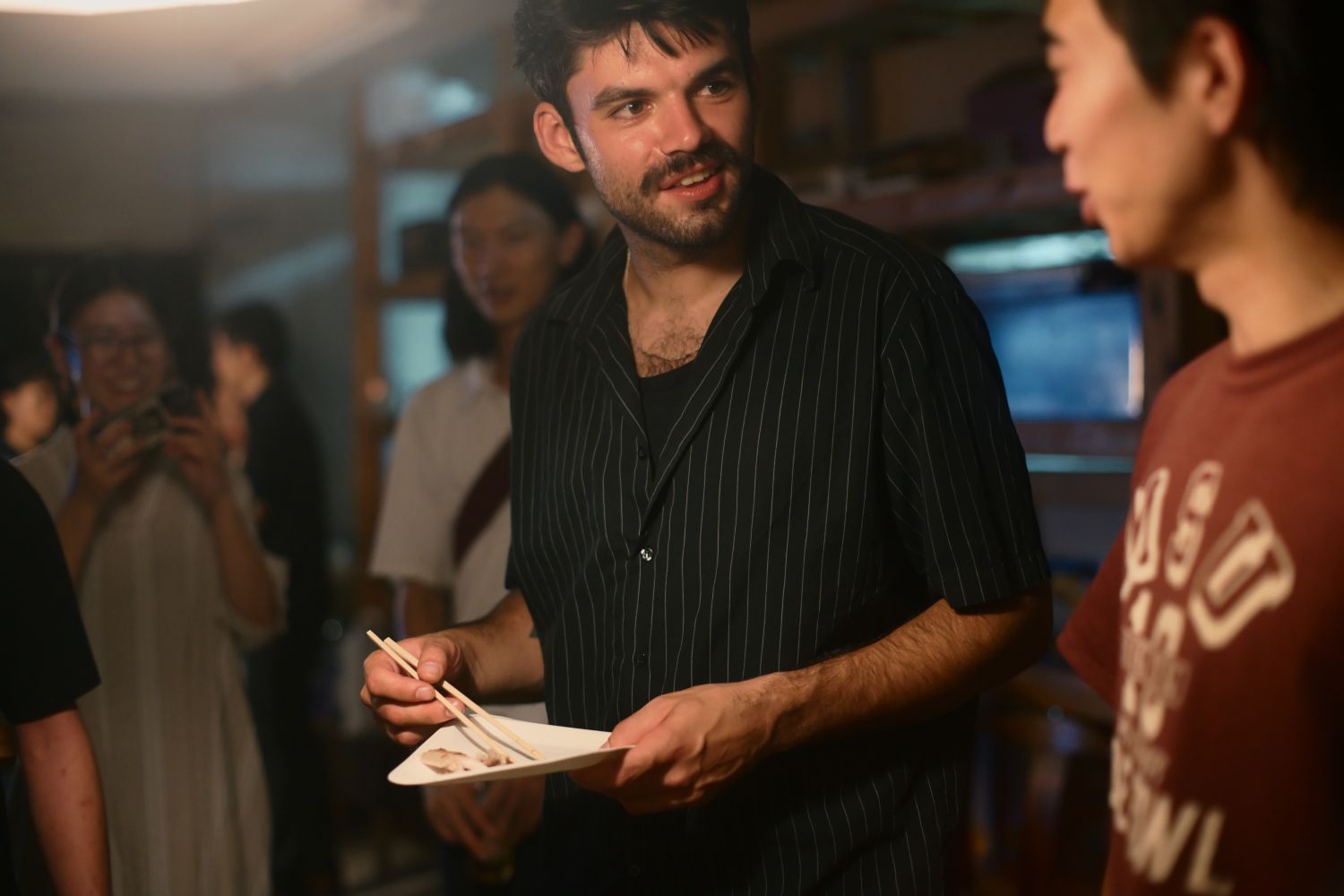
With my very clumsy Japanese. And a lot of gestures. I’d use my hands, almost like a pantomime, to try to communicate. But that was more than enough. I really felt that if you genuinely try to connect, you can communicate with anyone, no matter what methods you use.
Because I’m not Japanese, I could already feel people’s eyes on me just walking down the street. And even more so when I was carrying this rather “strange object.” But even elderly residents would come up to me with a smile and ask, “What is that?”
In those moments, I felt that something beyond words was being shared between us.
The Story Behind the Journey Without Money
Yuxin
That interesting bag you carry… what led you to start working through bartering in the first place?
Jules
It began with a bitter experience in Paris two years ago. I was invited to exhibit, but I had to cover all the transport costs myself. Everything, out of pocket. I was also invited to dinner but being told, “Buy all the ingredients yourself, cook the meal yourself, and you don’t even get to eat”.
So I thought, “In that case, I’ll make the lightest possible work I can carry on my own and build a system that doesn’t require money at all.”
Yuxin
I was struck by something you said about the rules of exchange. “Not something expensive, but something interesting to you.”
Jules
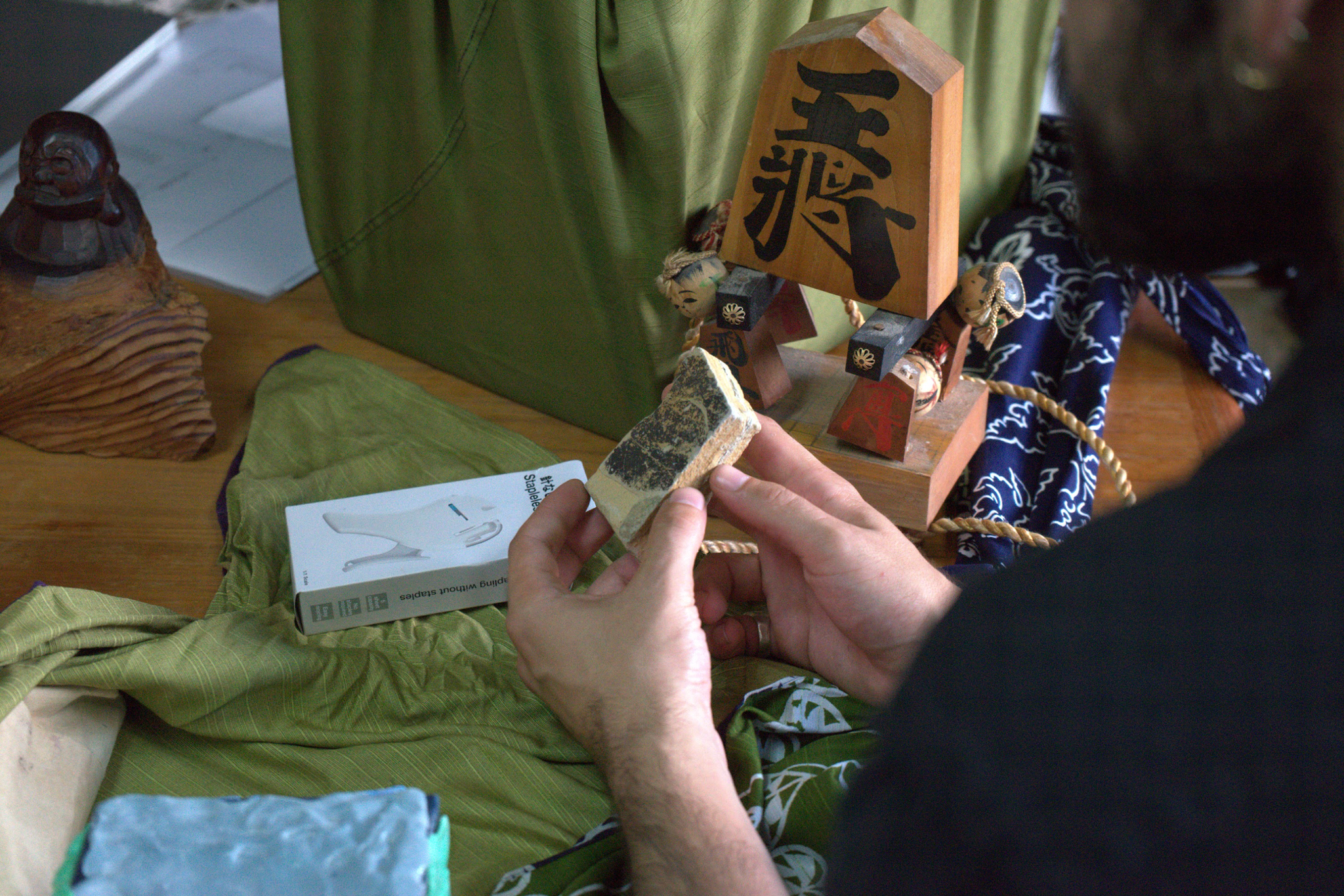
Yes. As a response to a world that constantly demands efficiency and profit, I chose slowness. And values that don’t pass through money. The only rule of exchange was exactly that: not something expensive, but something interesting to you.
When people offered me valuable items, I would almost feel apologetic receiving them. I wanted to encounter things that held value along a different axis from money. The objects people brought were filled with long stories; stories that simply can’t be bought with money.
And the deeper the story an object carried, the more valuable it became. Far more so than something you could purchase in a shop.
Encounters of Ichigo Ichie and Gratitude to All Involved
Yuxin
Looking back on this stay, how are you feeling now?
Jules
It was a month filled with an incredible sense of welcome. The STUDIO MONAKA staff who hosted me, the Nuit Blanche team, and everyone at the Institut Français, thanks to all of them, every encounter, every piece of work, and even the place I stayed felt perfect. I’m still wrapped in a warm afterglow. It feels truly comforting.
Yuxin
The way you meet people feels very much like ichigo ichie — once-in-a-lifetime encounters.
Jules
Yes. Some meetings happened only once, while others came back to see me many times during my stay. I’ve already made friends here those who I’m certain I’ll meet again.
The only change I can really imagine leaving behind is that I handed them “objects with stories.” Things that once belonged to me now live in someone else’s home. If they occasionally look at them and think, “I traded this with that strange guy,” and if that act of exchange continues to live on, that would make me happier than anything.
Yuxin
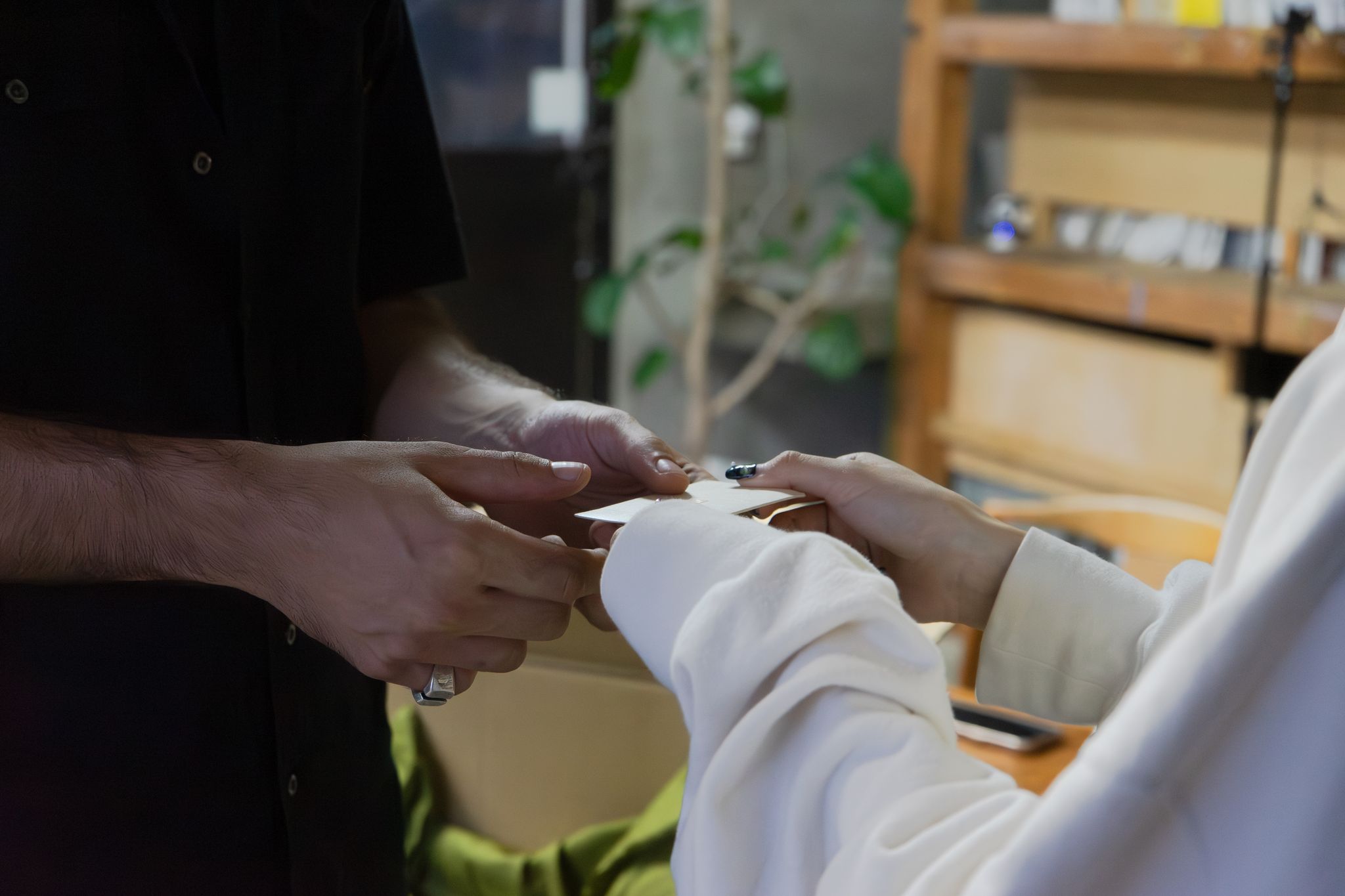
Actually, I have something in my wallet that I’d like to give you. Will you take it back to France with you?
Jules
Of course, I’d be delighted! I don’t have anything left to trade right now… but I’ll find something. Thank you so much.
Yuxin
Will you come back to Japan again?
Jules
100% YES! I’d like to return to this place again as soon as I possibly can.