Embracing Impermanence and Encounters : Contemplating What Is Lost, Embracing What Is New
The Japanese version of this Article can be read from here!
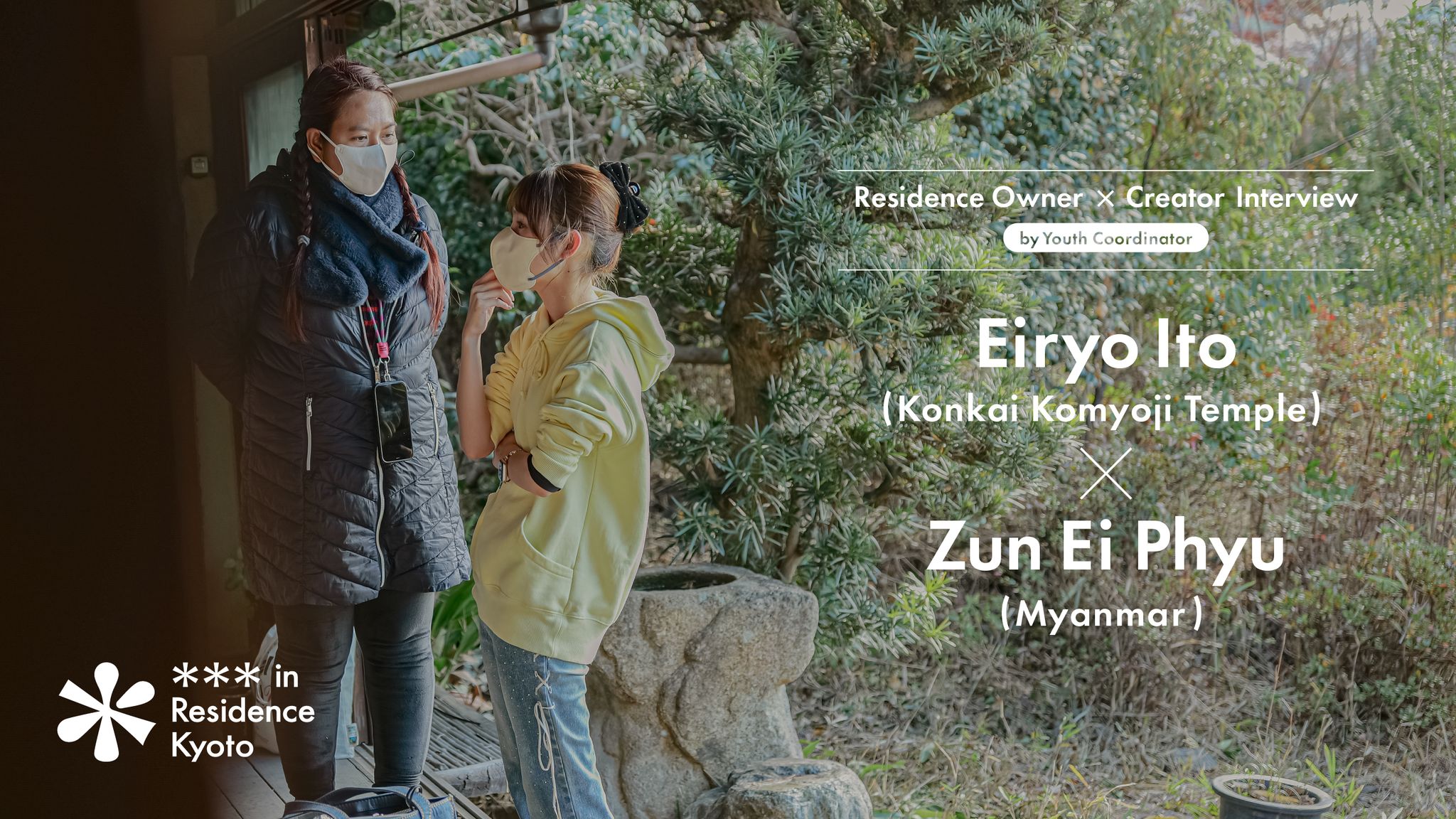
*** in Residence Kyoto is a residency program where creators visiting from overseas share daily life with Kyoto residents, learning from each other to cultivate new values and relationships.
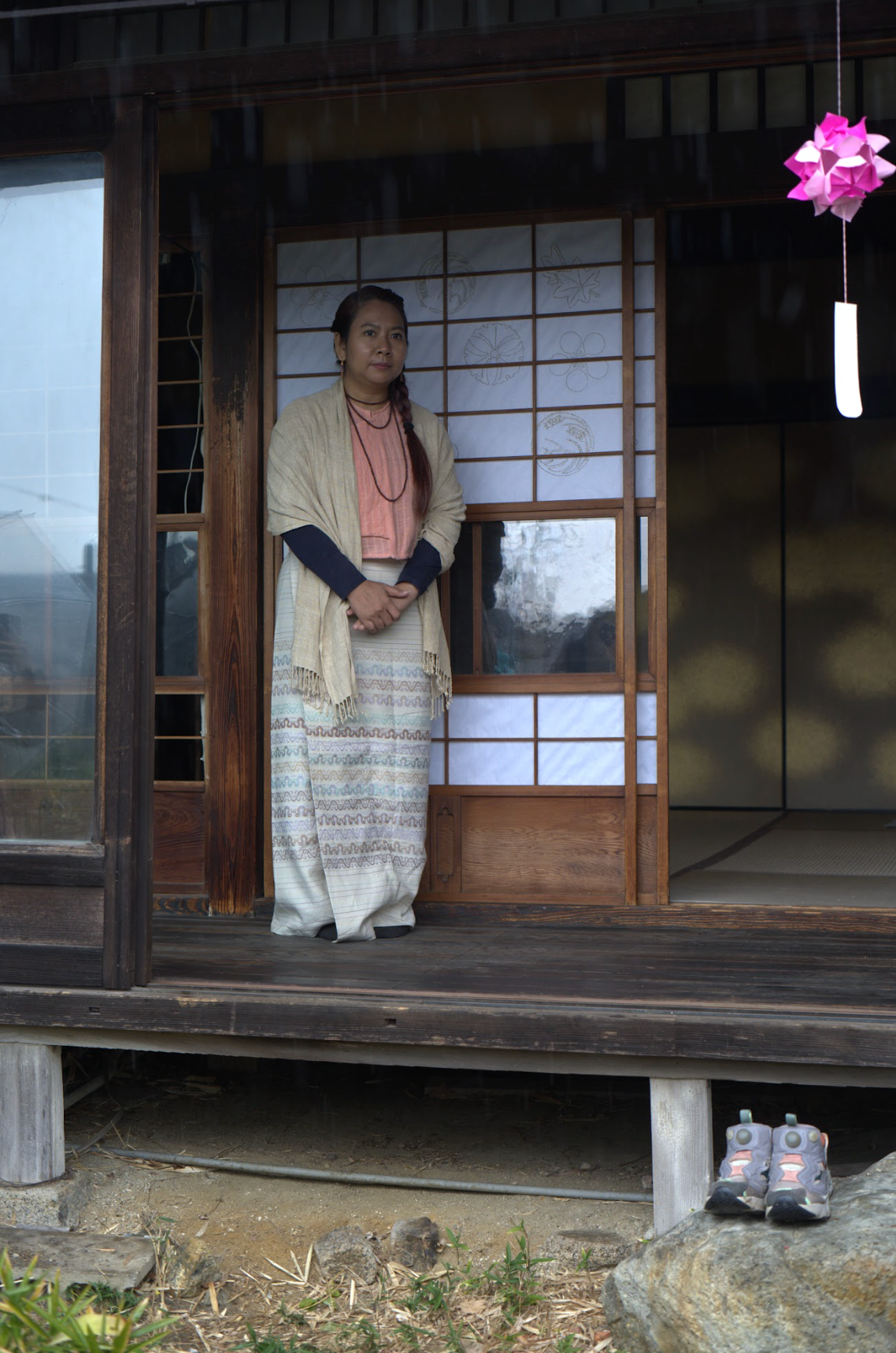
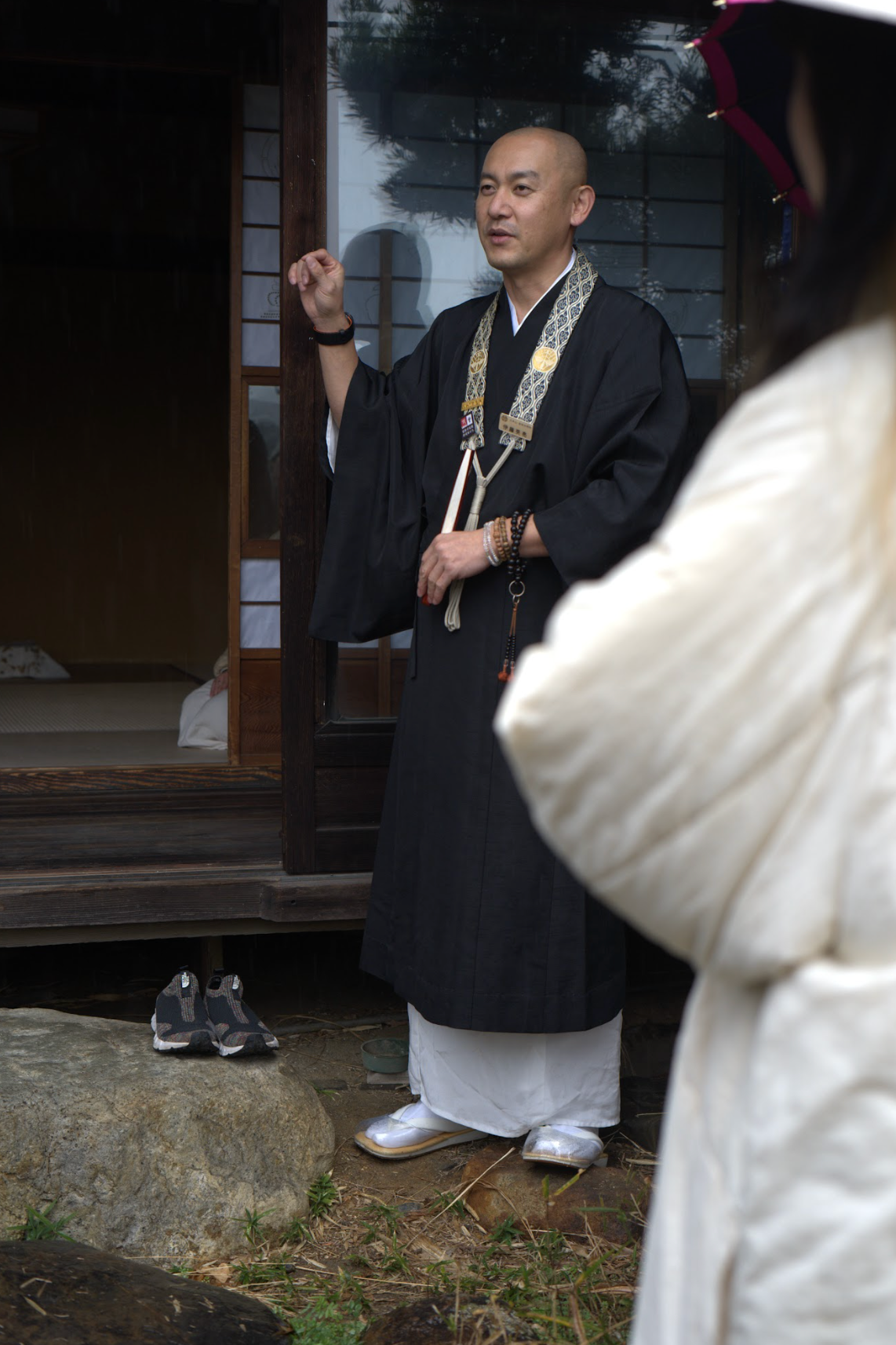
This time, we are featuring Eiryo Ito, the head priest of Kurodani Kinkai Komyoji Temple and the residence owner, and Zun Ei Phyu, a doctor and creator from Myanmar.
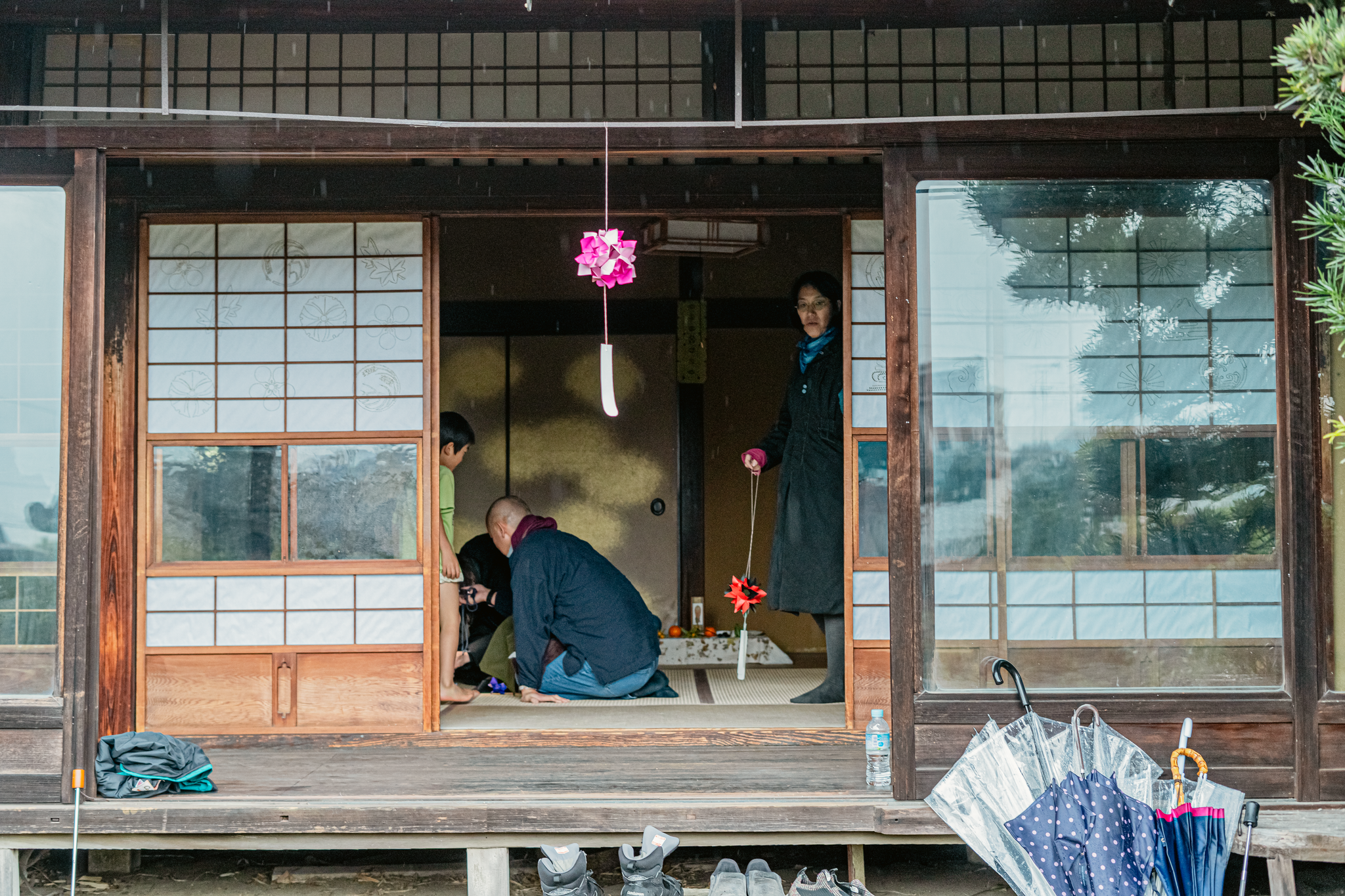
The setting is Kurodani Konkai Komyoji Temple in Sakyo Ward. Surrounded by nature, this temple has stood for over 850 years and function as a gathering space for the local community, sharing the region's history.
The encounter between Konkai Komyoji Temple, the sole religious facility in the Pilot Project, and an artist from the Buddhist nation of Myanmar gave rise to a new way of connecting with the community, fostering a gentle and inclusive environment that embraces cultural differences.
The theme of this work was “Impermanence.” Though the word firmly declares the absence of eternity, it also softly embraces and affirms us “* (asterisk)” as beings existing in the present moment.
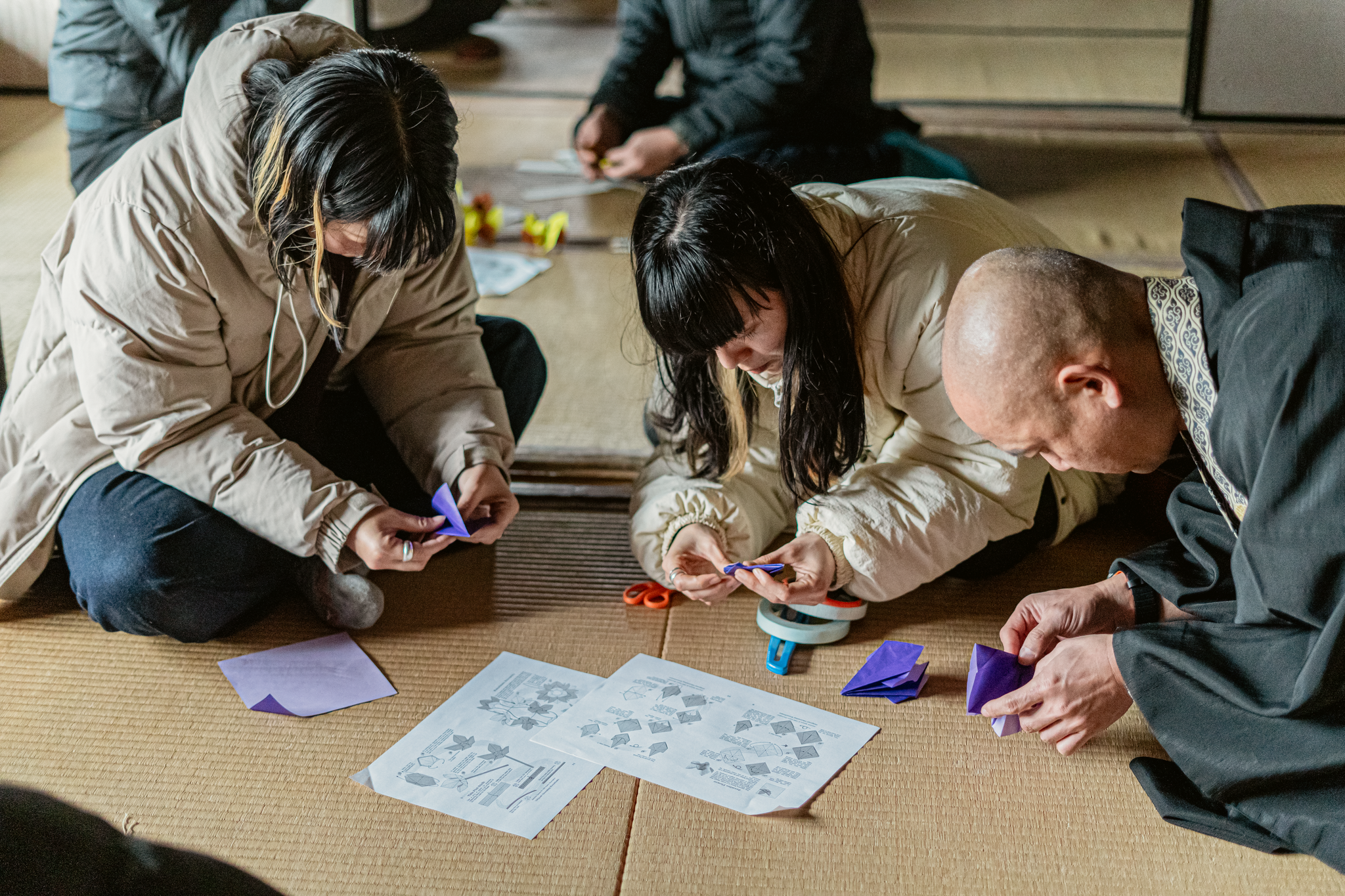
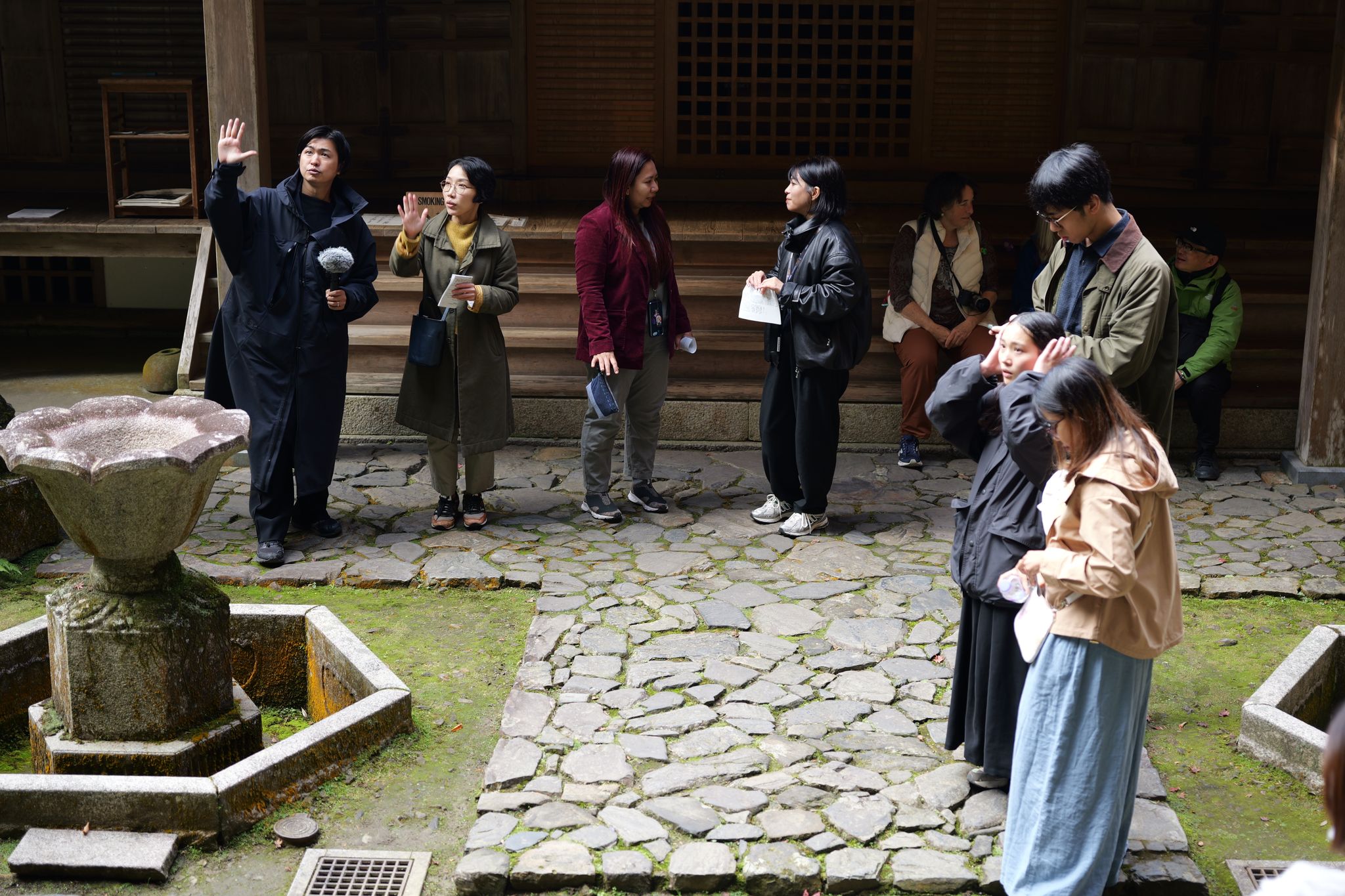
Final Presentation Day. Youth Coordinators Towa Shinden and Cocone Nakamura, along with PR representative Aika Enoki (Magasinn Inc.), documented the day, tracing memories of the stay.
Throughout this article, we have interwoven 🌀 YC Notes 🌀 written by the Youth Coordinators of *** in Residence Kyoto. Spending time alongside the creators and the residency owner, they observed the days from a position that was both inside and slightly askew — close enough to feel the texture of each exchange, yet distinct in perspective.
- Interviewer & Article Writer / Youth Coordinator
- Support
Throughout this article, we have interwoven 🌀 YC Notes 🌀 written by the Youth Coordinators of *** in Residence Kyoto. Spending time alongside the creators and the residency owner, they observed the days from a position that was both inside and slightly askew — close enough to feel the texture of each exchange, yet distinct in perspective.
目次
CreatorResidenceInterview with Residence Owner
— Eiryo Ito, Konkai Komyoji TempleFinding the Connection with the Community
— Noblesse Oblige and Local SolidarityFaith, Community, and Myanmar
— Connection that Inspires, Community that ExpandsWeaving Buddhism Through the Creator’s Gaze
— Creating the Stay from Its Earliest StagesChanges sparked by the residency
— Traces of the stay that continue to breatheThe Best Moment of the Stay
ーExpanding the Possibilities of ResidencyInterview with Creator
— Zun Ei Phyu "asterisk" – Embracing the Creator's Background
ー Pieces of the * gathered through the residencyConnections with the Community, Born from the Community
— Gentle Changes Emerging Through Acceptance Expressing Impermanence
ー An Open Exhibition "That Rejects No One"The Best Moment of the Stay!
ーCherishing life, letting thoughts wander to this very moment
Interview with Residence Owner — Eiryo Ito, Konkai Komyoji Temple
Finding the Connection with the Community — Noblesse Oblige and Local Solidarity
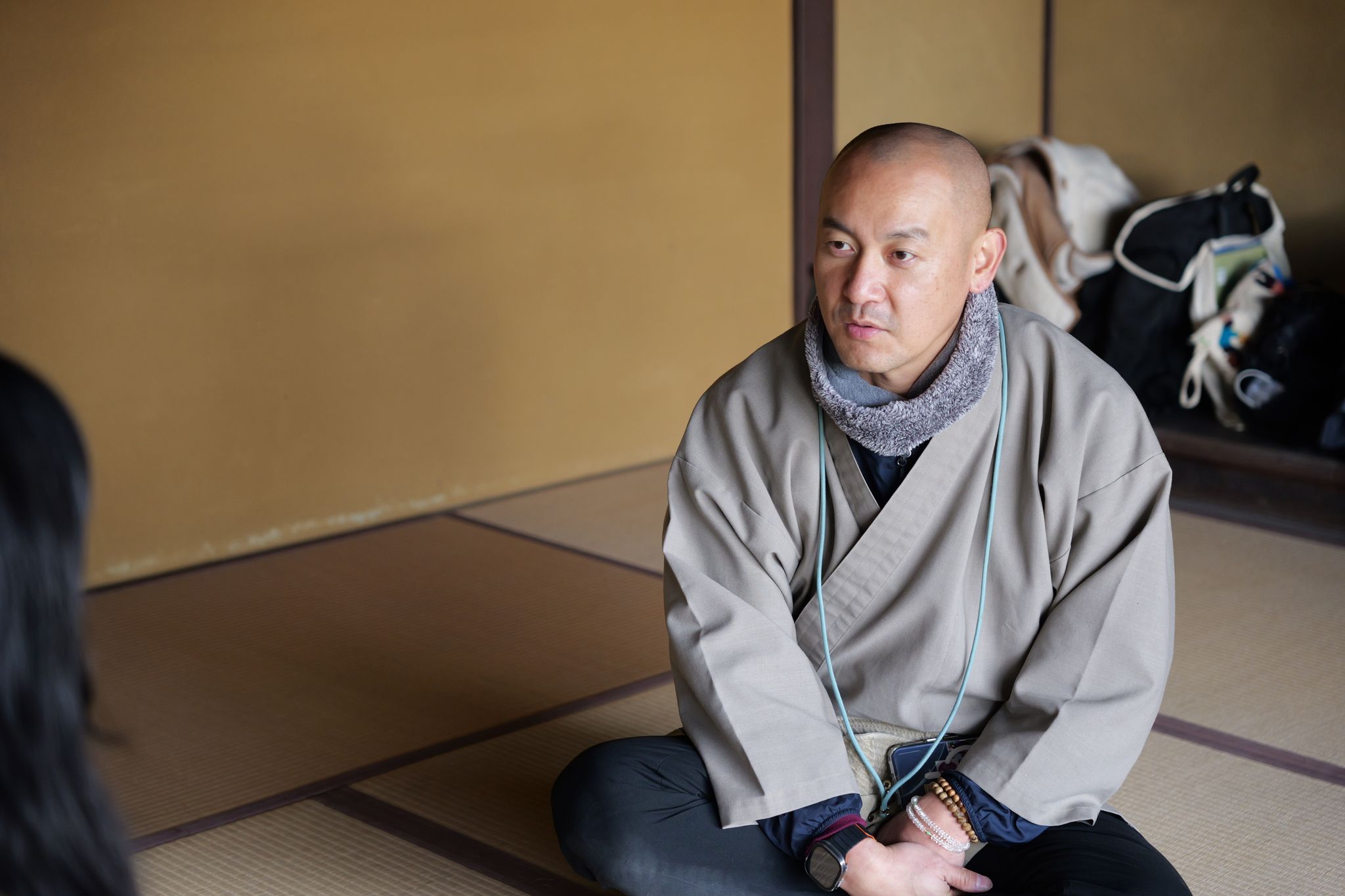
Youth Coordinator:Towa
First question: What prompted your decision to do a residency here? What sparked your interest in becoming a residency owner?
Residence owner:Eiryo Ito
The starting point was a conversation with Mr. Noguchi at Kyoto City Hall about the program. I remember it started from "Is there a good facility available?" rather, "Let's do it here": More of like a consultation.
As we continued talking, I began to envision the concrete details: "If we were to do it at Konkai Komyo-ji Temple, we could use this space for lodging and that facility for production..." After the office staff actually visited the site, they formally requested to do it here.
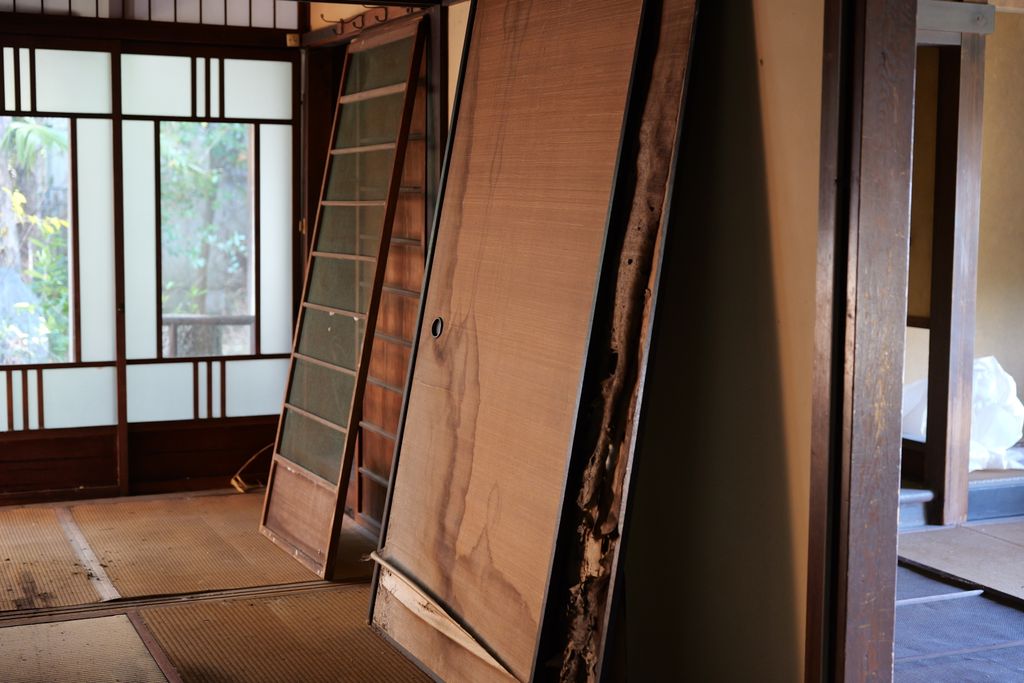
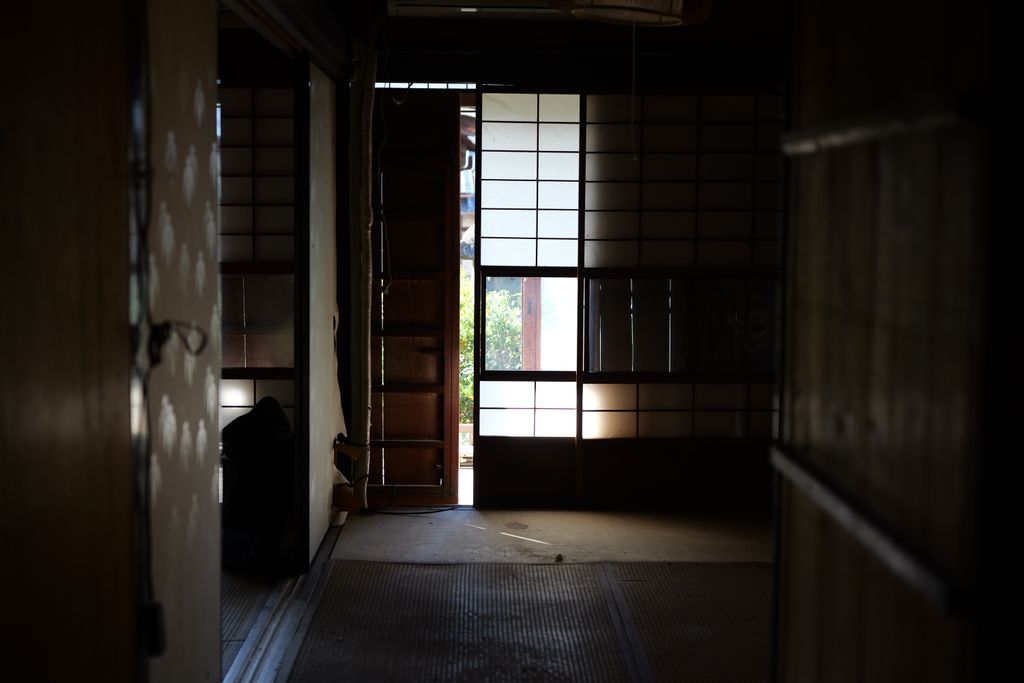
I had long felt a quiet unease watching the former Kosugi Residence which is beside our temple remain vacant. The thought that it could be brought back into use inspired me to take initiative in organizing arrangements within the temple. The collective passion of those involved gave me a push forward.
Towa
So that's how it all unfolded! Since temples are deeply rooted in their local communities and have such close ties to the area, hosting overseas creators at a temple seems like it would offer many benefits.
Eiryo Ito
To be honest, our temple, Kurodani Konkai Komyo‑ji Temple, has not had many opportunities to deeply engage with local residents until now. The exact reason is unclear, but I sometimes worry that being a historic head temple may have created an air of entitlement, a sense that “we naturally belong here”, which in turn may have given the impression of being closed off to the community.
Wanting to change that, we began hosting a children’s cafeteria about four years ago. Opening our facilities to the community was the first step. It was through this accumulation of social contributions that we were able to move naturally toward participating in this residency program. If we have facilities that can be utilized, we want to engage as actively as possible in whatever ways we can contribute. For me personally, this project was truly a dream come true.
Towa
Despite being such a large temple, you felt the connection with the community had been somewhat limited until now. That's why you were hoping to deepen those ties, and this project came along as a perfect opportunity. Was the reassurance of it being a Kyoto City initiative a significant factor?
Eiryo
It's a bit difficult to put into words, but if a creator I had never met before suddenly came and said, "I want to do something here," I’m honestly not sure whether we could have accepted that so readily. We would have been cautious.
But this time, officials from Kyoto City Hall were involved. Their presence provided a major sense of security and a significant support when it came to persuading members within the temple.
Support Staff: Aika
I'd like to hear a bit more about the background behind your thought of "we need to open the temple more to the community." Was this something the entire temple had been envisioning for a long time, or was it something you personally felt strongly about?
Eiryo
Yes. So, I currently live in Shiga Prefecture, and children's cafeterias are really popular there. I'm in an environment where food bank and children's cafeteria activities are a regular part of daily life. That's what made me think, "With our temple's capacity, we could probably run a children's cafeteria." So, I suggested starting with just once a month.
Then there's the concept of "noblesse oblige," right? The idea that those in high positions have an obligation to use their power for society. I also felt that, as the head temple that has been in this community for so long, it wasn't right that we weren't doing anything for the local community. This residency project began as an extension of those activities – I thought it could be "just the right opportunity."
Faith, Community, and Myanmar — Connection that Inspires, Community that Expands
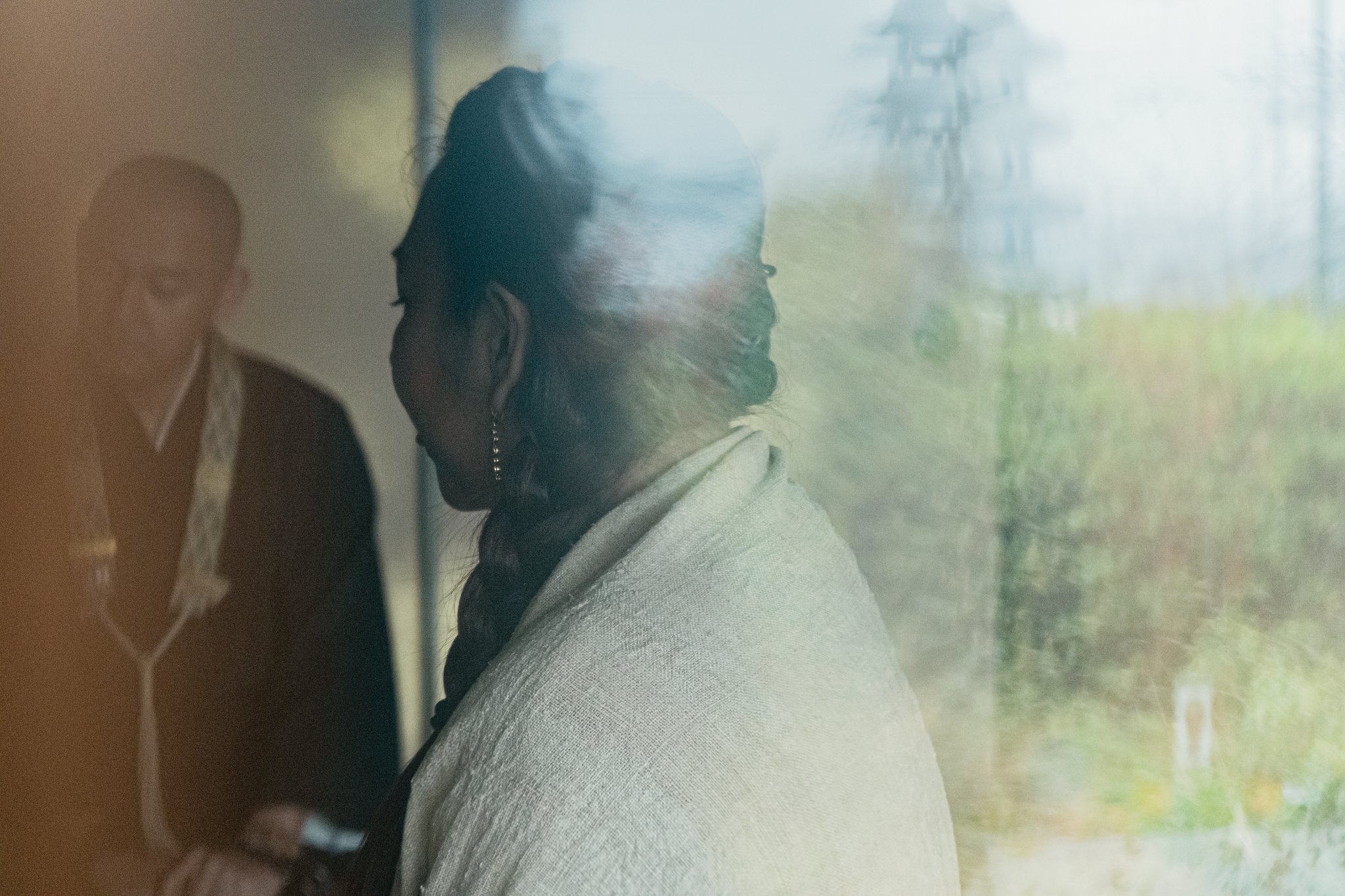
Towa
Next question. Among all six model projects, what do you think are the unique characteristics and appeal specific to this residency?
Eiryo
I think it's definitely the historic building itself, something you won't find elsewhere. While having a category like "Buddhism" might have imposed some constraints on creation, I believe the temple space itself held a powerful presence.
Towa
Zun is Buddhist, and Myanmar is a Buddhist country too. While the sects differ from Japan's, are there any anecdotes about how you navigated or overcame those differences?
Aika
What really stood out this time was how incredibly supportive the entire Sakyo Ward was. From the fire department's night patrols to the ward festival, even the ward office staff would say things like, "We're really looking forward to it."
Towa
Earlier, you mentioned feeling somewhat disconnected from the community. Personally, I was really struck when a local woman approached me while I was cleaning the old Kosugi residence.
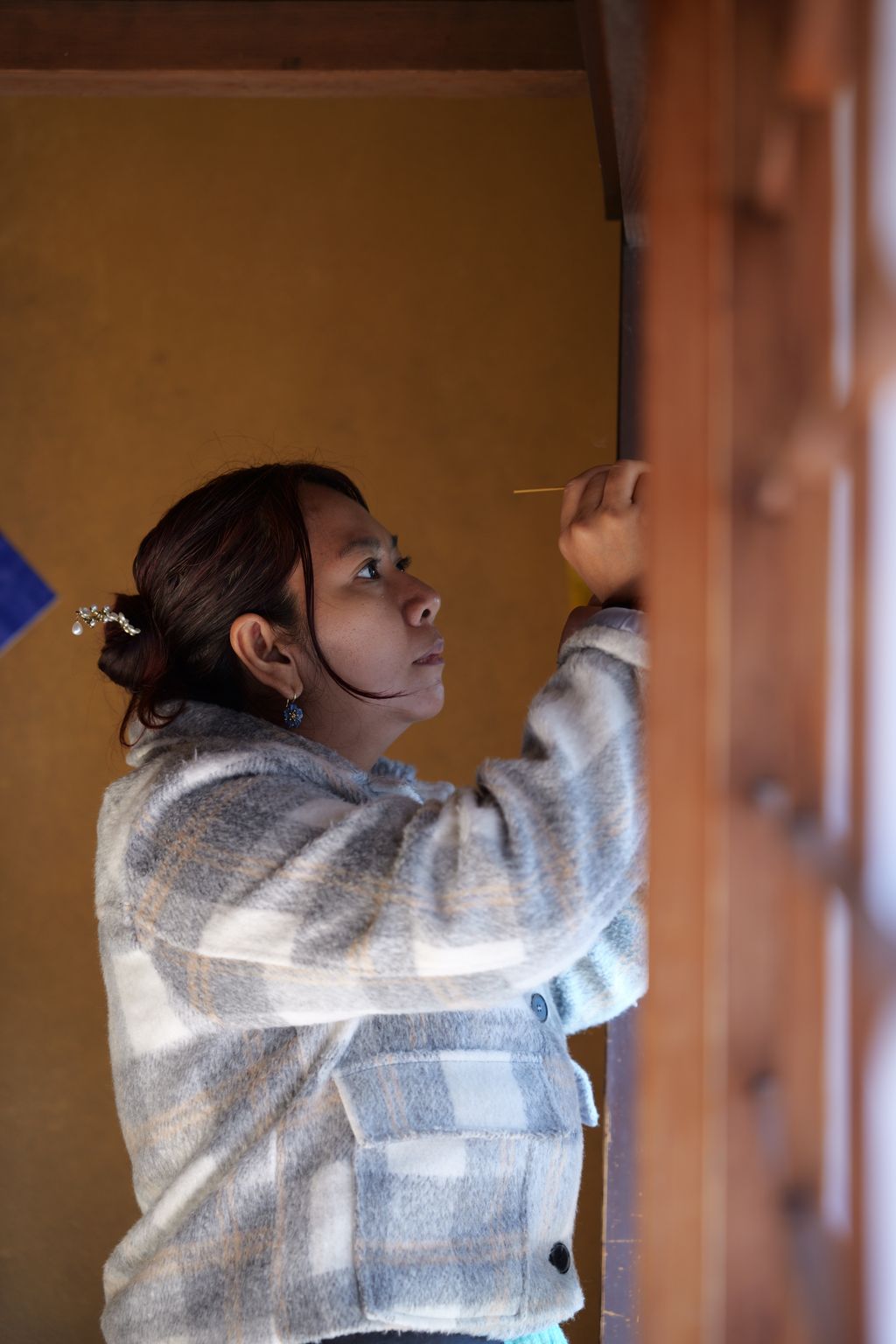
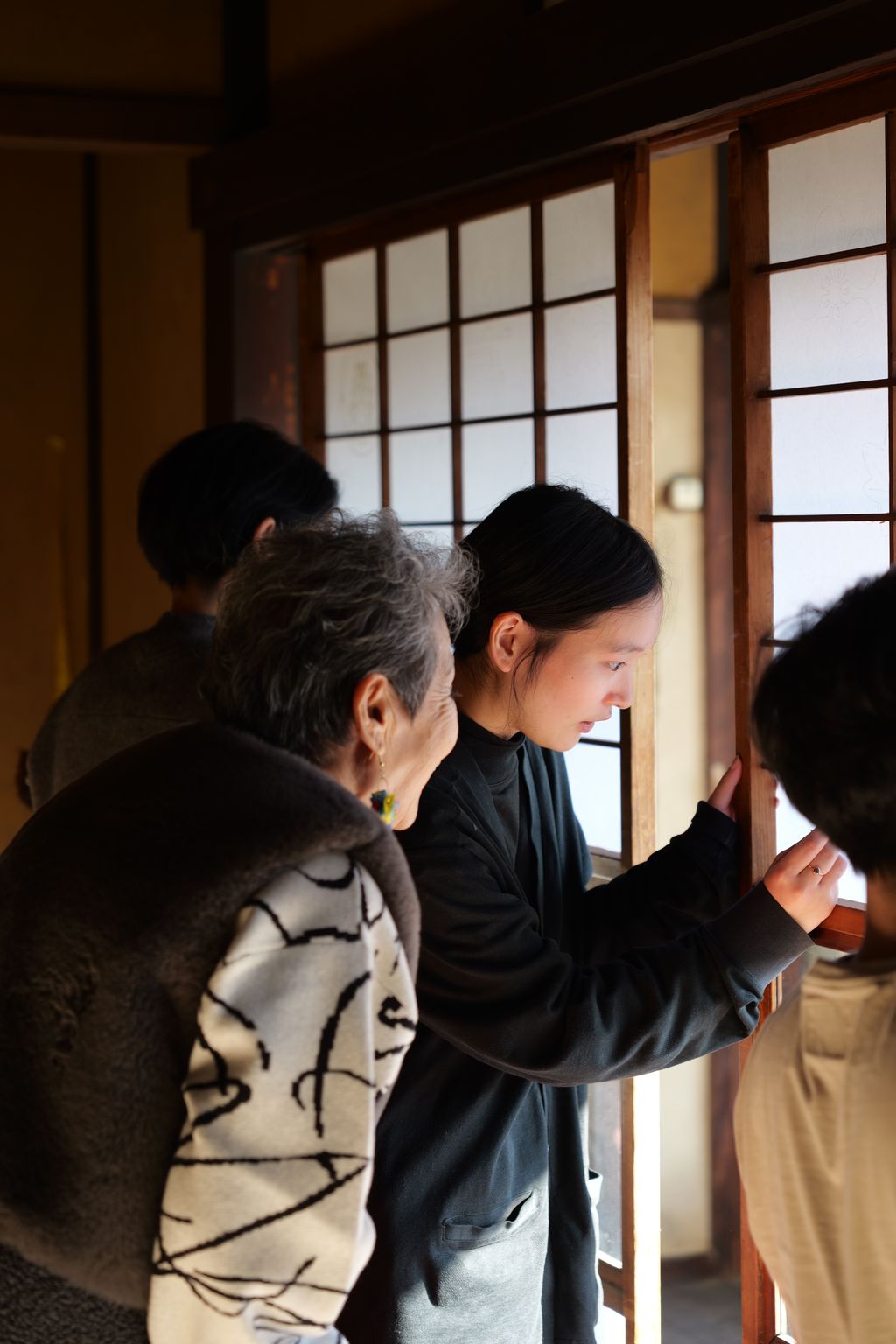
Eiryo
Well, I was mostly staying a bit away from the Kosugi residence... So interactions were happening without me knowing.
Towa
Exactly! During the workshop, a lady on a bicycle even came by to say, "Feel free to borrow my grass trimmer anytime!" Watching today's Final Presentation, I found myself thinking that the way old Kosugi residence's presence faces the street, and the fact that it's part of this temple, must naturally draw these kinds of connections. Did you personally feel that you weren't deeply involved with the community, Eiryo-san?
Weaving Buddhism Through the Creator’s Gaze — Creating the Stay from Its Earliest Stages
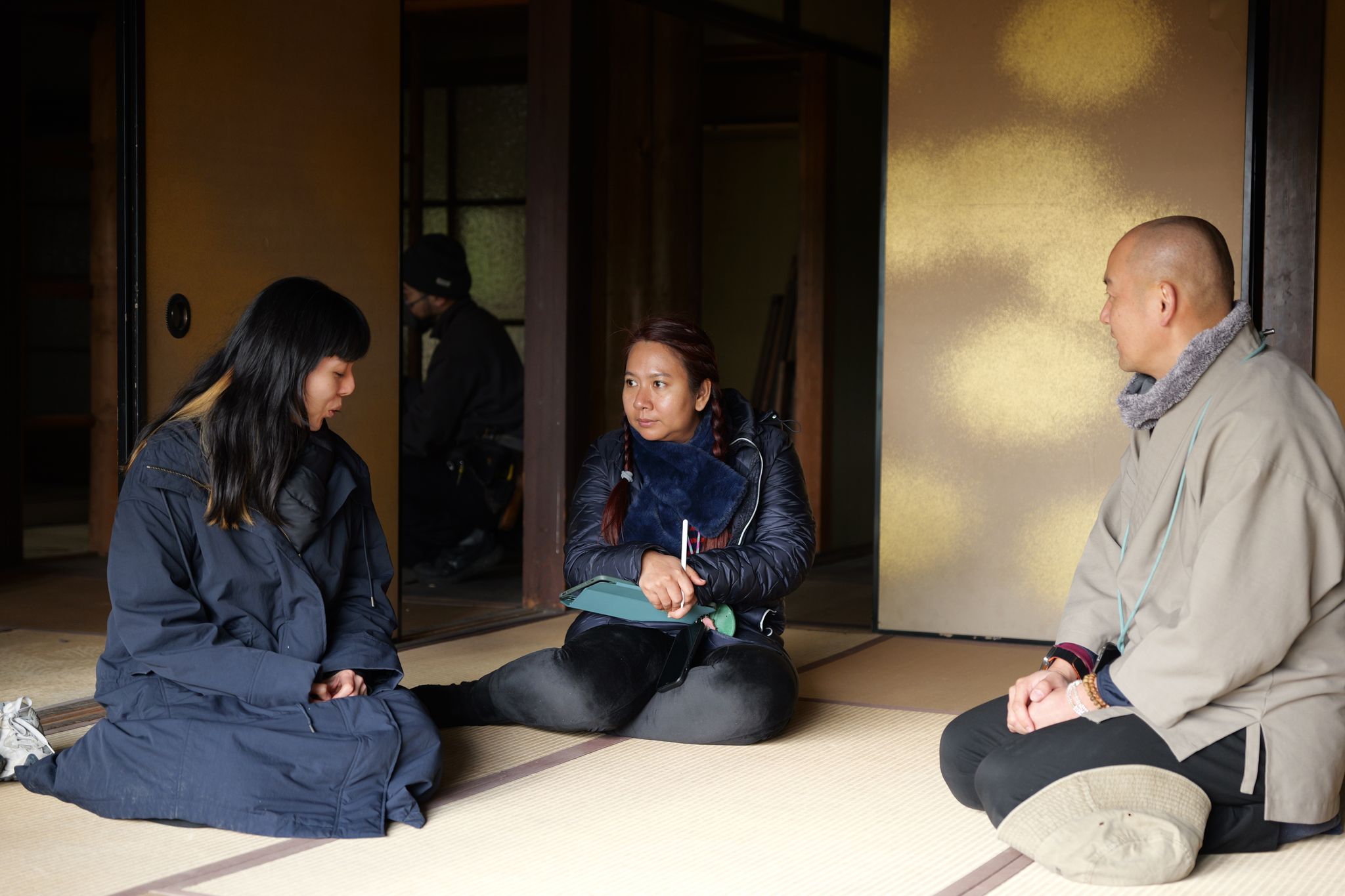
Aika
Early in the residency, Zun expressed wanting to learn about the temple, leading to a discussion session with Eiryo-san and Zun-san. Was there anything particularly memorable from that exchange?
Eiryo
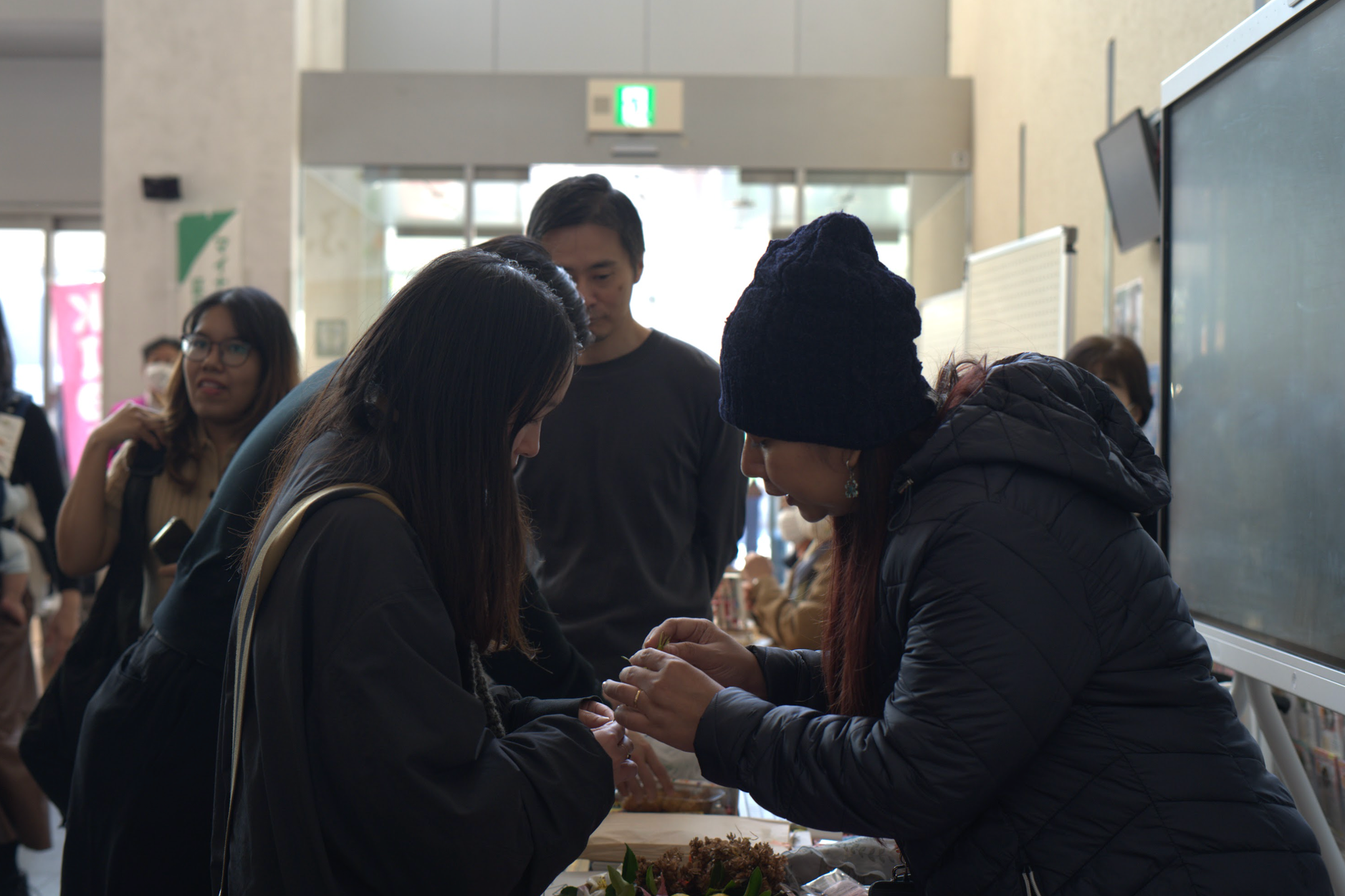
I think today's "offering" exhibit in the Final Presentation was directly inspired by that conversation. When she asked, "What rules are there for offerings?" I explained that while there's a basic form called the "Ten Types of Offerings," gathering every single item can be overwhelming. What matters most is the "heart behind the offering." Even picking a single flower can be an offering.
Then, this morning, she gathered flowers blooming in a neighbor's garden, balls, and other things she found nearby, and brought them to the venue as offerings. That's an idea that would never have occurred to us temple people.
Towa
Eiryo-san once said, "What matters more than elaborate rituals is having the heart to do it," and I thought that was wonderful. That exhibition was the result of the Buddhist perspective deeply embedded in everyday Myanmar life resonating with Eiryo-san's flexible way of thinking.
Eiryo
That might be it. Japanese people also go to temples or shrines when they're troubled, right? I felt that Zun's personal faith and her pure desire to "honor Japanese Buddhist deities" took shape through that meeting.
Changes sparked by the residency — Traces of the stay that continue to breathe
Towa
Next question. I'd like to ask if Zun's residency brought any changes to this place.
Eiryo
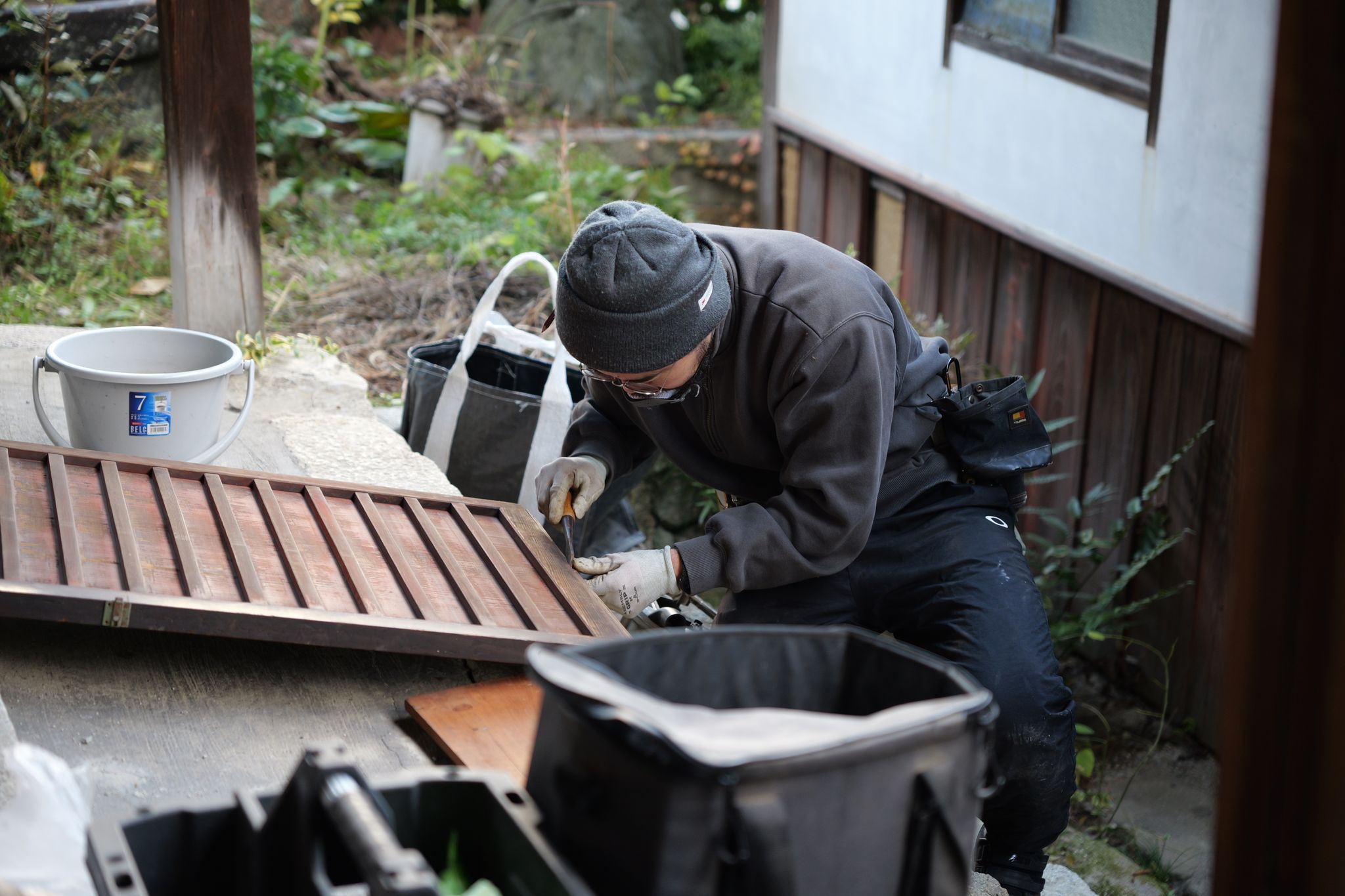
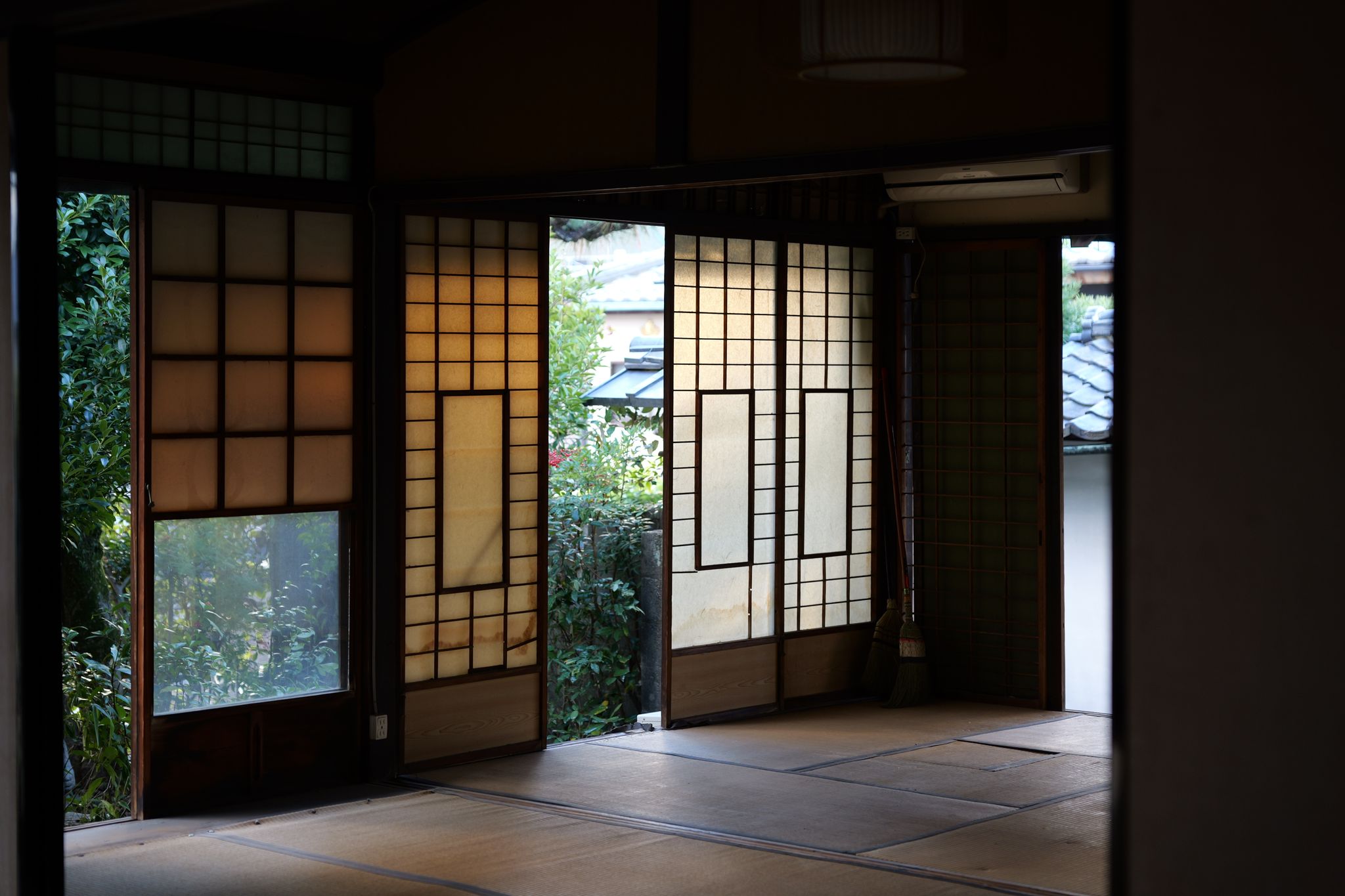
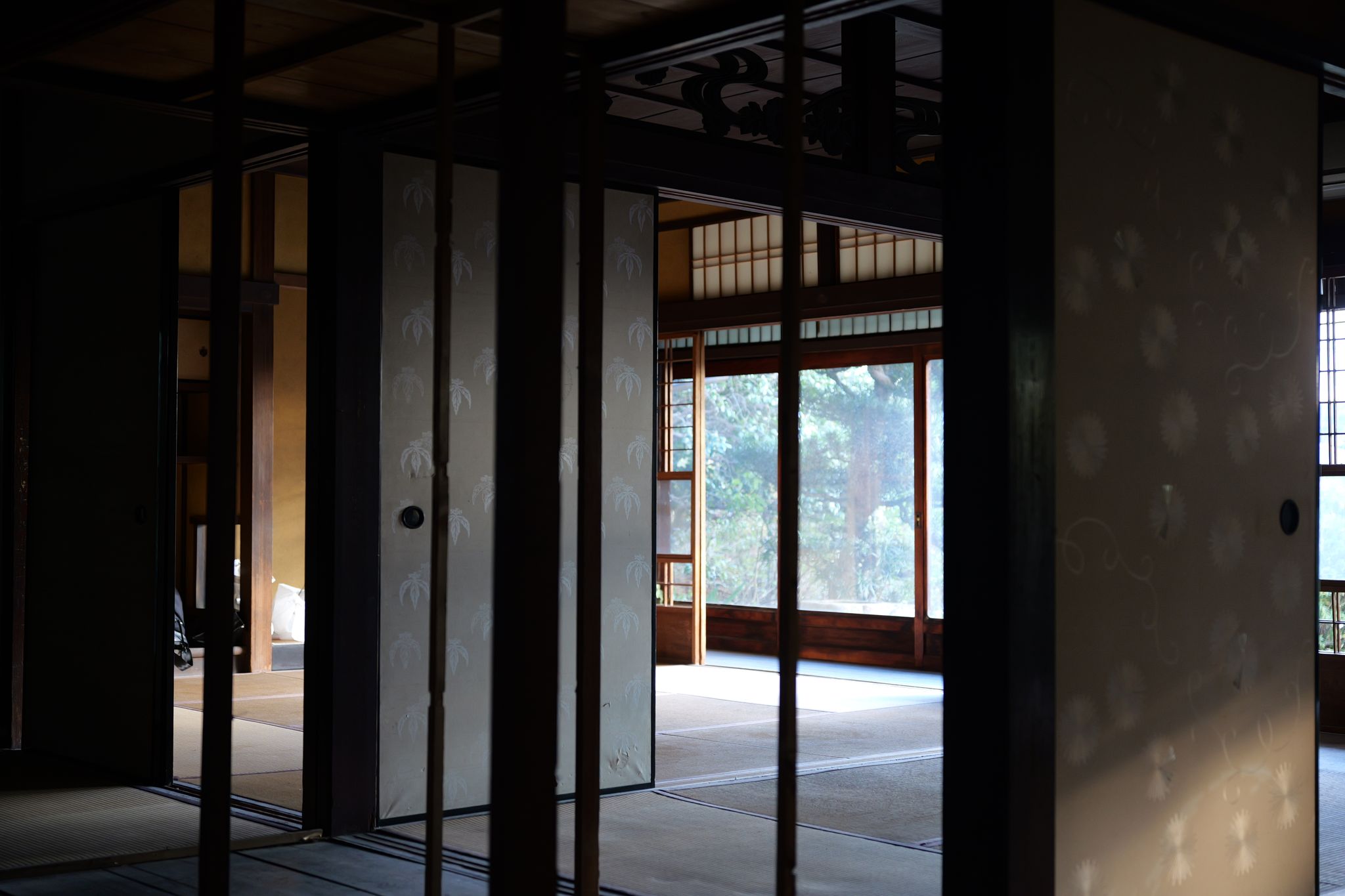
First, the old Kosugi residence "became accessible to people" (laughs). Do you remember the state of the place on the first day? It was completely untouched, with an overwhelming smell of dampness and mold... Honestly, it was a place you'd rather not enter. It was so dangerous you couldn't even go in without shoes. Now, it's become a space where you can sit down and even meditate. You can see the garden and walk all the way to the storehouse. I was truly amazed by this transformation.
Towa
It was striking when a university student visiting today said, "I want to live here!" The potential of this place has unlocked thanks so everyone’s care. How do you plan to utilize the former Kosugi residence going forward?
Eiryo
Rather than the temple deciding something, I’d like to see people saying that "I want to use this space," feeling free to utilize it.
Towa
Have you personally experienced any changes through hosting this event?
Eiryo
I really thought, "I wish I could speak more English." I felt bad for her that we couldn't have a deeper conversation directly. I regret that I ended up speaking to her mostly in Japanese. Even so I want to continue hosting people like this in the future.
The Best Moment of the Stay ーExpanding the Possibilities of Residency
Towa
Now, for the final question I ask everyone: What was the "Best Moment" during this stay that particularly moved you?
Eiryo
The first one was definitely the first day. I remember it well welcoming her and showing her around the garden.
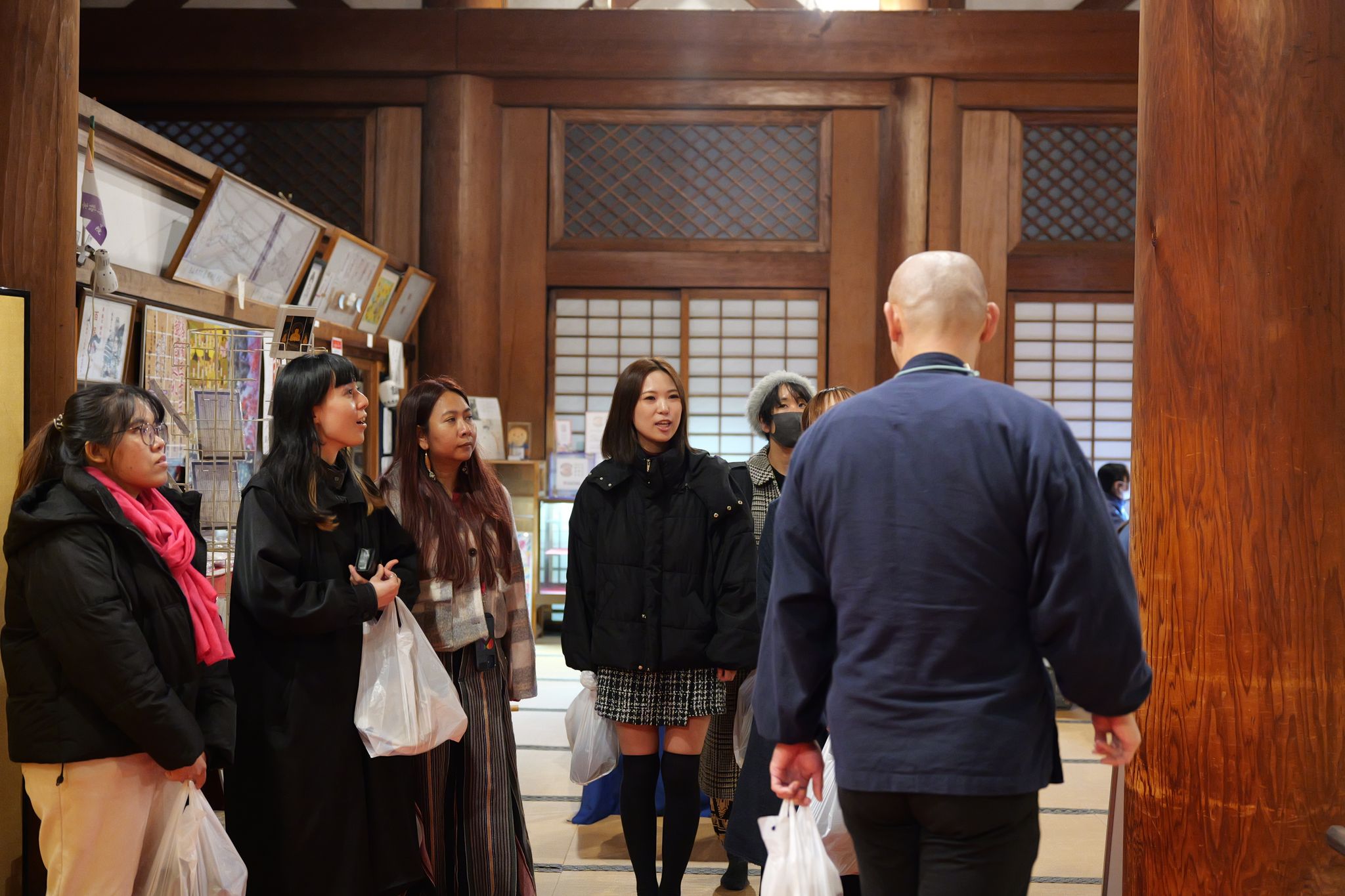
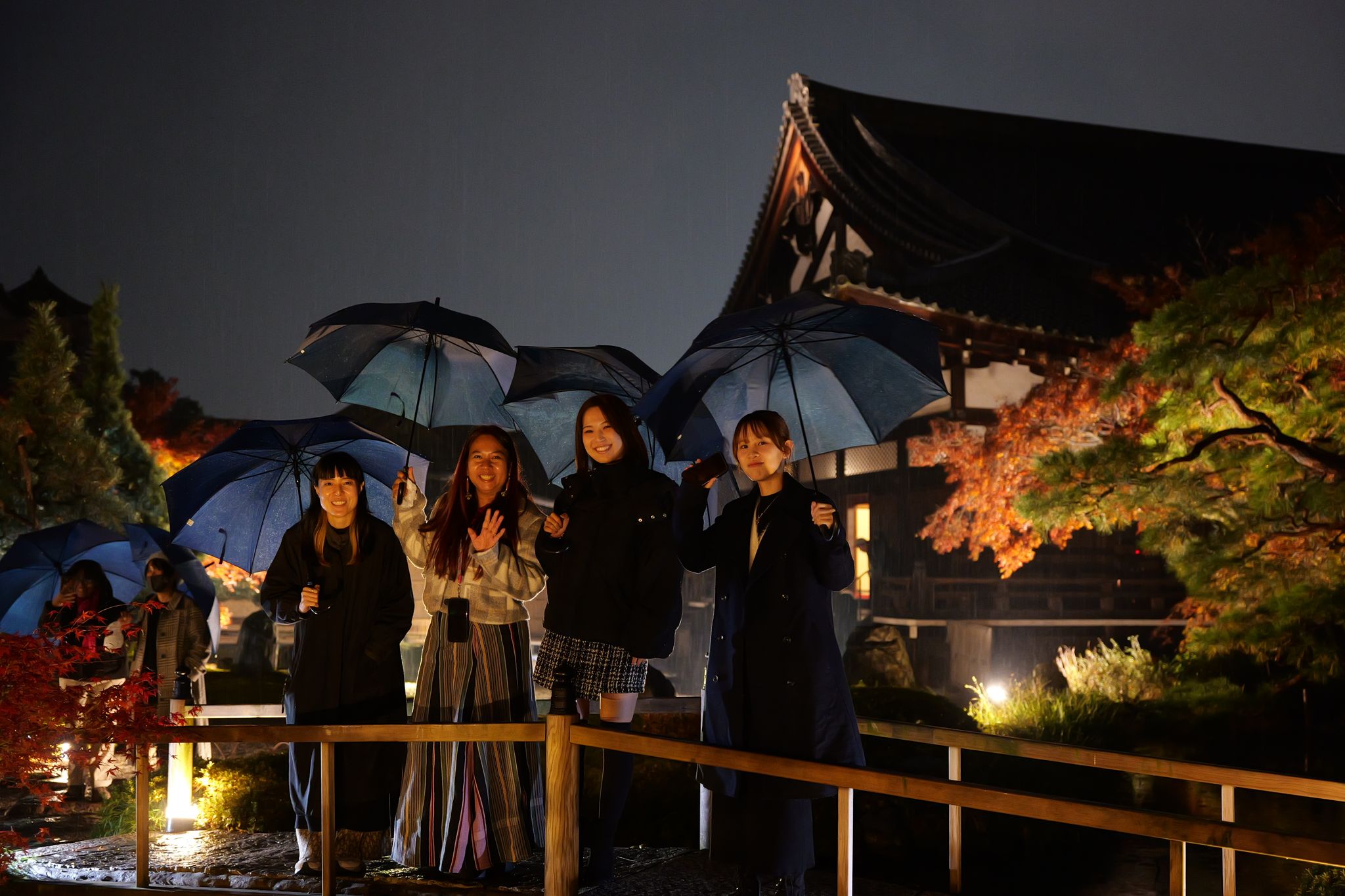
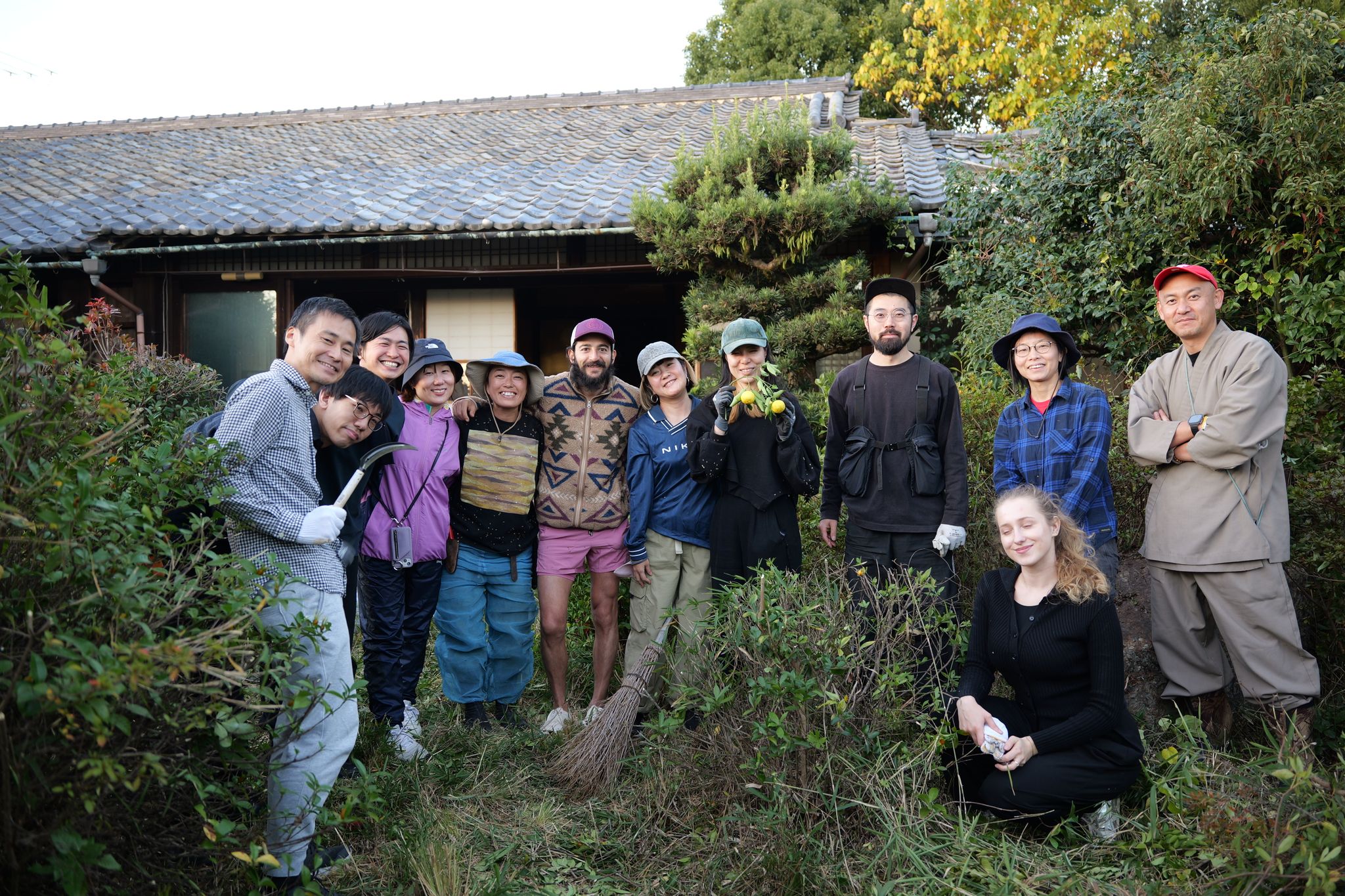
The second highlight was the day we gathered to clean the old Kosugi Residence. Through gardening workshops and similar activities, the space was gradually reclaimed and brought to life — a truly meaningful moment for all of us.
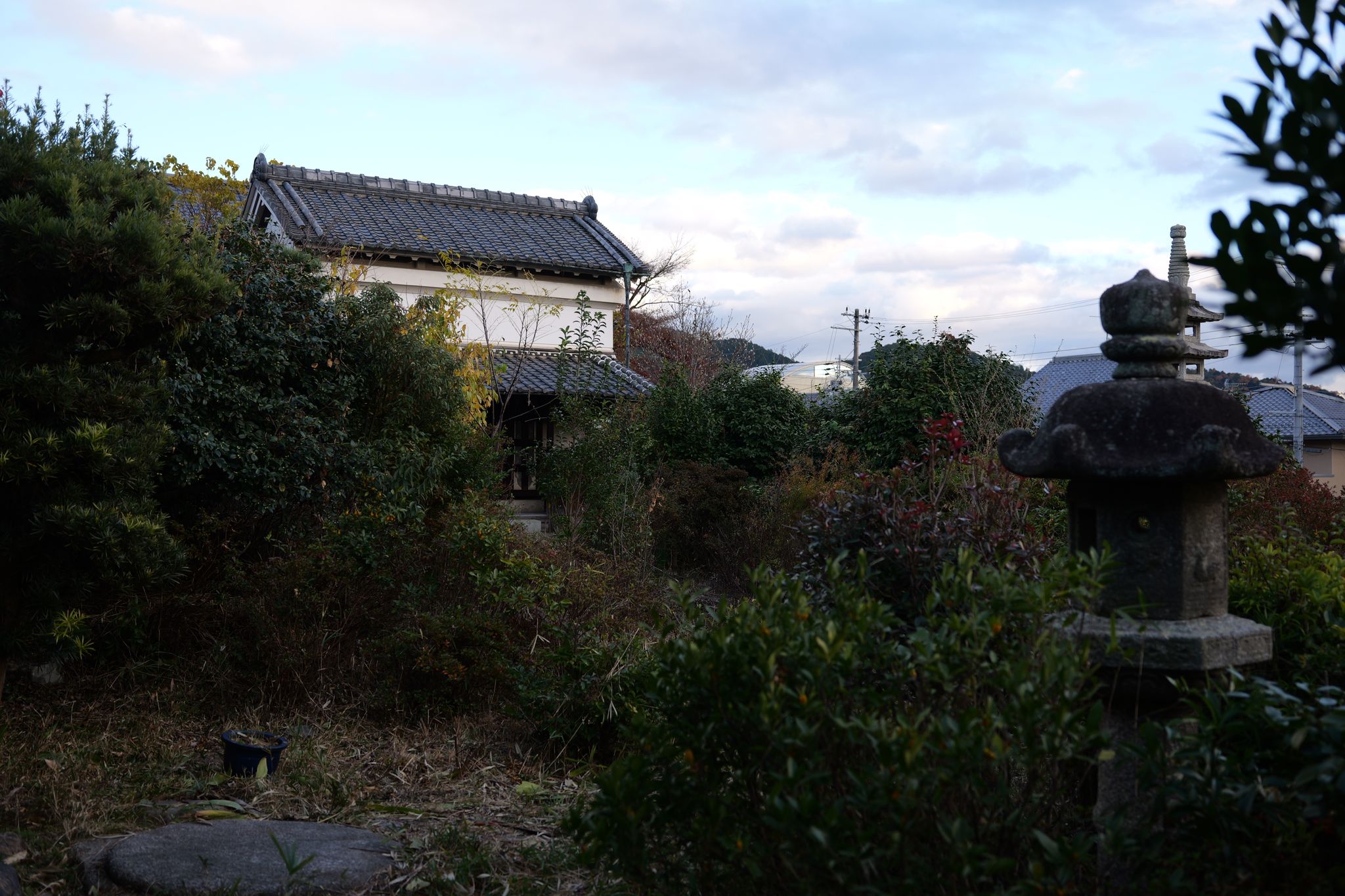
And last but not least, the day of the Final Presentation.
Towa
The atmosphere today was truly wonderful. Surrounded by Myanmar's tea salad and tea prepared by Youth Coordinator Kokone-san, conversation flowed naturally... It felt like a "borderless" scene, where diverse cultures were absorbed and blended together—more than simply mixing, it was as if the boundaries themselves had dissolved.
Eiryo
I was deeply moved that so many people came. people we never have met otherwise. Usually, we give Dharma talks and do missionary activities for our temple members. That, of course, is important. But at the same time, reaching people who know nothing about Buddhism or have never had any connection to it help expand the circle of understanding. "Continuing to share with those who already know" and "reaching out to new people." I felt once again that both wheels are necessary. This residency became precisely the catalyst for that.
Towa
With the addition of an international perspective, it feels as though the temple has opened itself, hasn’t it?
Eiryo
Yes, that’s exactly how It feels.
Interview with Creator — Zun Ei Phyu
"asterisk" – Embracing the Creator's Background ー Pieces of the * gathered through the residency
Towa
First question: Why Kyoto, and why did you decide to participate in this "*** in Residence Kyoto"?
Zun
It started with a message from an art curator. Two points drew me in. One was that a "temple" was the host. That was very catchy. The other was that this wasn't just an "artist-in-residence" program; it bore the name "asterisk."
Typical residencies tend to be limited to artists, but here, anyone can be the "main character (asterisk)". They could be a carpenter or a chef. I was strongly drawn to the goal of connecting different specialists to create a space for dialogue and co-creation.
Towa
Zun, you have a diverse background, engaging in both artistic activities and healthcare. That's precisely why I felt your multifaceted perspective would be a perfect fit for this program.
Zun
I feel the same way. My work is about the "process" itself, so this residency's emphasis on process over creation really resonated with me. The ironic thing is, before coming, I thought, "A month is just right—I can take time off work." But once I arrived... it was nowhere near enough! (laughs) Every artist says the same thing. A month is only enough for research; you need another month to actually produce something.
Towa
Mr. Mizuguchi, who ran the Umekoji area residency this year, also said the first week was spent just recovering from jet lag. A month is really short to research and create something. For us too, only a month feels far too short.
Zun
That's right. For artists who visit repeatedly, or someone like a carpenter who completes their work in a specific studio, a month might be enough. But for someone like me, who works step by step through the process, it's too short. Meeting people just once or twice isn't enough to develop deep collaboration.
Connections with the Community, Born from the Community — Gentle Changes Emerging Through Acceptance
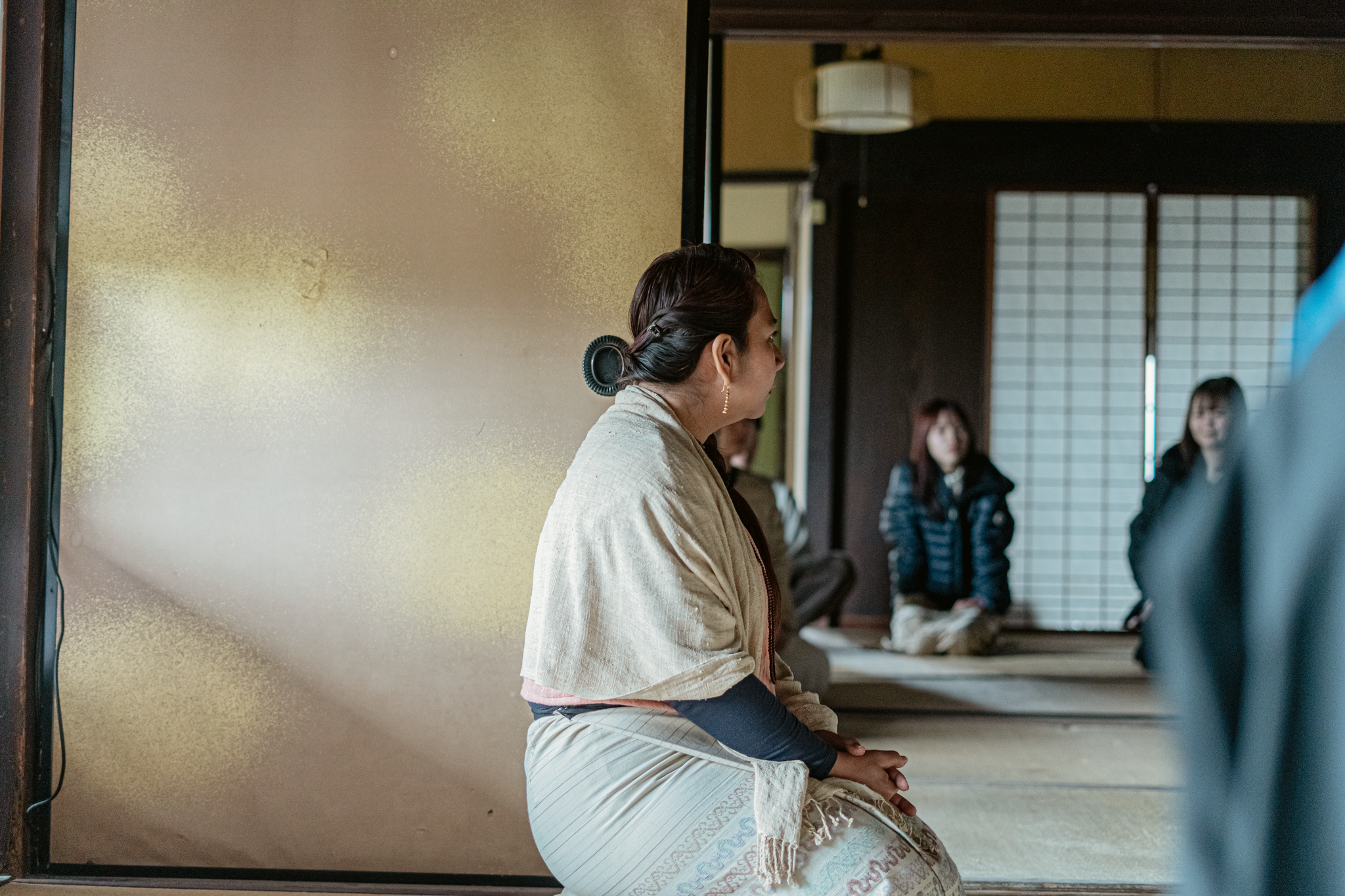
Towa
The exhibition at the former Kosugi residence felt deeply connected to the local people and culture. Did you envision it that way from the start?
Zun
Honestly, it was completely different from what I'd imagined before coming! The photos sent in advance a place in the woods with a broken door, before the house was repaired. I thought, "Maybe I'll just meditate and enjoy the forest."
But when I arrived, the house was right in the town center, very close to the temple. And above all, the raw state of this former Kosugi residence was wonderful.
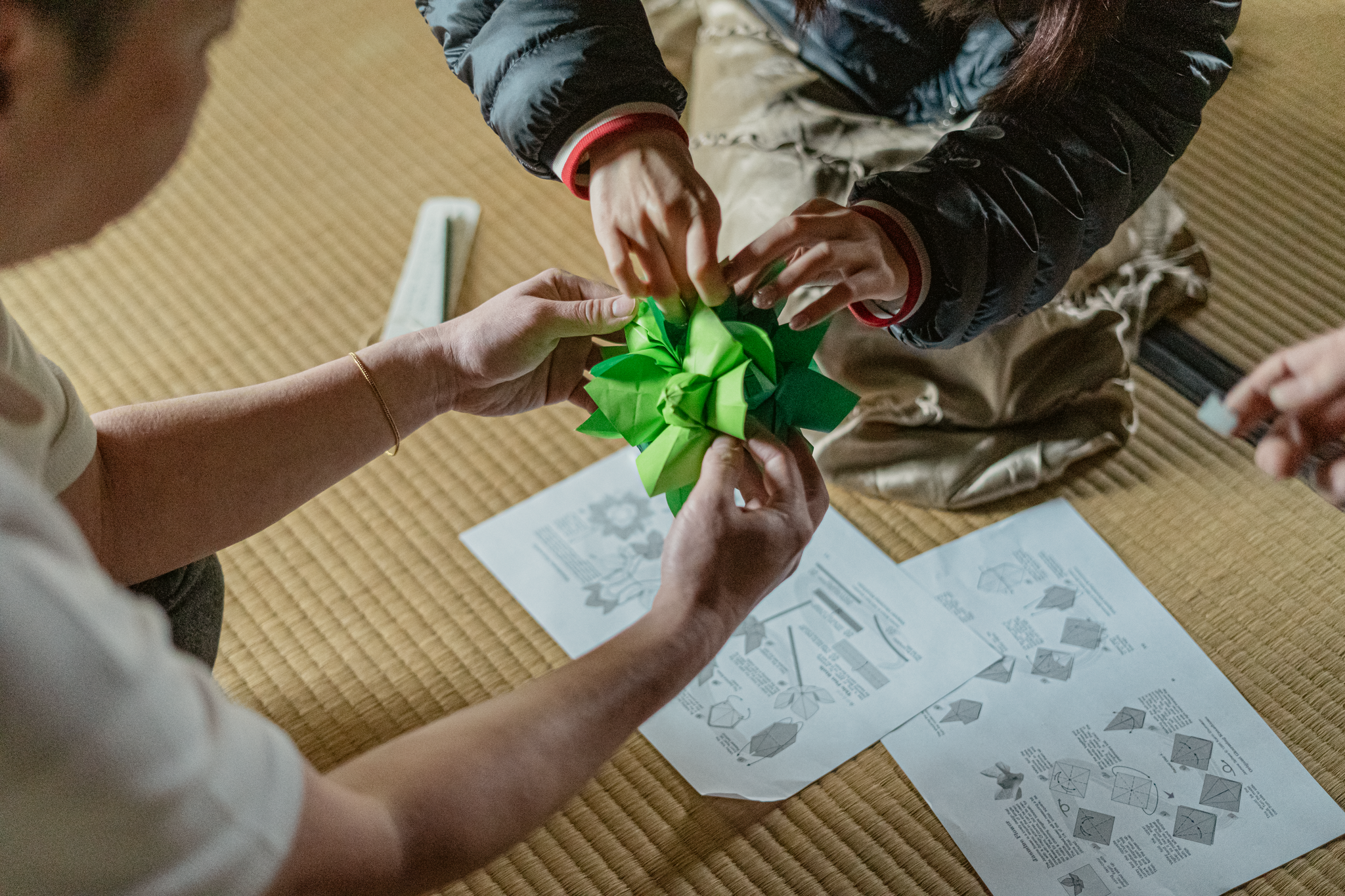
Initially, since it was Japan, I planned to hold origami workshops, create installations, collect data, and attach QR codes... But standing in that space, talking to people, hearing things like "Tourists go to the temple, but surprisingly, locals don't," and learning about the relationship between the temple and the community changed my thinking.
How could I create an organic connection, not something imposed? I wanted to incorporate elements from Myanmar, but not just bring in foreign objects. I wanted to find a relationship with this temple, these people, and their way of thinking. Watching carpenter Shimako-san repair the old house, researching the structure and the "storehouse," step by step, it took shape into what it is now.
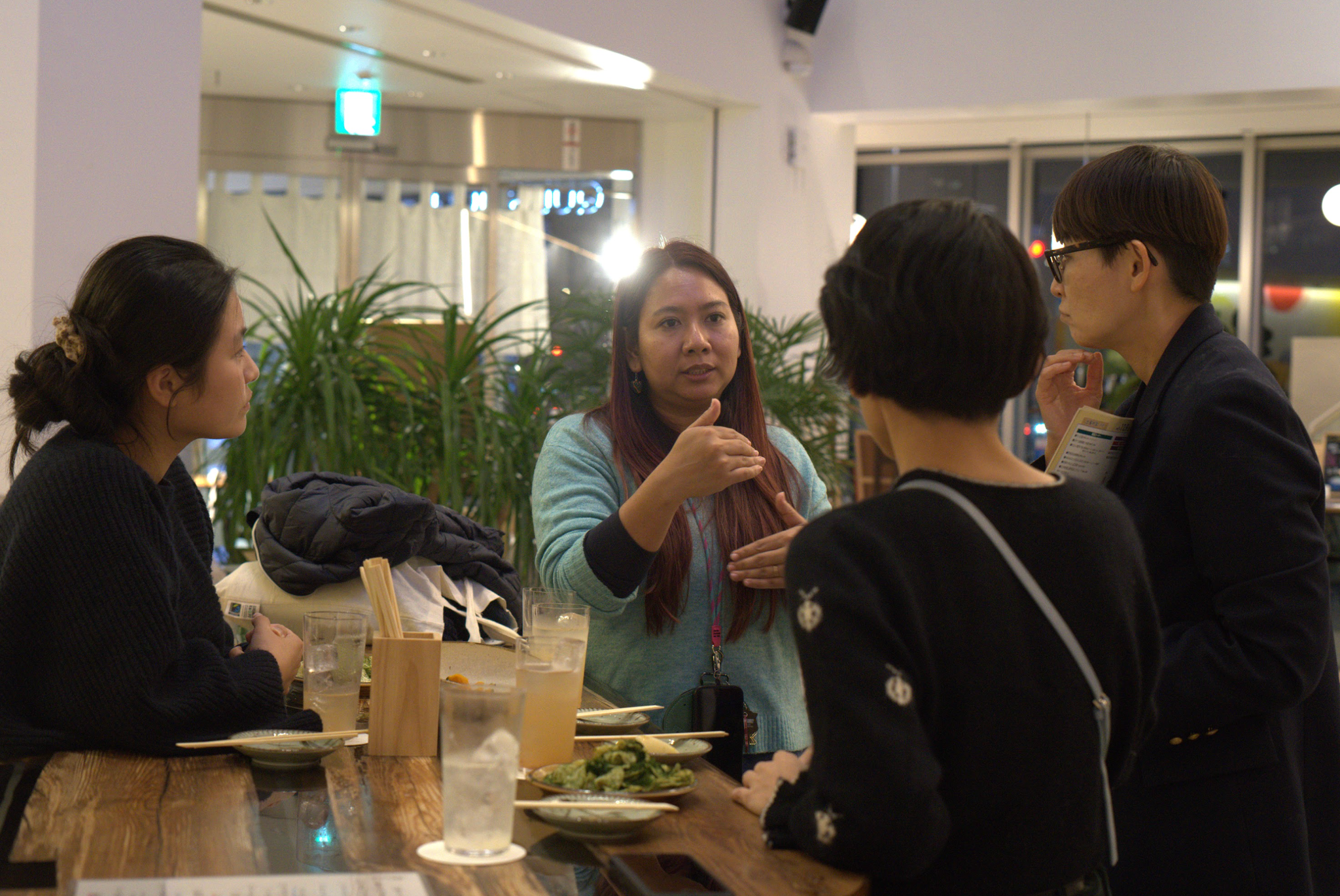
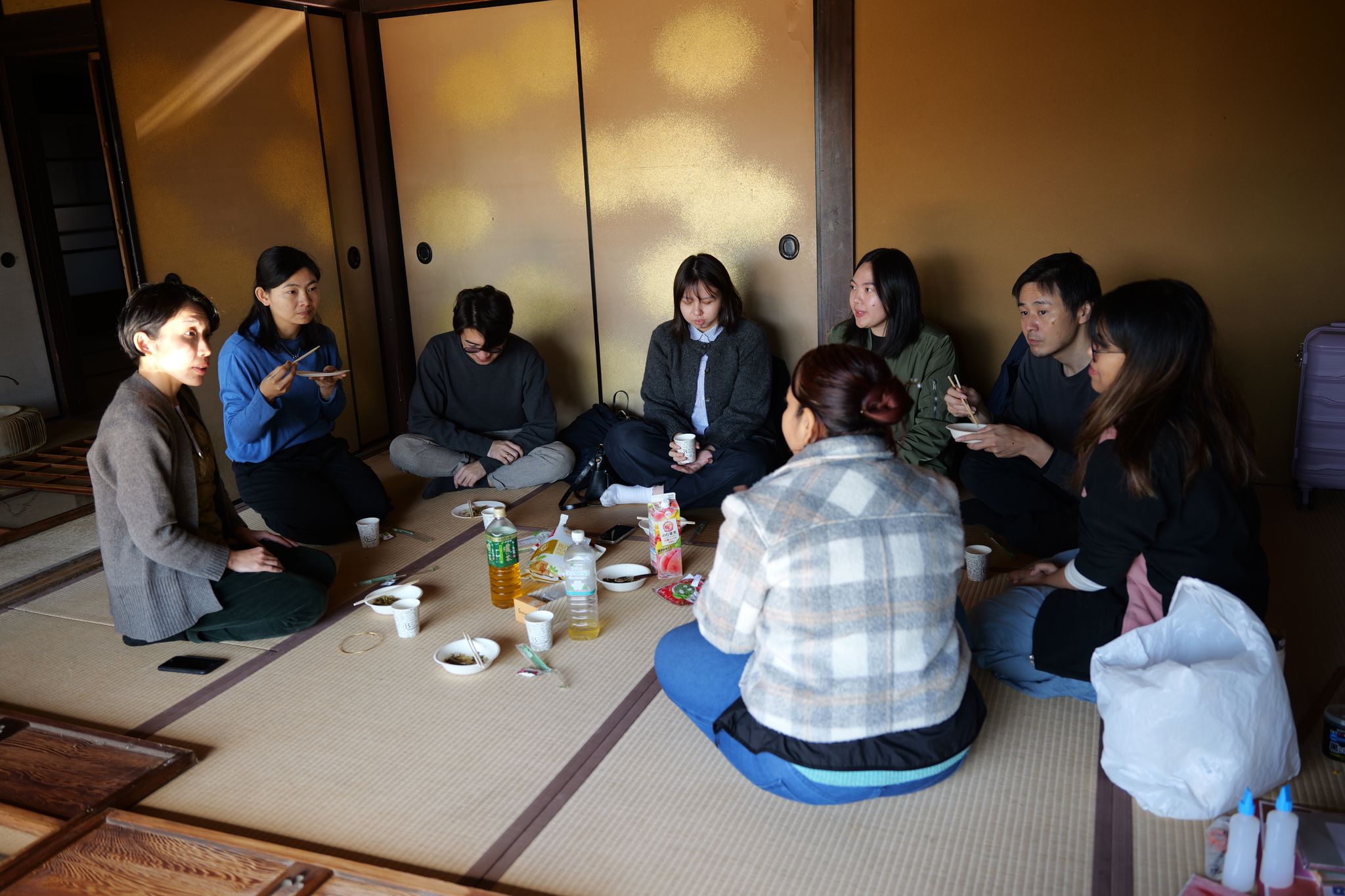
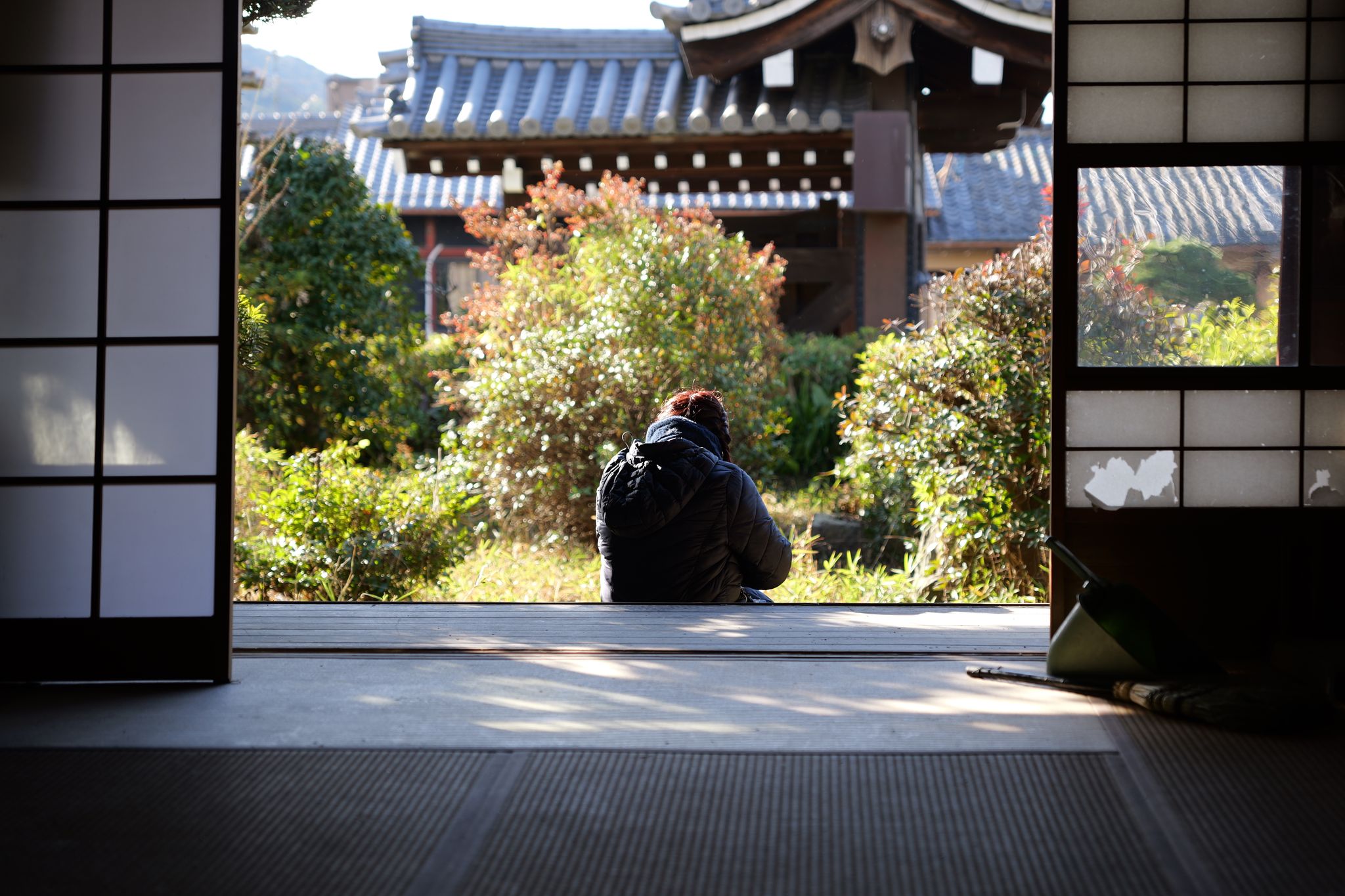
Towa
So you changed the plan after actually seeing the house. What parts of the former Kosugi residence did you like?
Zun
The structure itself. The sense that each room had a purpose. Especially the glass windows, shoji screens, corridors, and garden visible from the event space... That view was perfect. The "storehouse" was also wonderful. I would have loved to hold meditation sessions inside it if time allowed, but we ran out of time and had to give it up.
Towa
That location faces a major street, giving it a unique setting. When we held the grass-cutting workshop, local passersby stopped to ask, "What are you doing?" and joined in, enjoying themselves. Did you feel a real connection to the community?
Zun
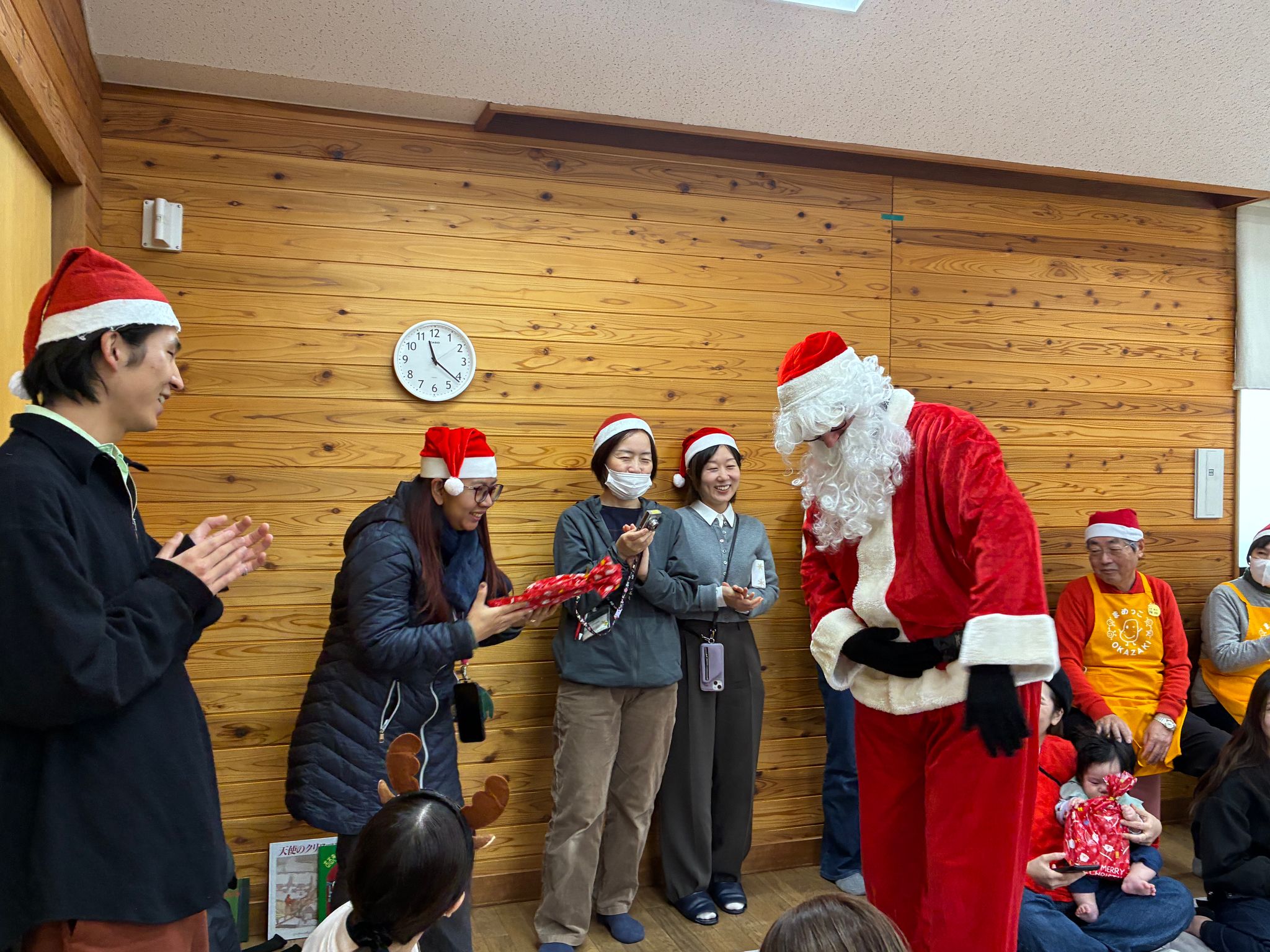
Yes, very strongly. During my stay, there were many small events—the district's citizen festival, the children's Christmas celebration, last night's fire safety patrol. Since I don't speak Japanese, direct conversation is difficult, but I could feel what the locals value.
Reading about it in a book and actually experiencing it there are completely different. I think the best experience isn't just traveling as a tourist, but staying through a project like a residency, gaining the local perspective and advice.
Youth Coordinator Note by Kazuki
Afterwards, we went out to eat together. I got to hear about the political situation in Myanmar and how it connects to the art world. It really hit me how easily we can just go about life in Japan without thinking about these things. We talked about so many things—the way his work is tied to politics, what “expression” means for Japanese people, and more. I learned a lot.
Cocone
While preparing for the final presentation, a woman from the neighborhood came to see the garden. She had always been concerned about this old house and was delighted to see Zun-san mowing the grass and taking such good care of it.
Towa
Perhaps Zun's arrival helped strengthen the bonds between Kurodani Konkai Komyoji Temple and the wider community. After your stay in Kyoto and Kurodani, did your own way of thinking or your creative style change in any way?
Zun
Rather than experiencing a dramatic shift, I feel I gained a much deeper understanding of the people of Kurodani and the temple itself. At the same time, my interest in "paper (washi)" grew much stronger. I became more drawn to researching and exploring the possibilities for dialogue through paper, not only as a material, but also through the people who make it and the process behind its creation.
Towa
I was amazed by the "shoji" piece you exhibited. Where did that idea come from?
Zun
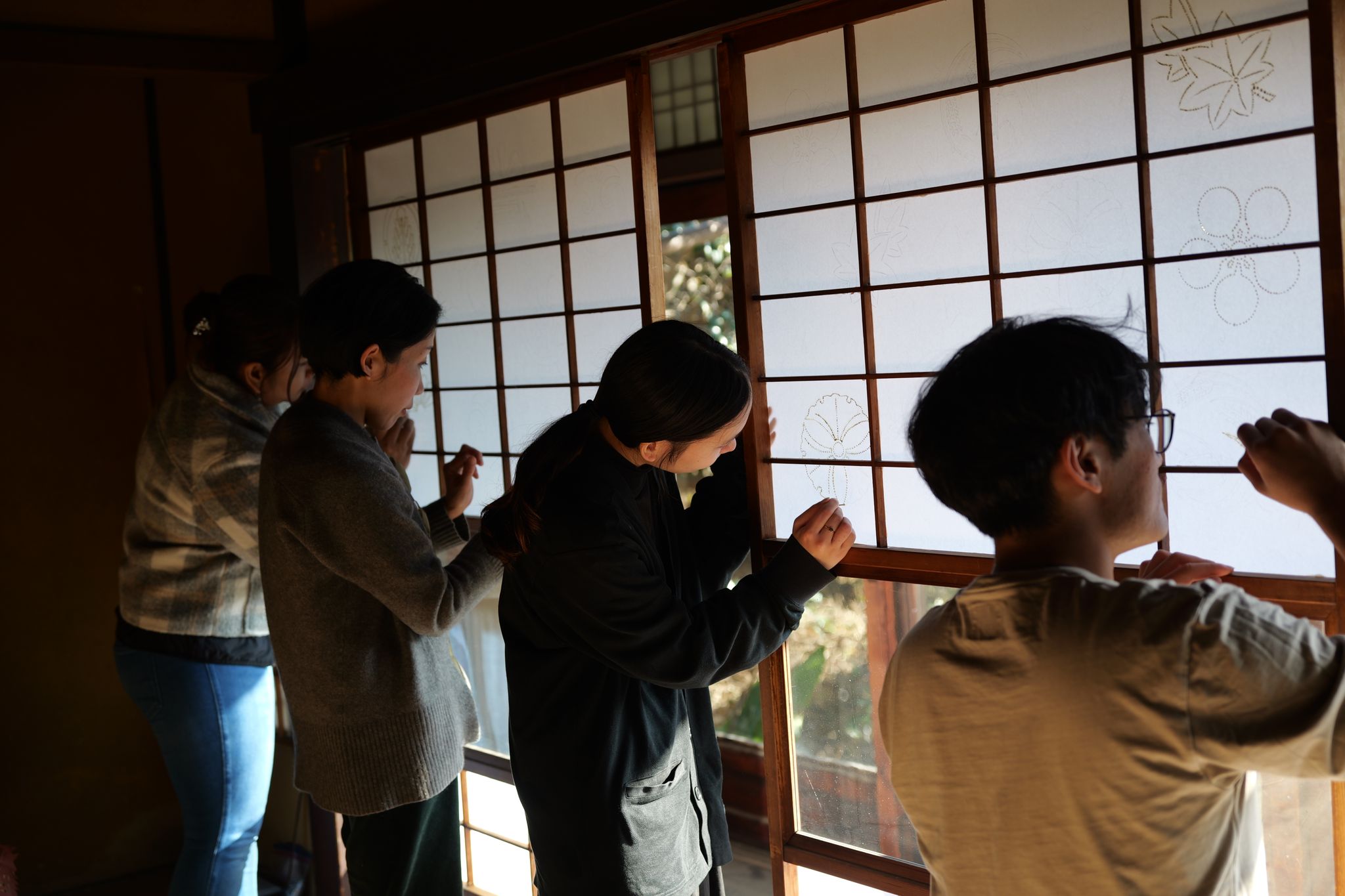
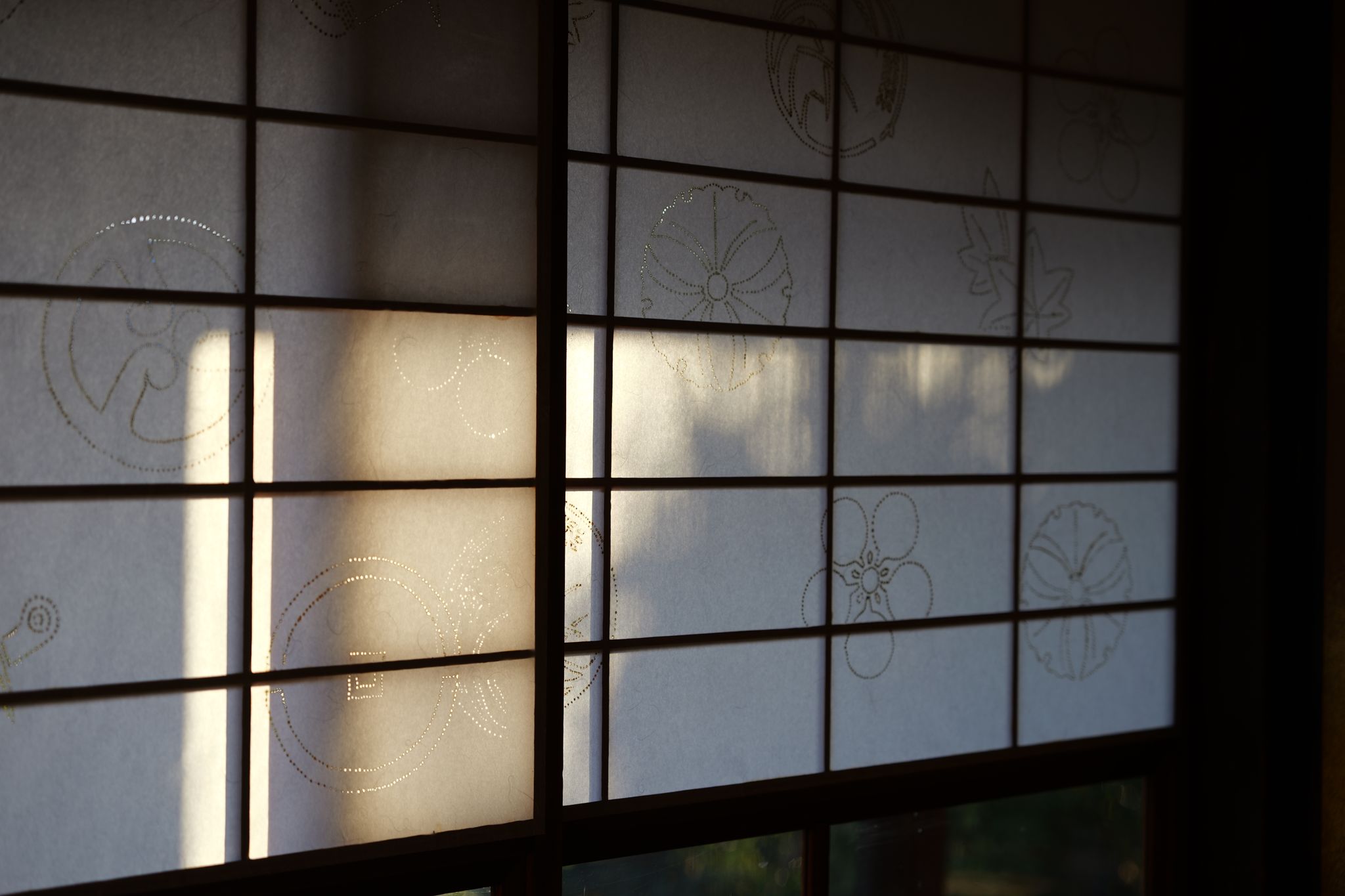
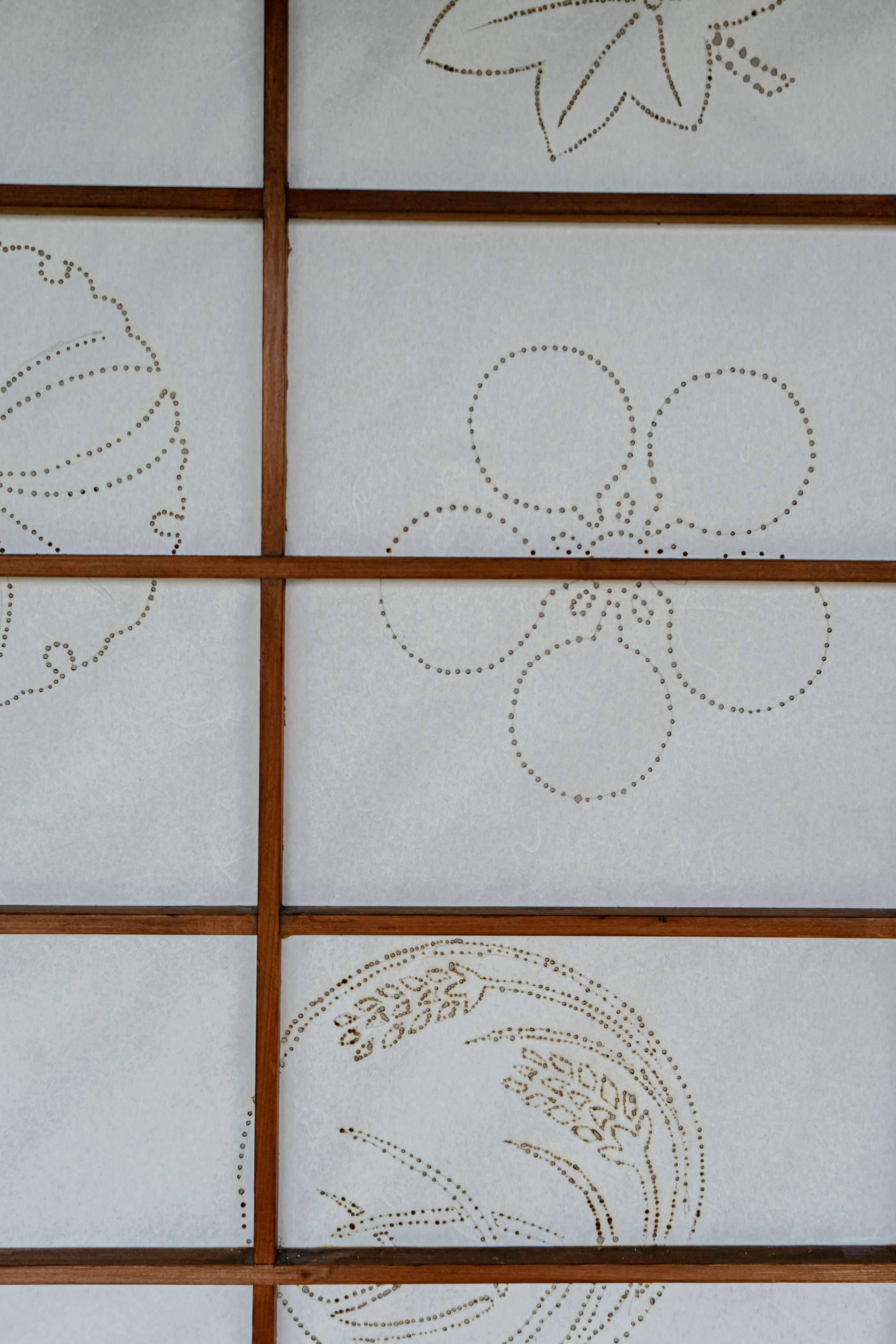
One day while working with carpenter Shimakō-san, I saw the light and shadows streaming into the house and thought, "This is it." I'd been making works using shadows before, but the way light entered here was special.
Researching temple and Buddhist knowledge led me to the concept of "Impermanence." How to show that everything changes.
That's when I thought of using incense sticks. Incense is a tool for prayer, and the process of burning holes into the shoji becomes a symbol of impermanence. The shape of the holes and the charred marks vary depending on the pressure applied, the intensity of the flame, and the concentration at that moment. It possesses a beauty unique to that instant, different from ordinary paintings. When light passes through those holes and falls into the room like sand, the house naturally becomes one with nature.
Towa
So carpenter Shimakō's philosophy influenced Zun's insight into shoji screens.
Expressing Impermanence ー An Open Exhibition "That Rejects No One"
Towa
Buddhism in Myanmar and Japan (Jodo-shu) are a bit different, right? Did those differences, or your stay at the temple, influence your work?
Zun
I don't seek to compare religions. All share the common intent of "striving to become better people." Fixating on differences breeds conflict.
I simply wanted to understand the practices here and the relationship between the temple and the community. For the work, rather than foregrounding "Buddhism," I incorporated "impermanence"—a core concept common to all Buddhist traditions.
Towa
This was the only religious facility among the six residency programs we conducted this year. How did that influence your final output?
Zun
I utilized the space of the old house at the temple entrance and included elements connecting the temple and people, but I didn't want to promote any specific religion. I wanted it to be a place open to everyone, whether Christian, Muslim, or anyone else. Head Priest Eisho conducted a Buddhist ceremony to open the space, but I see that within the context of "precisely because it's a place owned by the temple, we invite everyone in."
Aika
In an interview, Eisho-san said, "I was truly delighted that so many diverse people—even those who don't usually come to temples or had no interest in Buddhism—came to the presentations."
Zun
I'm so glad to hear that.
The Best Moment of the Stay! ーCherishing life, letting thoughts wander to this very moment
Towa
For the last, could you please share your top 3 best moments during your stay.
Zun
That's tough... there are just too many!
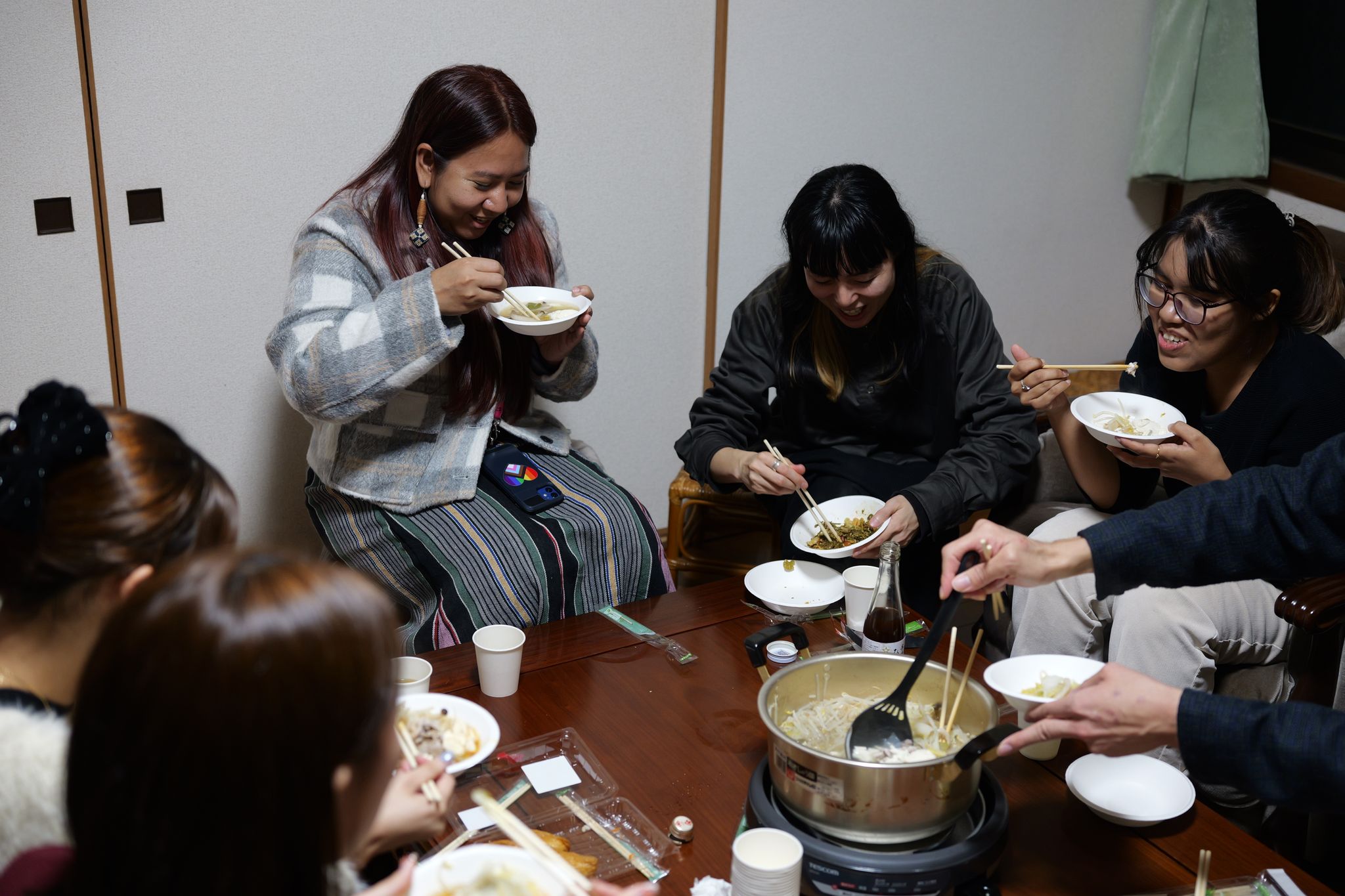
First was the evening we all ate together here on the day we arrived. It was cold, but Eisuke-san showed us around, and the table we shared with everyone we'd just met was truly warm.
The second was yesterday and today's events. People I met over this past month kept showing up, one after another.
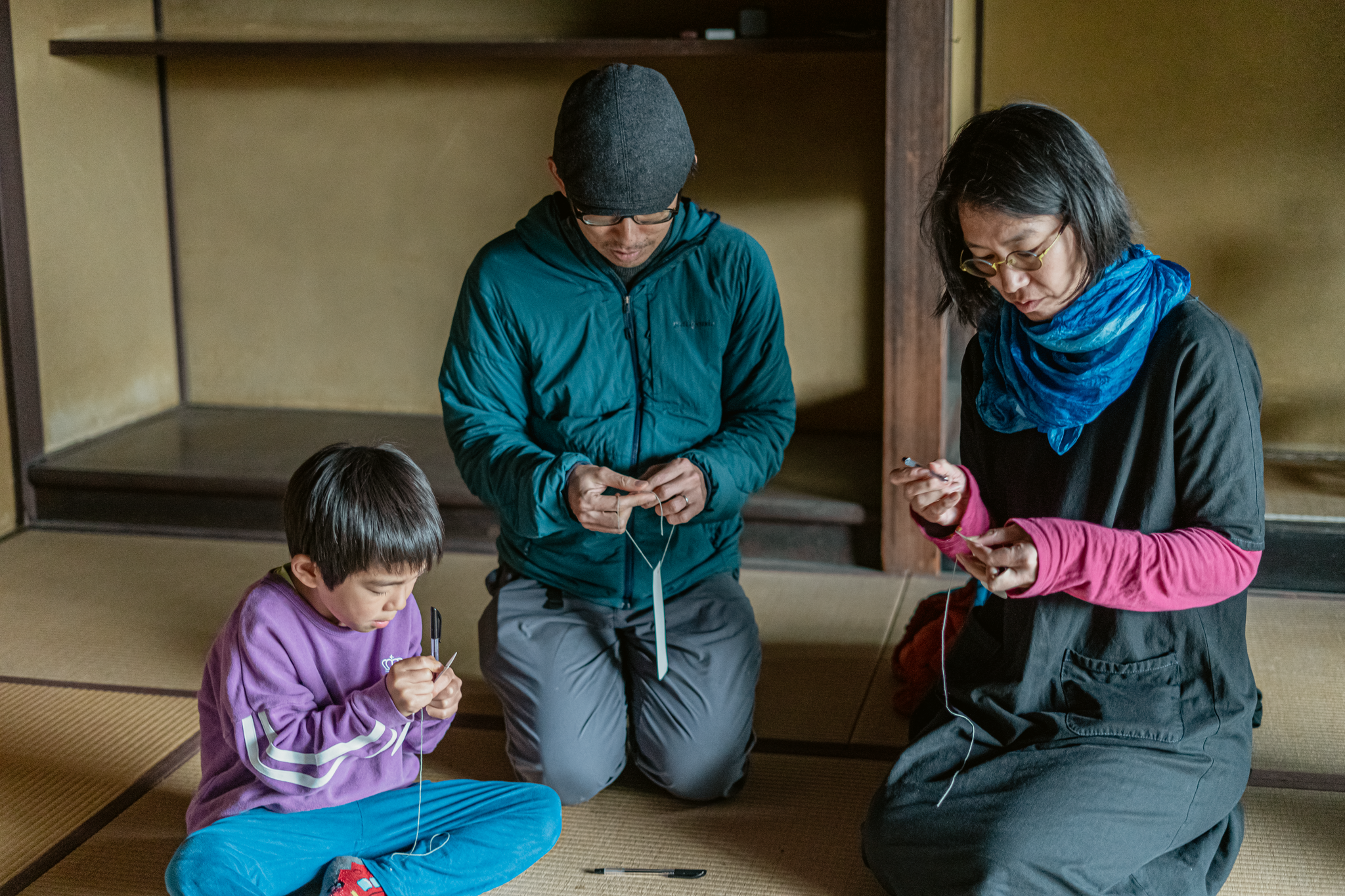
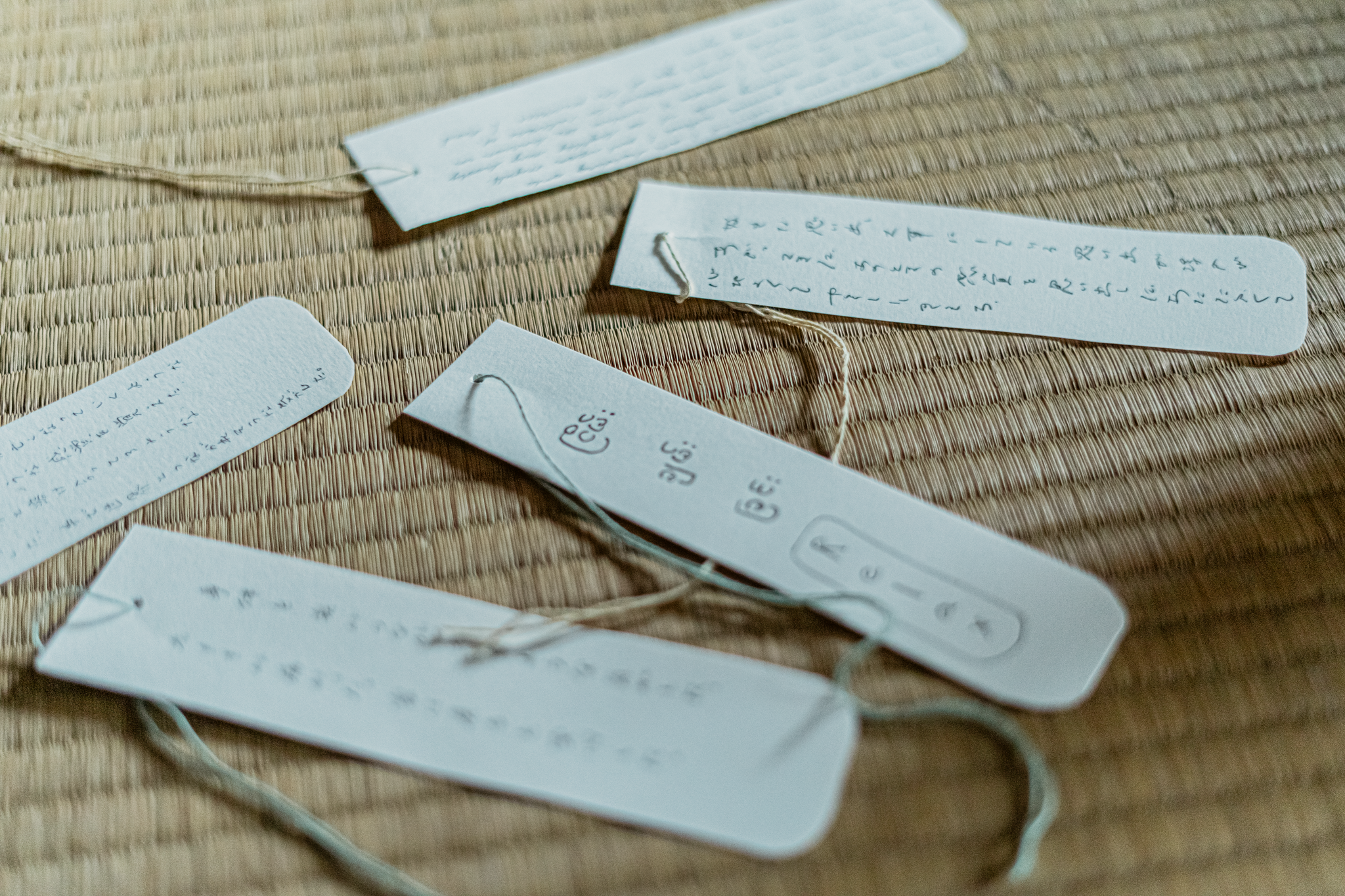
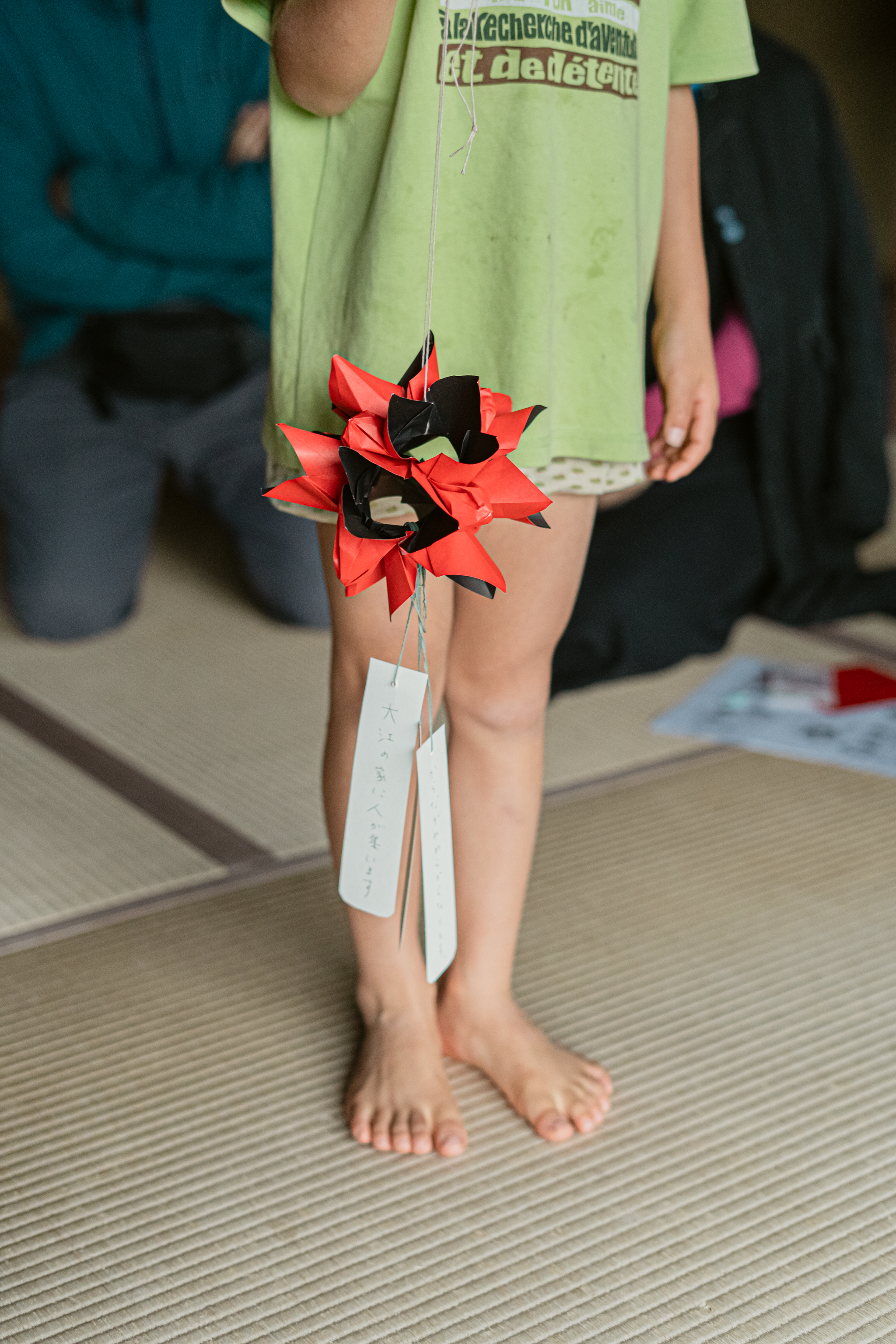
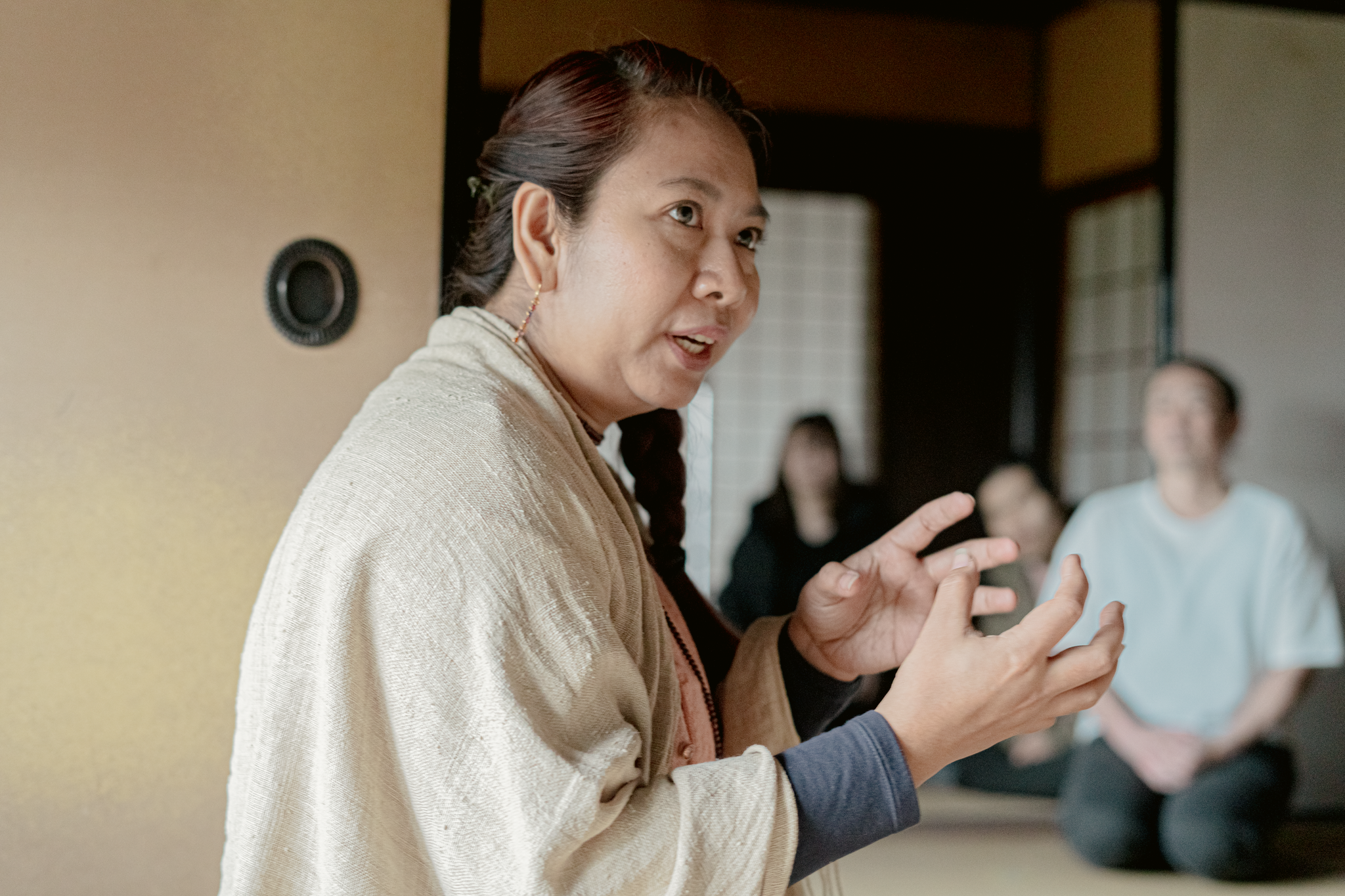
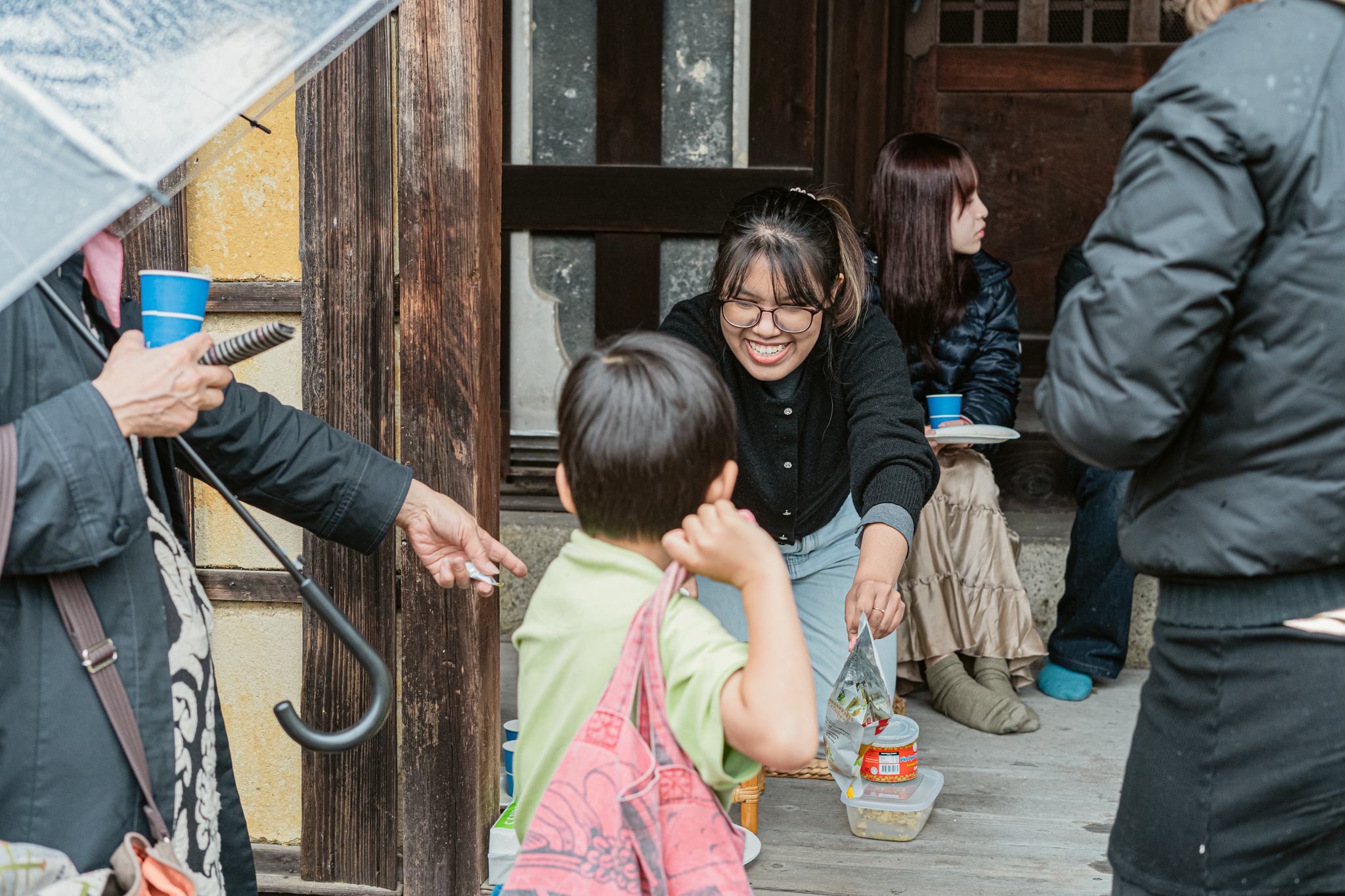
The third isn't a specific moment, but all the conversations I shared with everyone even with the slightest moments. Discussing things during workshop breaks, sharing thoughts. The accumulation of those moments is my best memory.
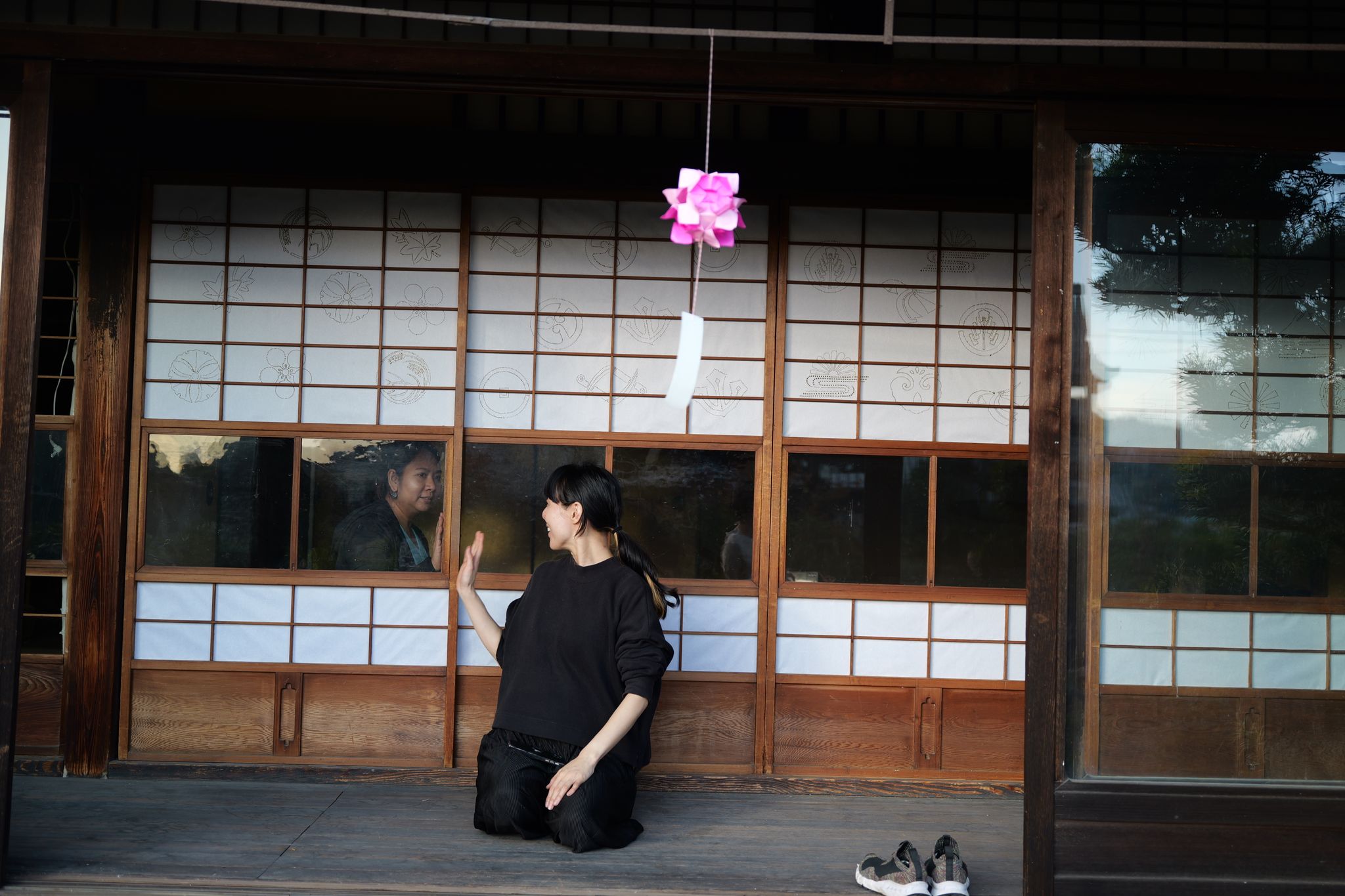
Cocone
During orientation, Zun told me, "I want to work with you." Why me?
Zun
Because you mentioned being interested in traditional crafts. I thought it would be wonderful to spend time together, share that interest, and work. Sorry if I put pressure on you during your exam period (laughs).
Cocone
No, I was really happy that you invited me!
Zun
People tend to forget what's truly valuable while thinking "I won't die yet." It's similar to how we don't really focus on studying until exams are approaching (laughs). But when faced with death, we finally start thinking about "what should be prioritized."
That's precisely why I'm trying to deeply feel and savor how "special" and "precious" this moment is, this month I'm spending with everyone in this old house.
Towa
One member wrote in the Youth Coordinator report, "Hearing the Myanmar students' stories made me realize how fortunate it is to be able to plan for the future."
Zun
Your thought process changes depending on your environment. Ten years ago, I would have thought further ahead. But now, I'm just trying to enjoy this very moment.
And right now, here in this old house, I'm spending good time with you all.
It might not last long, but even so, it's already very, very special and very valuable.
I want to cherish enjoying this moment above all else.
Life is shorter than you think it is.
Through this interview, what emerged was the potential of a residency that embraces things as they are, entrusting itself to the contingency of change that unfolds with flexibility.
Moments that accepted transience and sought new encounters within what is gradually being lost visited us again and again — experiences that called to mind the very sensibilities long embedded in Kyoto’s enduring historical consciousness.
Eternity does not exist. And yet, even within that impermanence, the self that lives here and now remains certain. Perhaps it is the conceptual framework of *: asterisk that gently receives and affirms that certain, present existence.